
What is a Geothermal Steam System Integrity & Safety Dashboard?
A geothermal steam leak detection dashboard is a centralized monitoring platform that ensures the safe operation, structural integrity, and risk control of geothermal steam infrastructure. It consolidates real-time data related to steam pressure, temperature, asset availability, valve response, leak detection, and incident response across geothermal facilities. This dashboard functions as a geothermal steam pressure safety monitoring and geothermal steam temperature safety dashboard, allowing utilities to continuously verify that high-pressure steam systems operate within defined safety thresholds.
It supports operations teams, safety engineers, and compliance managers by providing early warnings of abnormal conditions that could lead to equipment failure or personnel exposure. By integrating asset-level health data with leak detection and response analytics, the system also acts as a geothermal steam hazard monitoring system. It enables proactive risk mitigation, faster incident response, and improved safety governance across geothermal steam networks.
How to Create a Geothermal Steam System Integrity & Safety Dashboard
You don’t need to build your report from scratch, just start with a ready-to-use dashboard template from Mokkup. Add in your data and export it however you like. Here’s how to do it:
1. Create or Log in to Your Mokkup Account
Start by signing up on Mokkup.ai using your email. If you already have an account, just log in, and you’ll be good to go.
2. Choose and Customize Your Dashboard Template
Find the Geothermal Steam System Integrity & Safety Dashboard template in the Templates section. Use the drag-and-drop editor to adjust KPIs, edit filters, or add elements based on your data.
3. Export to Your BI Tool
Once your dashboard wireframe is ready, use the BI Tool Export feature to send it directly to Power BI or Tableau for further analysis and enhancements. You can also download the dashboard as a PDF, PNG, or JPEG, embed it on a platform, or invite your team to collaborate.
Note: This is a Pro template. You’ll need a Pro subscription on Mokkup to use and customize this dashboard wireframe. Upgrade anytime to unlock full access.
Geothermal Steam System Integrity & Safety Dashboard Example
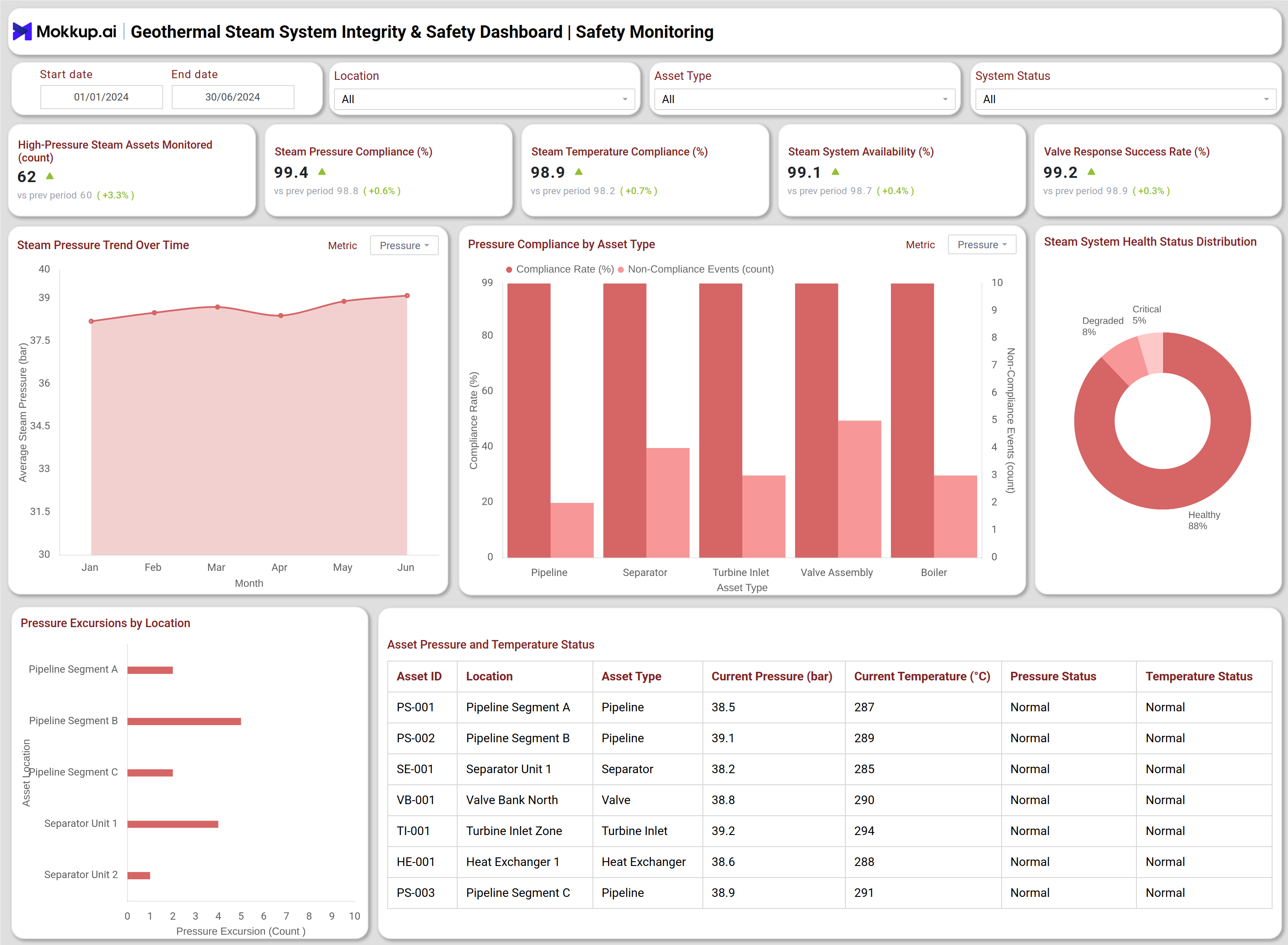
You can build a Geothermal Steam System Integrity & Safety Dashboard using two primary analytical sections: Pressure & Temperature Safety Monitoring and Leak Safety & Incident Response. The Pressure & Temperature Safety Monitoring section focuses on asset integrity and operational safety. It tracks monitored high-pressure steam assets, steam pressure compliance, steam temperature compliance, steam system availability, and valve response success rate. These metrics ensure that pipelines, separators, turbine inlets, valves, and boilers operate within safe pressure and temperature limits. Trend charts display average steam pressure over time, helping teams identify gradual deviations or spikes.
Pressure compliance by asset type highlights non-compliance events across pipelines, separators, turbine inlets, valve assemblies, and boilers. Steam system health distribution visuals provide an overall view of asset condition, while pressure excursion analysis by location helps pinpoint high-risk areas. Detailed asset tables consolidate current pressure, temperature, and status for each monitored component. The Leak Safety & Incident Response section addresses operational hazards related to steam leaks. It tracks steam leak incidents detected, average leak detection time, average isolation response time, steam loss due to leaks, personnel exposure incidents, and false alarm rate.
The leak severity distribution highlights risk concentration, while the leak detection method analysis shows how effectively acoustic sensors, pressure drop monitoring, infrared imaging, and manual detection are used. Leak cause analysis identifies standard failure drivers such as corrosion, gasket failure, valve leakage, and thermal stress, supporting targeted mitigation strategies. Incident and response logs provide detailed records of detection time, isolation time, steam loss, and resolution status, enabling accountability and continuous safety improvement. Together, these views form comprehensive geothermal steam leak detection and geothermal steam corrosion monitoring dashboards.
How to Analyze Data in Geothermal Steam System Integrity & Safety Dashboard
Here is how you can analyze data from this dashboard:
- Review steam pressure and temperature compliance rates to ensure safe operating conditions.
- Monitor pressure and temperature trends to detect gradual system degradation.
- Analyze non-compliance events by asset type to identify high-risk equipment.
- Track steam system availability and valve response success to assess operational readiness.
- Review pressure excursions by location to prioritize inspection and maintenance.
- Monitor trends in steam leak incidents to evaluate overall safety performance.
- Analyze leak detection and isolation times to improve emergency response effectiveness.
- Review leak severity and causes to reduce recurring failure modes.
- Track personnel exposure incidents to strengthen worker safety controls.
- Monitor false alarm rates to improve detection accuracy and system trust.
Benefits of Geothermal Steam System Integrity & Safety Dashboard
The following are the benefits of using this dashboard:
- Improves visibility into steam system integrity and operational safety.
- Reduces risk of high-pressure steam failures and leaks.
- Enables early detection of pressure, temperature, and corrosion issues.
- Improves response time to steam leak incidents.
- Enhances worker safety and reduces exposure incidents.
- Supports compliance with safety and operational standards.
- Strengthens asset integrity and maintenance planning.
- Provides centralized safety oversight across geothermal facilities.
KPIs to Track in Geothermal Steam System Integrity & Safety Dashboard
The following key KPIs can be tracked by using this dashboard:
- High-Pressure Steam Assets Monitored (count): Tracks the total number of critical steam assets actively monitored for safety and integrity.
- Steam Pressure Compliance (%): Measures the percentage of assets operating within approved steam pressure safety limits.
- Steam Temperature Compliance (%): Indicates how consistently steam temperatures remain within defined safe operating thresholds.
- Steam System Availability (%): Shows the proportion of time the steam system remains operational and safety-ready.
- Valve Response Success Rate (%): Evaluates how reliably safety valves respond during pressure or temperature deviations.
- Steam Leak Incidents Detected (count): Records the total number of steam leak events identified during the monitoring period.
- Average Leak Detection Time (minutes): Measures the average time taken to identify steam leaks after occurrence.
- Average Isolation Response Time (minutes): Tracks how quickly affected steam sections are isolated after leak detection.
- Steam Loss Due to Leaks (tons): Quantifies the amount of steam lost due to leak incidents.
- Personnel Exposure Incidents (count): Tracks the number of safety events involving personnel exposure to steam hazards.
- False Alarm Rate (%): Measures the percentage of safety alerts triggered without an actual leak or hazard.
Frequently Asked Questions
1. Why is a geothermal steam system safety dashboard important?
It provides real-time visibility into pressure, temperature, and leak risks, helping prevent hazardous incidents.
2. What assets does the dashboard monitor?
It monitors pipelines, separators, turbine inlets, valves, boilers, and related steam infrastructure.
3. Who uses a geothermal steam integrity dashboard?
Safety engineers, operations teams, maintenance staff, and compliance managers.
4. How does the dashboard help reduce steam leak risks?
By detecting leaks early, analyzing causes, and improving isolation response time.
5. Can this dashboard support safety audits and compliance?
Yes. It provides documented safety performance and incident records for audits and reporting.