
What is a Digital Pediatrics Monitoring Dashboard?
A digital pediatrics monitoring dashboard for hospitals is a centralized data visualization tool that helps pediatric departments monitor patient health, teleconsultation usage, system uptime, and treatment outcomes. Hospitals utilize this dashboard to monitor pediatric care metrics, including patient engagement, follow-up compliance, and system reliability. It also enables healthcare teams to assess how efficiently teleconsultation and remote monitoring tools are supporting child care delivery. The goal is to enhance clinical outcomes, improve digital adoption, and ensure reliable system integration across pediatric operations.
How to Create a Digital Pediatrics Monitoring Dashboard
You don’t need to build your report from scratch just start with a ready-to-use dashboard template from Mokkup. Add in your data and export it however you like. Here’s how to do it:
1. Create or Log in to Your Mokkup Account
Start by signing up on Mokkup.ai using your email. If you already have an account, just log in, and you’ll be good to go.
2. Choose and Customize Your Dashboard Template
Find the Digital Pediatrics Monitoring Dashboard template in the Templates section. Use the drag-and-drop editor to adjust KPIs, edit filters, or add elements based on your data.
3. Export to Your BI Tool
Once your dashboard wireframe is ready, use the BI Tool Export feature to send it directly to Power BI or Tableau for further analysis and enhancements. You can also download the dashboard as a PDF, PNG, or JPEG, embed it on a platform, or invite your team to collaborate.
Note: This is a Pro template. You’ll need a Pro subscription on Mokkup to use and customize this dashboard wireframe. Upgrade anytime to unlock full access.
Digital Pediatrics Monitoring Dashboard Example
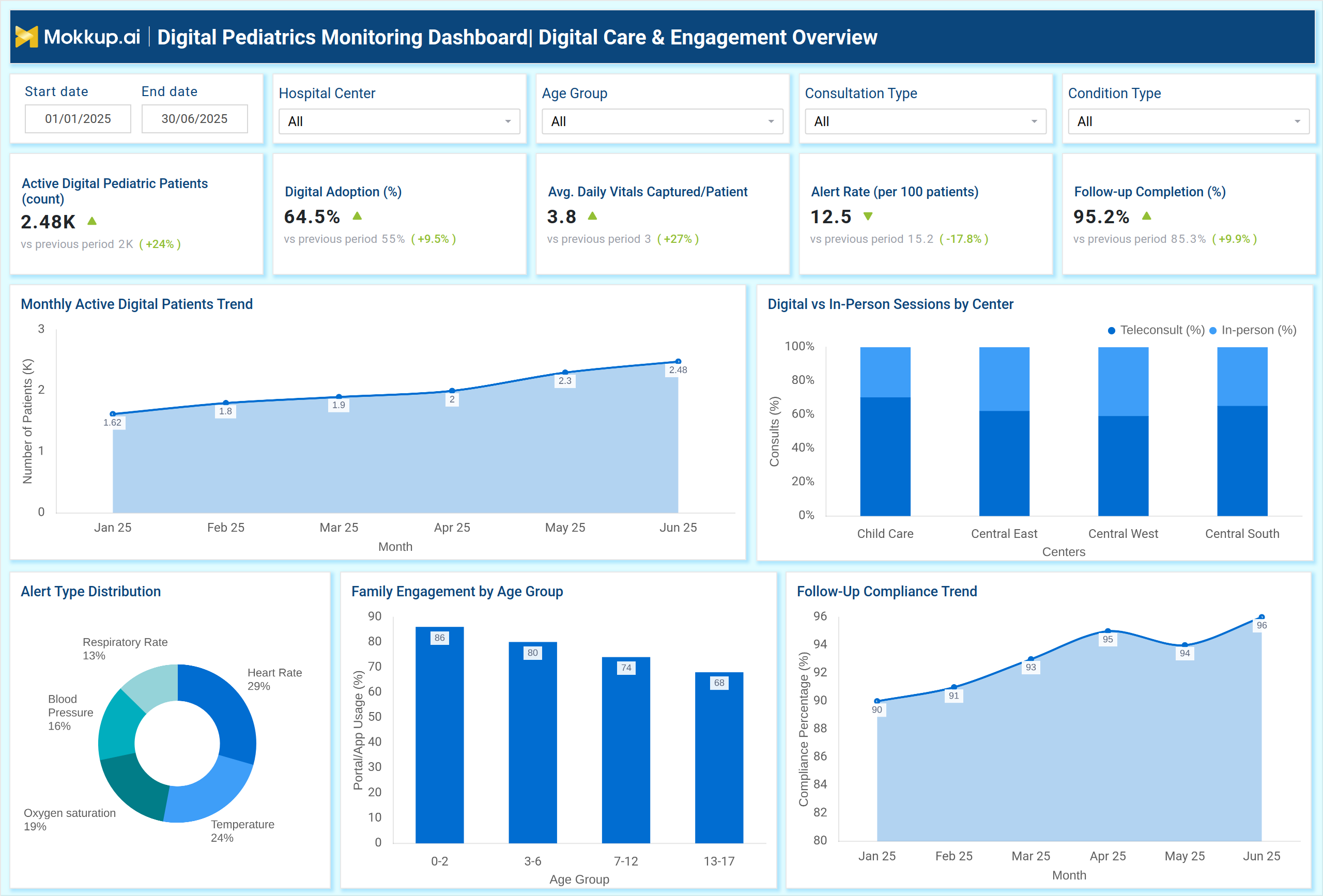
The example dashboards highlight two key perspectives: Pediatric Digital Care & Engagement and System Reliability & Integration Impact.
In the first view, the dashboard displays active digital pediatric patients, the teleconsult adoption rate, and the average daily vitals captured per patient. The child health monitoring and reporting dashboard visualizes key metrics, including Alert Rate per 100 patients and Follow-up Completion (%), enabling healthcare providers to track engagement levels and adherence. Graphs such as Monthly Active Digital Patients Trend and Teleconsult vs. In-Person Sessions by Center provide visibility into patient behavior and consultation preferences across centers.
The second view focuses on infrastructure reliability. It displays System Uptime, Device Sync Success Rate, EHR Integration Performance, and Average Data Latency, providing administrators with a clear understanding of how well-connected systems and devices perform. This pediatric hospital performance monitoring tool ensures minimal downtime, accurate data transmission, and better integration between hospital systems and external health platforms.
How to Analyze Data in a Digital Pediatrics Monitoring Dashboard
From this Pediatric patient health tracking dashboard, you can analyze data in the following manner:
- Track Patient Engagement: Utilize trends in active digital pediatric patients to measure growth in participation.
- Monitor Teleconsultation Adoption: Compare teleconsult versus in-person consultations to understand the shift toward digital care.
- Analyze Alert Distribution: Review alert types (vitals, oxygen, heart rate) to identify key health concerns among pediatric patients.
- Evaluate Family Involvement: Assess family engagement scores by age group to improve parent participation in care.
- Monitor Follow-Up Compliance: Track completion trends to ensure ongoing care and better treatment adherence.
- Assess System Reliability: Review uptime and latency data to maintain smooth digital monitoring operations.
- Measure Integration Success: Analyze EHR and API integration metrics to improve interoperability and reduce errors.
Benefits of Digital Pediatrics Monitoring Dashboard
The pediatric treatment outcomes analysis dashboard has the following benefits:
- Improved Patient Care: Real-time tracking enables the early detection of anomalies, ensuring timely interventions.
- Data-Driven Decision Making: Helps hospitals analyze treatment performance and clinical outcomes.
- Enhanced Operational Efficiency: The pediatric ward operational efficiency dashboard identifies performance gaps in staff workflows, teleconsult usage, and data reliability.
- Better Family Engagement: Monitors how actively families participate in child care through digital apps and consultations.
- System Reliability Insights: Tracks device sync rates, data latency, and EHR success to ensure consistent digital operations.
- Improved Treatment Outcomes: Enables ongoing analysis of pediatric treatment outcomes through a dashboard tracking care effectiveness.
KPIs to Track in Digital Pediatrics Monitoring Dashboard
- Active Digital Pediatric Patients (Count): Measures digital engagement levels among children.
- Teleconsult Adoption Rate (%): Measures the effectiveness of telemedicine in pediatric consultations.
- Average Daily Vitals Captured/Patient: Indicates the accuracy and frequency of monitoring.
- Alert Rate (per 100 Patients): Identifies the frequency of critical or abnormal health events.
- Follow-Up Completion (%): Tracks adherence and continuity of care.
- System Uptime (%): Ensures digital systems remain reliable and available.
- Device Sync Success Rate (%): Measures the efficiency of integration between medical devices and hospital systems.
- EHR Integration Performance (%): Evaluates interoperability and data exchange quality.
- Average Data Latency (Minutes): Monitors response time for real-time data synchronization.
- Family Engagement by Age Group (%): Analyzes digital app usage among different pediatric age groups.
Frequently Asked Questions
1. What is the purpose of a Digital Pediatrics Monitoring Dashboard?
It helps hospitals monitor pediatric patient health data, system performance, and digital care adoption through a unified, real-time view.
2. Who can use this dashboard?
This tool is designed for pediatric care managers, hospital administrators, IT integration teams, and clinical leaders focused on digital health transformation.
3. How does it improve pediatric healthcare delivery?
By providing actionable insights into patient engagement, clinical outcomes, and system uptime, it enables hospitals to enhance efficiency and patient experience.