
What is an Athletic Nutrition Performance Dashboard?
An Athletic Nutrition Performance Dashboard is a strategic tool designed for coaches, nutritionists, and sports program directors to monitor and evaluate the nutritional status and performance readiness of athletes. It provides a clear view of key metrics such as diet compliance, caloric balance, recovery time, hydration, and injury rate monitoring—all in one place. Unlike manual tracking methods, this dashboard serves as a centralized Athletic Nutrition Performance Dashboard, helping sports professionals make data-driven decisions to enhance athlete performance and well-being.
How to Create an Athletic Nutrition Performance Dashboard
You don’t need to start from scratch—simply use a pre-designed Athletic Nutrition Performance Dashboard template from Mokkup. Input your data and export it in your preferred format. Here’s how:
1. Create or Log in to Your Mokkup Account
Sign up at Mokkup.ai using your email address. Existing users can log in directly.
2. Choose and Customize Your Dashboard Template
Navigate to the Templates section and select the Athletic Nutrition Performance Dashboard. Use the drag-and-drop editor to modify KPIs, adjust filters, or add new elements based on your team’s data.
3. Export to Your BI Tool
Once your dashboard wireframe is ready, export it directly to Power BI or Tableau using the BI Tool Export feature. You can also download it as a PDF, PNG, or JPEG, embed it on a platform, or invite team members to collaborate.
Note: This is a Pro template. A Mokkup Pro subscription is required to access and customize this dashboard wireframe. Upgrade anytime to unlock full features.
Athletic Nutrition Performance Dashboard Example
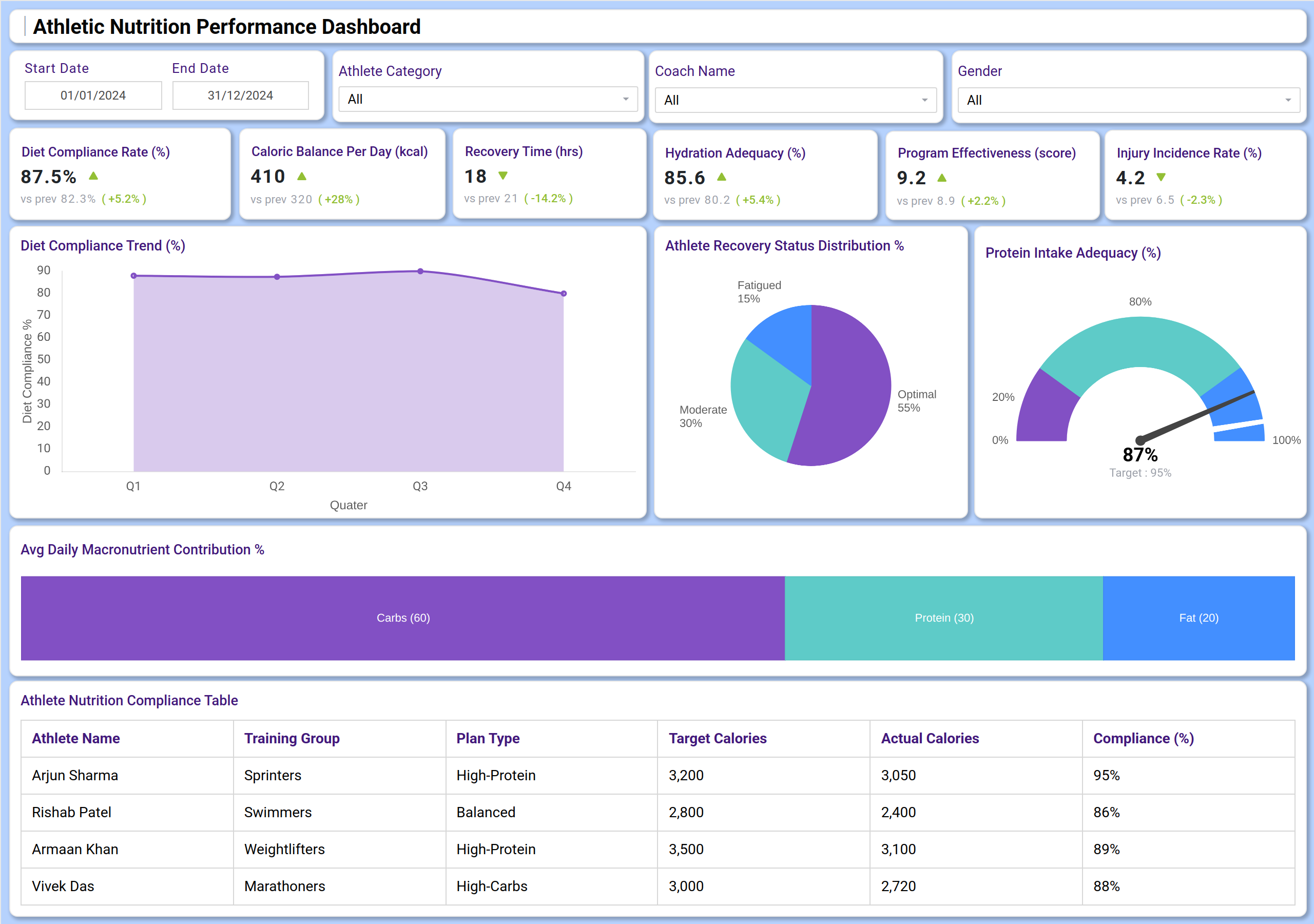
An effective Athletic Nutrition Performance Dashboard combines KPI tiles and visualizations for at-a-glance insights. At the top, KPI cards track essential metrics such as diet compliance, caloric balance, recovery time, hydration adequacy, program effectiveness, and injury rates. Below, trend charts display diet compliance over quarters, and tables summarize individual athlete nutrition compliance. Additional sections highlight recovery status and macronutrient distribution. This layout makes it the best Athletic Nutrition Performance Dashboard for tracking nutrition and recovery metrics, helping coaches align dietary plans with performance goals.
How to Analyze Data in Athletic Nutrition Performance Dashboards
Here’s how sports professionals can leverage the Athletic Nutrition Performance Dashboard:
- Monitor diet adherence: Use trend charts to track quarterly diet compliance rates across athlete groups.
- Evaluate energy balance: Review caloric intake vs. expenditure to ensure athletes meet daily energy needs.
- Track recovery metrics: Analyze recovery time and hydration levels to optimize rest and hydration strategies.
- Assess program effectiveness: Use program scores to measure the impact of nutrition plans on performance.
- Reduce injury risk: Monitor injury incidence rates to identify correlations with nutrition or recovery gaps.
- Review macronutrient splits: Ensure carbohydrates, proteins, and fats are balanced according to training demands.
- Check individual compliance: Use the athlete nutrition table to identify who is adhering to their nutrition plan.
Benefits of Athletic Nutrition Performance Dashboards
An Atheltic Nutrition performance dashboard offers several benefits:
- Holistic athlete oversight: Tracks nutrition, recovery, and injury data in one unified Athletic Nutrition Performance Dashboard.
- Improved dietary compliance: Helps coaches enforce nutrition plans with clear compliance tracking.
- Informed recovery strategies: Monitors recovery time and hydration to reduce fatigue and enhance performance.
- Performance optimization: Links nutrition metrics with program effectiveness and injury rates.
- Personalized nutrition support: Identifies individual athlete needs based on compliance and intake data.
- Strategic planning support: Acts as a nutrition and performance analytics dashboard for seasonal or event-based planning.
- Compliance and reporting: Functions as a sports nutrition reporting dashboard for program reviews and stakeholder updates.
Together, these features provide coaches and nutritionists with the insights needed to align nutrition with athletic output, making this dashboard an essential tool for modern sports programs.
KPIs to Track in Athletic Nutrition Performance Dashboards
It helps you track multiple KPIs as follows:
- Diet Compliance Rate (%): Measures how closely athletes follow their prescribed nutrition plans.
- Caloric Balance Per Day (kcal): Tracks the difference between calorie intake and expenditure.
- Recovery Time (hrs): Monitors average time taken by athletes to recover after intense training.
- Hydration Adequacy (%): Assesses whether athletes are meeting their daily hydration targets.
- Program Effectiveness (score): Rates the overall impact of the nutrition program on performance.
- Injury Incidence Rate (%): Tracks the frequency of injuries relative to athlete exposure.
- Protein Intake Adequacy (%): Measures how well athletes meet their daily protein requirements.
- Athlete Recovery Status Distribution: Breaks down the proportion of athletes in optimal vs. fatigued states.
- Avg Daily Macronutrient Contribution %: Shows the split between carbs, protein, and fats in athlete diets.
Frequently Asked Questions
1. Who should use an Athletic Nutrition Performance Dashboard?
Coaches, team nutritionists, sports scientists, and athletic program directors who oversee athlete health and performance.
2. Can this dashboard help reduce athlete injuries?
Yes. By tracking nutrition compliance, recovery, and hydration, the dashboard helps identify risk factors and supports proactive injury prevention.
3. How does it support nutrition planning?
It provides data on macronutrient splits, calorie balance, and individual compliance—enabling tailored nutrition strategies.
4. Is this dashboard useful for sports program reporting?
Yes. It serves as a sports nutrition reporting dashboard for sharing insights with stakeholders, sponsors, or medical staff.