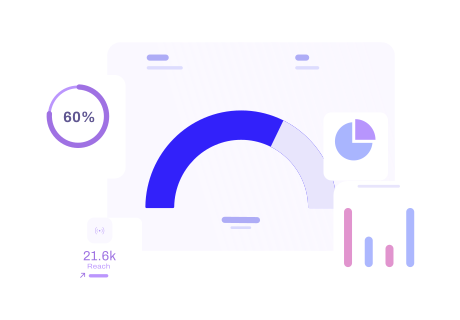
What are Dashboard Mockups?
Dashboard mockups are like blueprints. They help create user-friendly interfaces. These interfaces make data analysis, visualization, and decision-making faster.
These mockups are typically used during the planning and design phase of building dashboards in business intelligence (BI) tools. They help stakeholders visualize what the final dashboard will look like, without requiring any complex data modeling or coding.
Early in the design phase, developers and analysts may visualize the general structure and functionality. This helps them identify problems early, make changes faster, and create a dashboard that meets user needs.
Table of Contents
- What is the Importance of Dashboards?
- Benefits of Dashboard Wireframes
- The Reasons Behind Dashboard Development Challenges
- Tips For Establishing Effective Dashboard Wireframes
What is the Importance of Dashboards?
Dashboards play a pivotal role in modern business and data-driven decision-making processes. They act as a central hub and show important real-time data, trends, and insights. This helps users quickly grasp complex information.
In today's fast-paced world, we have a lot of data, but attention spans are short. Dashboards are valuable tools that help combine information and support informed actions.

As Steve Jobs stated, "Simple can be harder than complex: You have to work hard to get your thinking clean to make it simple." This quote sums up dashboards quite nicely. They make things simpler and assist stakeholders in making quicker decisions with more confidence. They achieve this by converting large amounts of data into easy-to-understand visuals.
Moreover, by fostering a common understanding of performance indicators and objectives, dashboards promote collaboration and transparency inside businesses. They create more productivity, efficiency, and better strategy by promoting data-driven decision-making at every level.
What are Dashboard Mockups?
A dashboard mockup is a prototype that shows what a dashboard will look like. It mimics the final product's features, structure, and layout. It is created in the early stages of design. This helps stakeholders understand the layout and function of the dashboard.
Mockups often have placeholders for elements like tables, graphs and charts. This lets data analysts and developers try different layouts. They can change the design before moving on to the development phase.
One can get feedback and review their design choices. They can also make sure the final business dashboard meets user needs. This can be done by presenting a static or interactive prototype.
Benefits of Dashboard Wireframes
Dashboard mockups offer numerous advantages for both development teams and end-users. Let's look at the few benefits the dashboard mockup offers:

1. Visual Representation
They provide a dashboard layout, structure, and functionality, allowing users to envision the final product before it is developed. This helps ensure that everyone involved is on the same page regarding the design direction.
2. Feedback & Iteration
By showing a wireframe, data analysts can gain useful insights. They can spot potential problems and make changes early in the design process. This approach saves time and resources in the long run.
3. User-Centered Design
Through testing different design aspects including navigation flows, data visualizations, and interaction patterns, mockups help developers prioritize the user experience. BI developers and data analysts can create a dashboard that is easy to use and meets the needs of its audience. They can do this by including user feedback in the mockup.
4. Efficiency
Creating a mockup lets developers try out different design ideas. Without using data, it is much faster to make changes. This way, they can experiment without committing to code.
This step-by-step method makes the design process smoother. It reduces changes during development. It also ensures the final dashboard meets project needs and goals.
5. Alignment
Mockups serve as a crucial communication tool for aligning stakeholders' expectations and project goals. Using an online dashboard creator helps developers show their ideas early. This way, everyone can understand the project scope, timeline, and deliverables clearly.
Dashboard mockups are important in the design process. They help promote teamwork and validate design choices. This leads to a user-friendly dashboard that meets your business needs.
The Reasons Behind Dashboard Development Challenges

Navigating the complexities of dashboard design requires a keen understanding of both data visualization principles and user experience considerations. However, even with the best intentions, teams often encounter common pitfalls that hinder the effectiveness of their dashboards. Let’s look at a few:
- Lack of Context: Teams often focus on showing key performance indicators (KPIs). However, they do not provide enough context or comparisons to past periods or specific goals. This makes it hard to evaluate performance accurately.
- Too Much Detail: Dashboards often show too much detail. This makes it hard for users to see the most important information. Clarity and relevance are ensured by focusing on high-level KPIs or key metrics.
- Limited Visual Variety & Inconsistent Presentation: Dashboards can become monotonous when using the same types of charts or graphs throughout. Incorporating diverse visual representations enhances engagement and understanding. Maintaining consistency in dashboard design is vital to avoid introducing meaningless variety. A cluttered and inconsistent layout can confuse users and reduce the dashboard's effectiveness.
- Visual Design Balance: In dashboard design, finding a balance between usefulness and aesthetics is essential. The dashboard is easier to read and use when we avoid flashy visual effects. We should also ensure that the color palette and other design elements match well.
To create a good-looking and functional BI dashboard, choose design elements that enhance the data. Avoid elements that distract from it.
By focusing on clarity and user experience, companies can create data dashboards. These dashboards help decision makers make informed choices and gain useful insights. And in every stage of the process, from setting specific goals to utilizing a dashboard mockup tool free of cost or have minimal charges, is a bonus.
Tips For Establishing Effective Dashboard Wireframes

Crafting compelling dashboard mockups sets the foundation for easy to understand data visualization. Here are some important tips for making effective dashboard mockups. These tips combine good design with user-friendly features. This will help ensure clarity and keep users engaged.
1. Define Clear Objective
Clearly explain the primary purpose of the dashboard and keep it in clear view as a constant reminder of its intended goal. This ensures that every design choice matches the overall goals. This leads to a dashboard solution that is accurate and efficient.
2. Prioritize Simplicity
Avoid the urge to stuff the dashboard template, including irrelevant information just to make it look good. Simplify the design to focus on conveying essential information clearly and effectively.
3. Establish Clear Hierarchy
Ensure the dashboard's navigation is simple and organized. Create a clear hierarchy early in the design process. A well-designed navigation system lays the foundation for a user-friendly experience.
4. Conduct Comprehensive Research
Before starting to develop the dashboard, do extensive research to understand customer preferences and industry insights. This preliminary research stage creates a solid foundation for the dashboard development process and guarantees well-informed decision-making.
5. Leverage Existing Standards
Though creativity is important, avoid making changes unnecessarily. Acknowledge established design standards and practices, recognizing that they often exist for valid reasons.
For instant, check out Mokkup.ai’s pharmacy report dashboard wireframe. It is a great dashboard wireframe example that follows standard layouts for clarity and usability. This ensures users can quickly understand and navigate the information presented.
6. Embrace Wireframing with Mokkup
Wireframing should always come first before diving into more in-depth design work. By focusing on wireframing, you can meet client expectations more effectively.
This also helps reduce time spent on unnecessary changes later. After you finish the mockup, it's important to test it with real users. This helps find any usability issues or problems.
Consider delivering the dashboard to a select group of beta testers rather than your entire client base. Use the feedback from this phase to improve the next version of your mockup dashboard. This will help you launch a fully functional dashboard for your users.
Mokkup.ai is a user-friendly dashboard wireframing tool that helps you design effective dashboards quickly. With Mokkup, you can easily add your wireframes to your product. This lets customers interact with them and give helpful feedback.
With Mokkup, you can easily add your wireframes to your product. This lets customers interact with them and give helpful feedback.
This dashboard creator tool also encourages teamwork through its commenting feature, making collaboration easy for your team and improving designs. This ensures that your dashboard is not only visually appealing but also meets user needs and achieves your business goals.
It is made for data analysts, developers, marketers, and non-designers—basically for everyone. It makes dashboard design easier. Users can create nice and effective dashboards quickly and efficiently.
Final Thoughts
Mastering effective wireframing techniques is crucial for creating dashboards with user-friendly interfaces. With careful planning and teamwork, developers can turn wireframes into polished dashboards. These dashboards impress visually and improve user experience. They also help users make decisions based on data.
Prompt it. Wireframe it with Mokkup.ai.