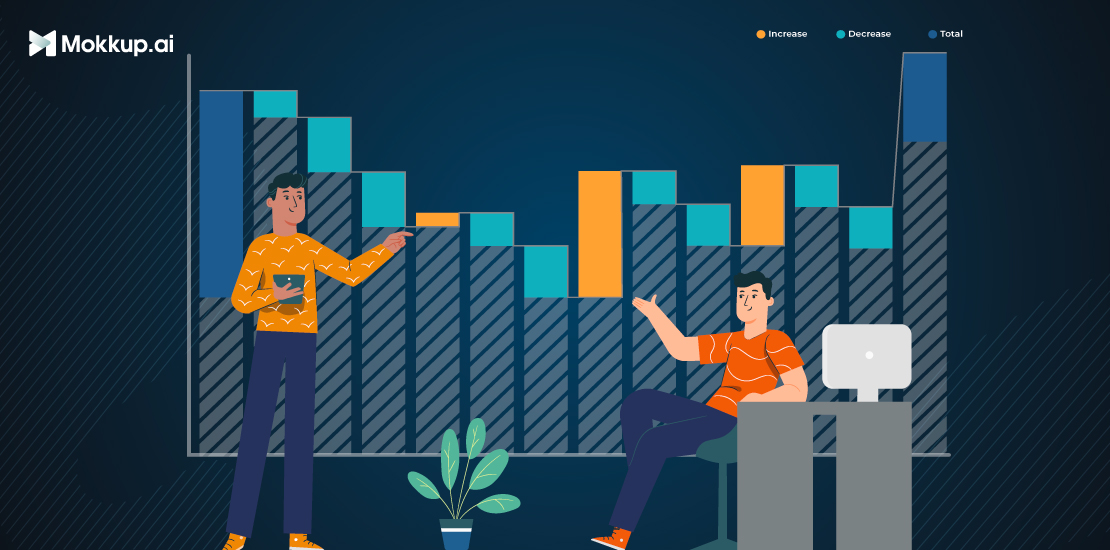
Imagine building a house. You wouldn't start installing the roof before laying the foundation, right? The waterfall model is like that, but it is for building software instead of houses.
Table of Contents
- Importance of Understanding the Waterfall Model
- The Stages of the Waterfall Model
- Iterative Waterfall Model
- Advantages and Disadvantages of a Waterfall Model
- What is the Use of the Waterfall Model?
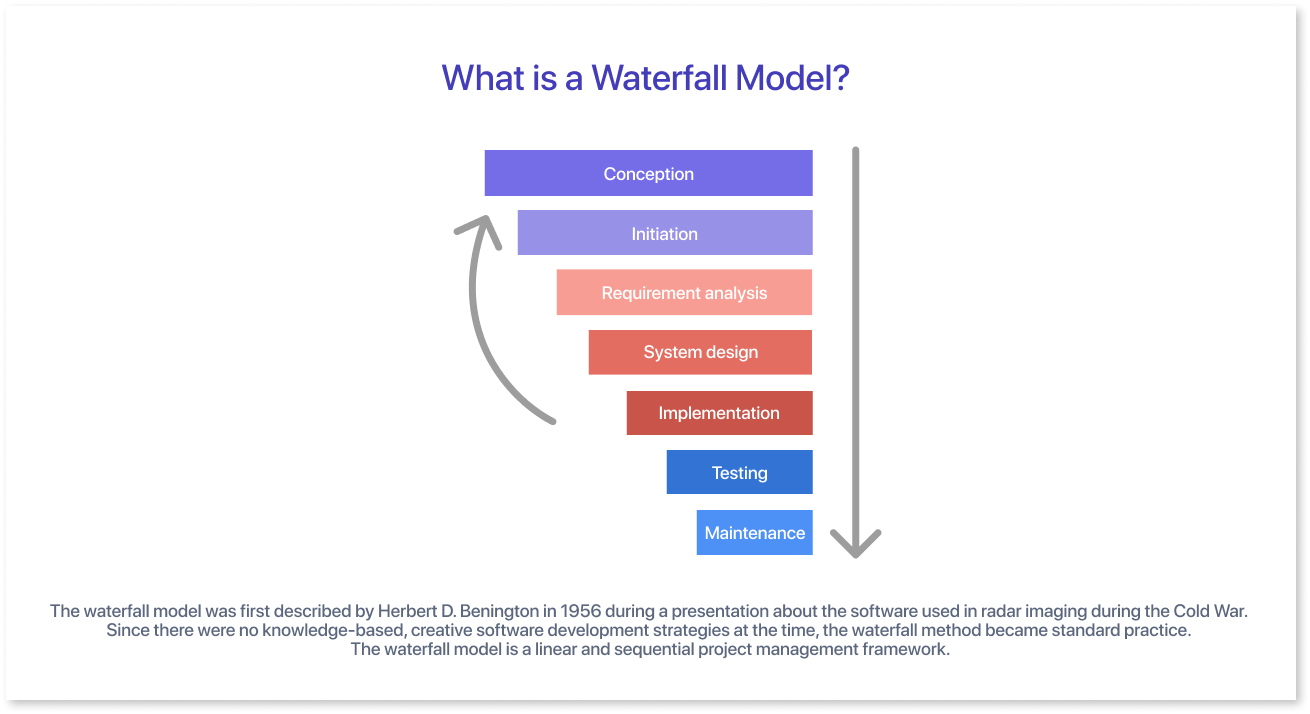
When people started making computer programs in the 1970s, they needed a way to organize the whole process. That's where the Waterfall Model came in. It's a step-by-step approach to building software, where each phase flows down like a waterfall, hence the name.
Importance of Understanding the Waterfall Model
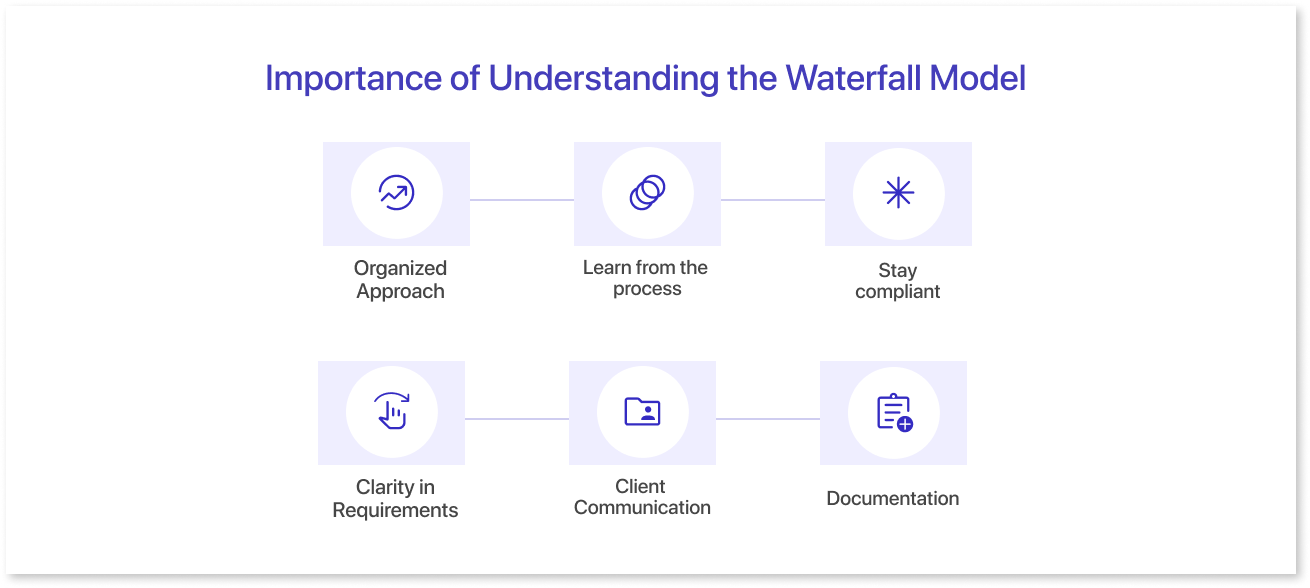
- Organized Approach: The Waterfall Methodology provides a structured and organized approach to software development, ensuring that each phase is completed before moving on to the next.
- Sequential Progression: It emphasizes a sequential progression of phases, which aids in better planning, management, and tracking of the project's progress.
- Stay Compliant: Following a linear progression, potential risks can be identified and addressed early in development, minimizing the likelihood of costly errors later.
- Clarity in Requirements: Understanding the waterfall model helps define and understand the project requirements clearly before developing, reducing the risk of misunderstandings or errors.
- Client Communication: It facilitates clear communication with clients or stakeholders by providing a well-defined structure for discussing project milestones and deliverables.
- Documentation: Each phase in the waterfall model typically requires thorough documentation, a valuable resource for future reference and software product management and maintenance.
The Stages of the Waterfall Model
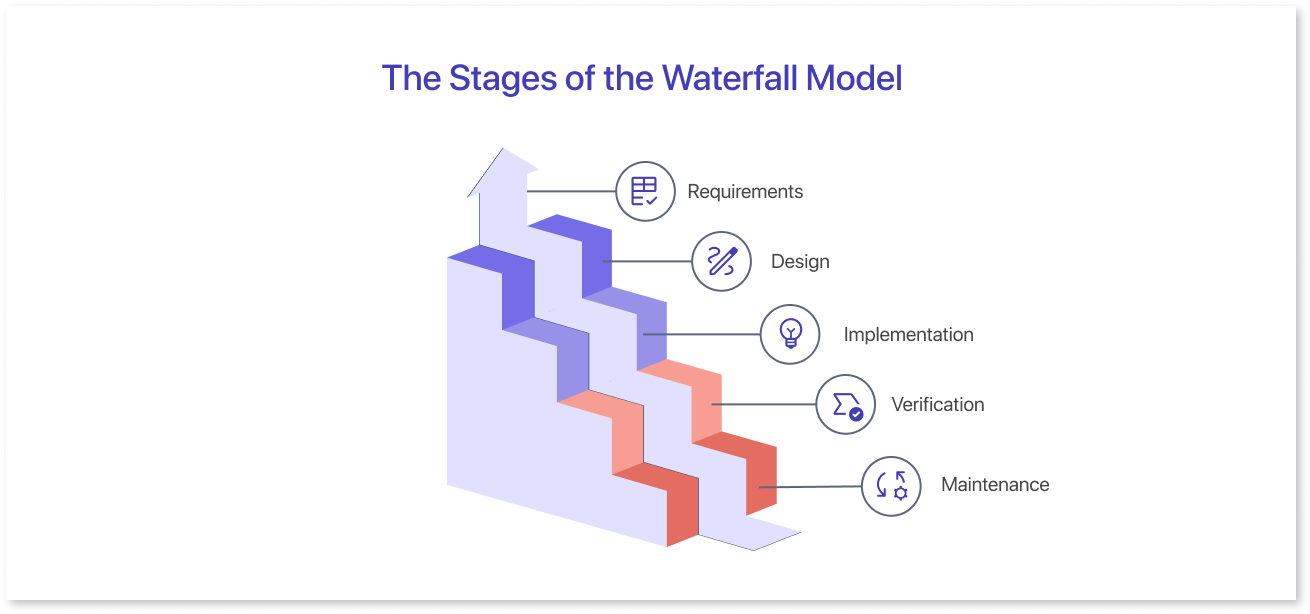
A. Requirements Gathering:
Imagine you're planning a big party. Before inviting guests or buying decorations, you must figure out what kind of party you want. In software development, this phase is like figuring out what the software needs to do. You ask questions, gather information, and list everything the software should be able to do.
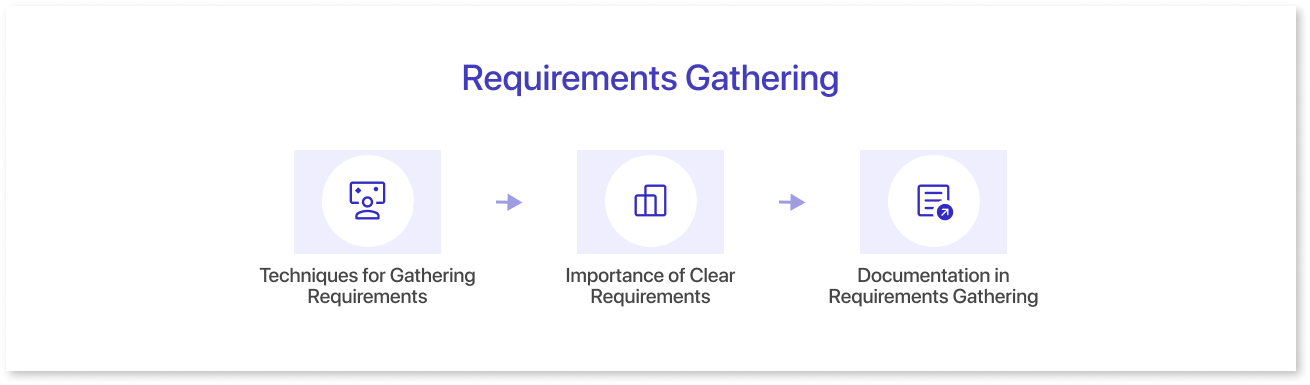
- Importance of Clear Requirements: Knowing exactly what you need is crucial before building anything. Clear requirements help everyone involved understand the goals and scope of the project.
- Techniques for Gathering Requirements: Just like interviewing guests to know their preferences for a party, there are various ways to gather requirement analysis, like surveys, interviews, or brainstorming sessions.
- Documentation in Requirements Gathering: Write down everything you learn during the requirements phase to avoid confusion later. It's like making a detailed shopping list for your party to ensure you remember everything.
B. System Design:
Once you know what you want the software to do, it's time to decide how it will work. This is like planning the layout of your party. You decide where the food tables will be, where people will sit, etc. In software development, you create a blueprint or design for how the software will be built and how different parts will work together.
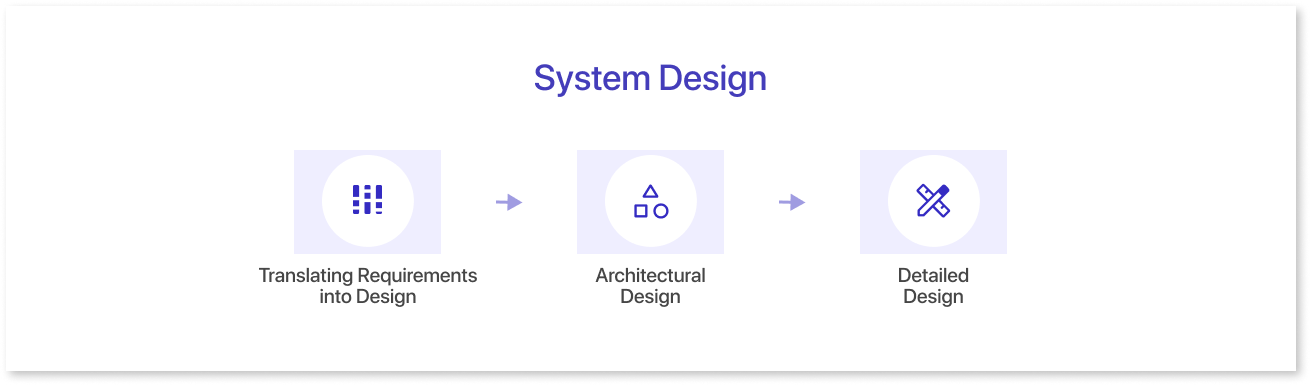
- Translating Requirements into Design: This is where you take all the information gathered and figure out how to make it work. It's like turning your party theme and guest preferences into a plan for decorations, food layout, etc.
- Architectural Design: Just as you decide the layout of your party space, architectural design in software development determines how different parts of the software will fit together.
- Detailed Design: Think of this as making detailed plans for each aspect of your party, like what decorations will go where and what food will be served at which table.
C. Implementation:
Now it's time to start building the software, just like setting up for the party. You follow the blueprint from the design phase and write the code that makes the software do what it's supposed to do.
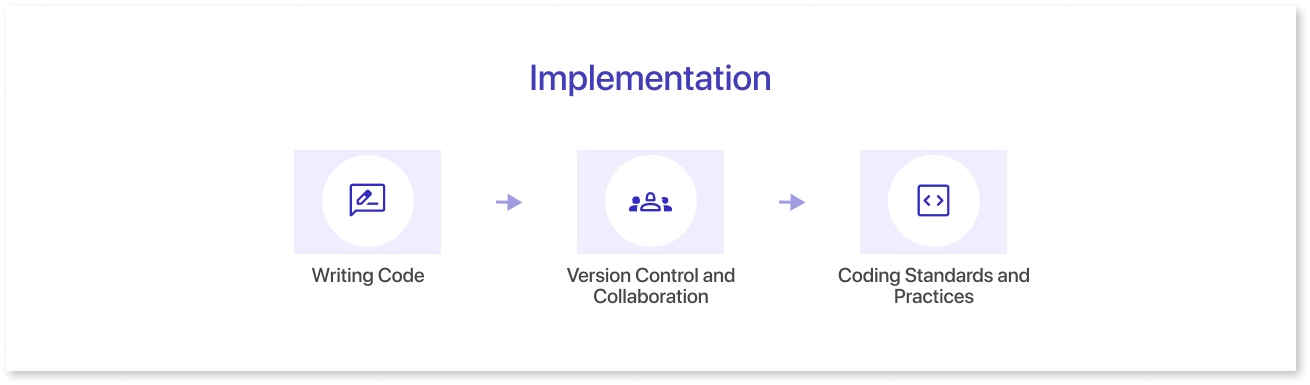
- Writing Code: Here, you start building the software, like cooking and setting up for your party.
- Version Control and Collaboration: Working on software with a team is like having friends help you set up for your party. Version control helps everyone stay organized and collaborate effectively.
- Coding Standards and Practices: Just as you follow recipes and party-planning rules, coding standards ensure consistency and quality in the software.
D. Testing/Verification:
Once the software is built, it must be tested to ensure it works correctly. This is like doing a practice run of your party before the real thing. You check everything to ensure it's working as expected and fix any pros and cons.
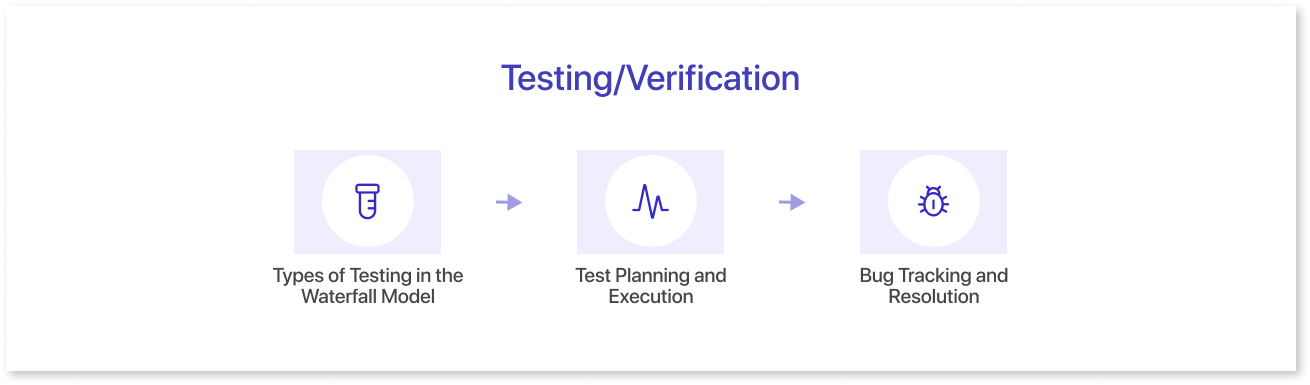
- Types of Testing in the Waterfall Model: Testing ensures the software works correctly before it's released, just like tasting food before serving it at your party. There are different types of tests to check different aspects of the software.
- Test Planning and Execution: Planning tests is like making a checklist for your party prep. You execute these tests to ensure everything works as expected.
- Bug Tracking and Resolution: It's like finding a mistake in your party setup if something goes wrong. You track and fix these issues to ensure a smooth experience for your guests.
E. Maintenance:
After the party, you may need to clean up or fix broken things. Similarly, in software development, once the software is up and running, it needs to be maintained. This means fixing bugs, making updates to keep it running smoothly, and adding new features.
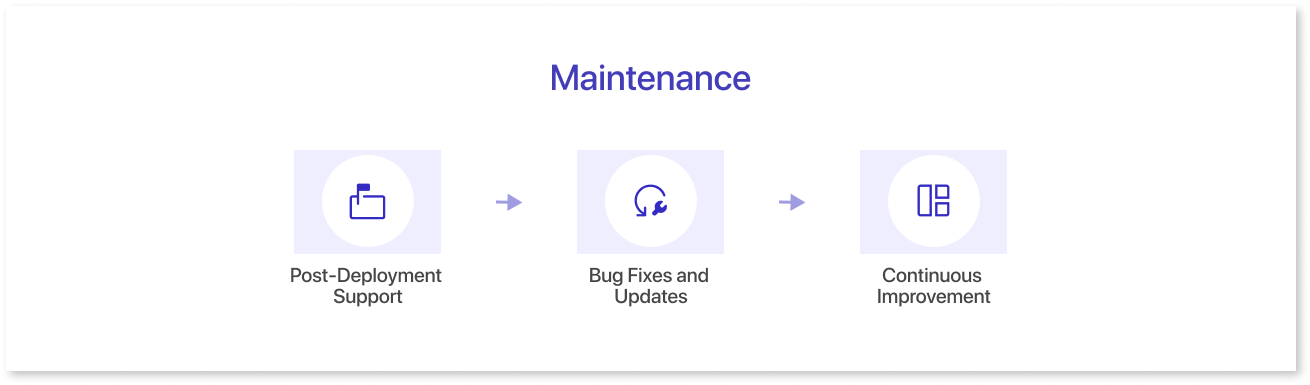
- Post-Deployment Support: After the party, you might need to clean up or address any issues. Similarly, after deploying the software, there may be ongoing support needs.
- Bug Fixes and Updates: Like fixing things that got broken during the party, software maintenance involves addressing bugs and making updates to improve performance or add new features.
- Continuous Improvement: Just as you might reflect on your party to see what went well and what could be improved, software maintenance involves continuously improving the software based on user requirements, feedback, and changing needs.
Iterative Waterfall Model
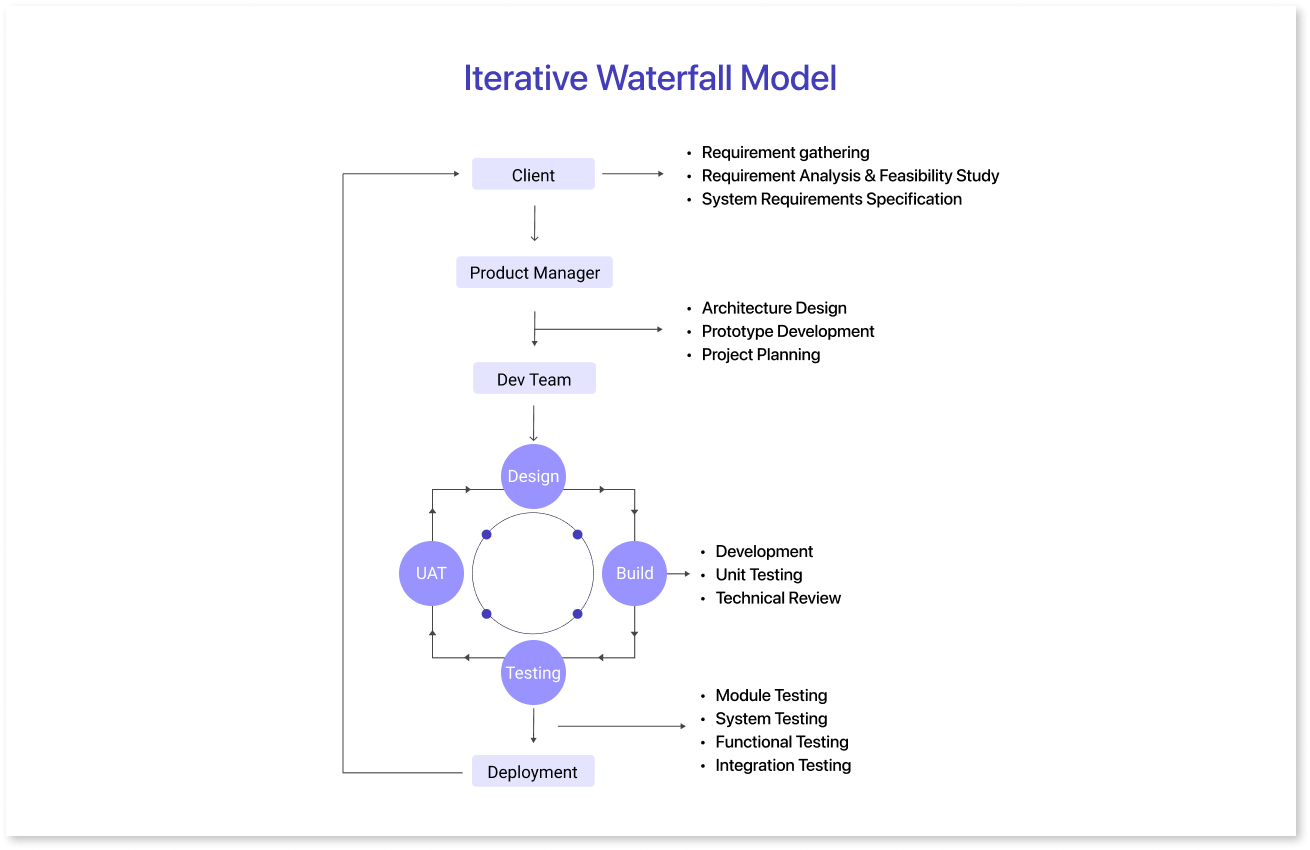
In the Iterative Waterfall approach, the process isn't strictly linear, like following a recipe from start to finish. Instead, it's more like making adjustments as you go along, tasting the batter and adding more sugar if needed. Here's how it works:
- From Client to Project Manager: The client provides initial requirements, like wanting a chocolate cake. The project manager plans the steps to make the cake, like gathering ingredients and preheating the oven.
- From Project Manager to Department Team: The project manager assigns tasks to different departments, like mixing the batter and frosting the cake.
- Iterative Waterfall Model: The team might realize they need more cocoa powder or extra frosting as the cake is being made. Instead of waiting until the end, they make these adjustments, ensuring the final product turns out just right.
- Completion: Once the cake is finished, it's presented to the client, who can enjoy it knowing that their input was considered throughout the baking process.
Advantages and Disadvantages of a Waterfall Model
| Advantages | Disadvantages |
|
Clear Structure:
|
Lack of Flexibility:
|
|
Easy to Understand and Implement:
|
Limited Scope for Revision:
|
|
Well-suited for Small Projects with Clear Requirements:
|
Long Delivery Time:
|
What is the Use of the Waterfall Model?
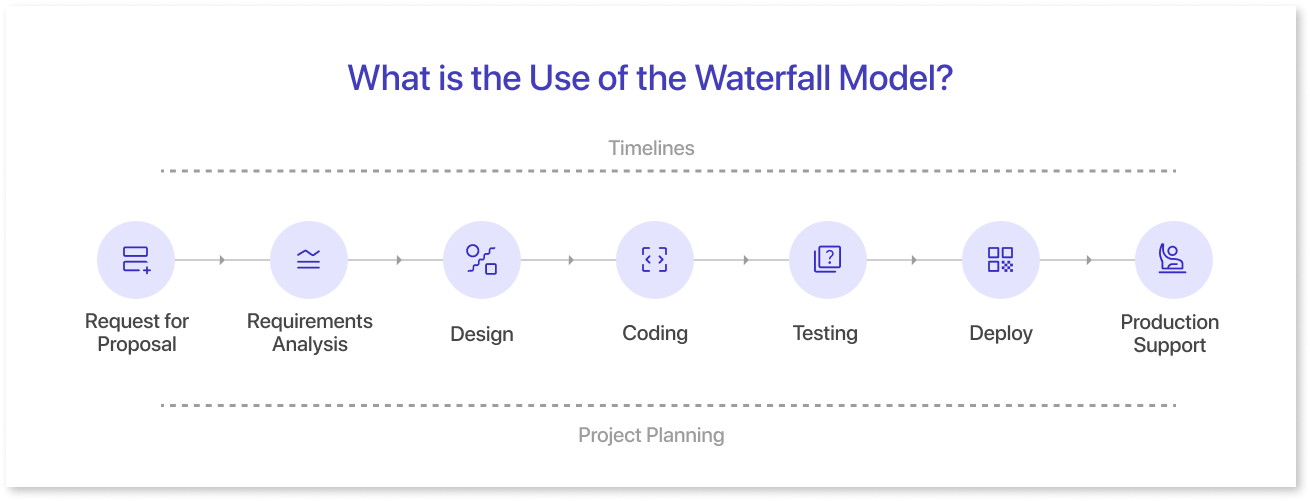
The waterfall model is a way of organizing work in a project, like building a dashboard. In this model, each project step happens one after the other, like a waterfall flowing down. First, you plan everything out. Then, you design the dashboard. After that, you build it, and finally, you test it to make sure it works right.
Using the waterfall model for dashboard development means following these steps in order. It can be helpful because it helps keep things organized and clear. You finish one step before moving on to the next, so there's a clear progression. This can make managing the project easier and knowing what needs to happen next. However, sometimes, it can also be inflexible because if something needs to change later on, it can be harder to go back and adjust things.
Final Thoughts
Whether you're embarking on a small-scale endeavor or navigating critical regulatory compliance, understanding the principles of the Waterfall Model can greatly enhance project management and success.
Ready to streamline your software development process? Explore Mokkup.ai for intuitive tools and resources to optimize your project workflow from inception to deployment. Embrace clarity, efficiency, and seamless collaboration with Mokkup.ai today!
Prompt it. Wireframe it with Mokkup.ai.