Why KPIs Matter in Modern Healthcare Dashboards
Have you ever noticed how much data flows through a hospital every single day? From patient records to operational details, the numbers are endless but without the right tools, much of this information goes unused. Instead of guiding better care and efficiency, it often remains scattered, hard to interpret, and even harder to act upon.
A healthcare KPIs dashboard helps turn this challenge into an opportunity by organizing raw data into clear, measurable indicators. These dashboards bring focus to what matters most, whether it’s patient outcomes, hospital finances, or compliance standards. They not only provide visibility but also make data usable for timely decision-making.
In fact, a Philips survey in 2025 revealed that 83% of healthcare professionals face disruptions at work due to incomplete or inaccessible patient data. This shows how raw information often fails to translate into decision-making value without proper structure.
In the sections ahead, we’ll look at the essential categories of healthcare KPIs that every modern dashboard should include.
Table of Contents
- Core Categories of Healthcare KPIs to Track
- Essential Clinical KPIs for Healthcare Dashboards
- Operational KPIs Every Modern Healthcare Dashboard Needs
- Financial and Administrative KPIs for Success
- Patient-Centric KPIs for Improving Care Quality
- Compliance, Safety & Risk Management KPIs
- How to Select KPIs for Your Healthcare Dashboard
Core Categories of Healthcare KPIs to Track
A modern healthcare dashboard should capture KPIs across different areas of hospital operations. Grouping them into categories ensures balanced monitoring and better decision-making. The main categories include:
- Clinical KPIs: Measure quality of care, treatment effectiveness, and patient safety.
- Operational KPIs: Track hospital workflow efficiency, staff performance, and resource utilization.
- Financial KPIs: Monitor revenue, costs, billing accuracy, and administrative performance.
- Patient-Centric KPIs: Assess patient satisfaction, waiting times, and overall care experience.
- Compliance and Safety KPIs: Ensure adherence to regulatory standards and minimize risks.
By aligning KPIs within these categories, healthcare organizations can evaluate performance holistically and identify areas for improvement without overlooking critical details.
Essential Clinical KPIs for Healthcare Dashboards
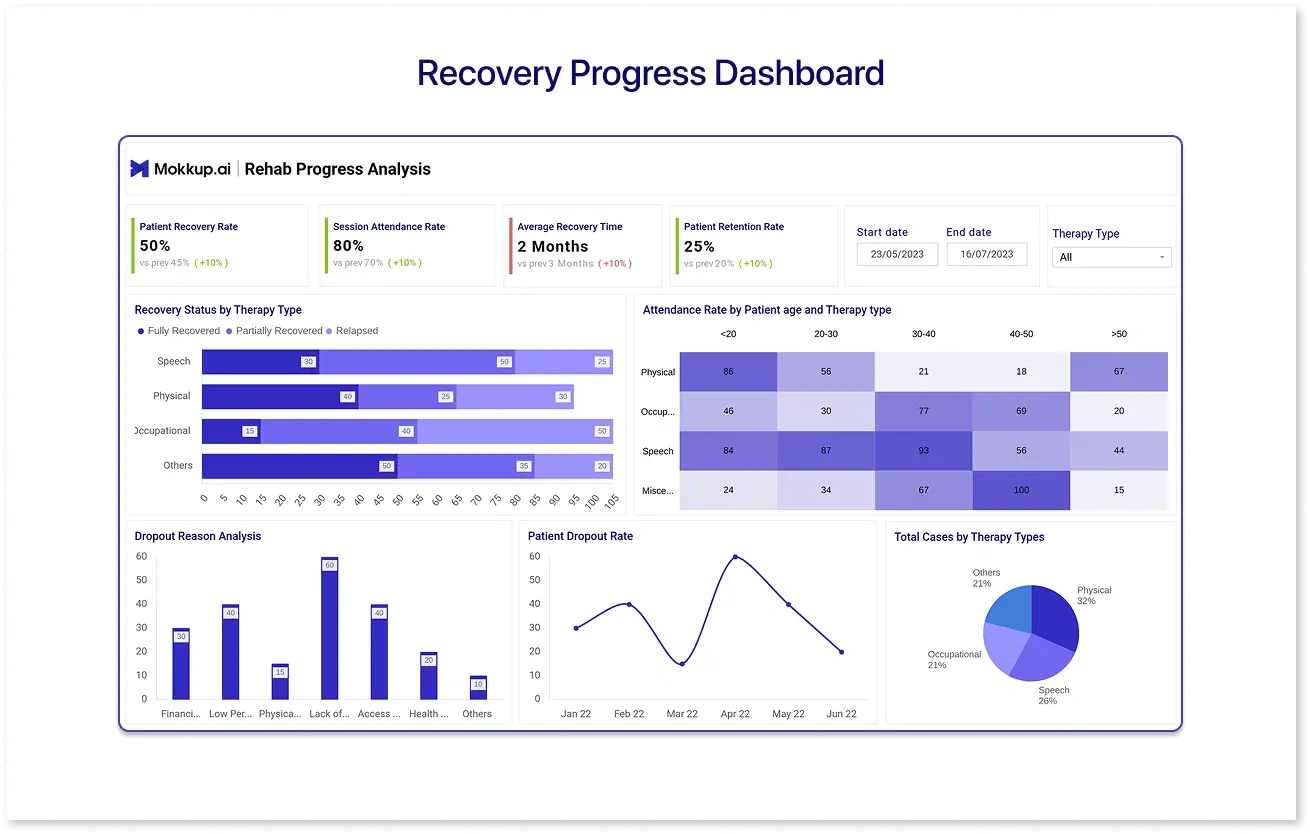
Clinical KPIs measure the quality, effectiveness, and safety of care delivery. They provide insights into patient outcomes, treatment efficiency, and overall clinical performance. The Healthcare KPIs dashboard uses these metrics to present data clearly, enabling timely decisions and proactive interventions.
Key clinical KPIs include:
- Patient Recovery Rate: Percentage of patients showing improvement over a defined period. Monitoring recovery trends helps evaluate treatment effectiveness and adjust care plans when needed.
- Treatment Success Rate: Proportion of interventions that achieve desired clinical outcomes, highlighting consistently effective procedures.
- Readmission Rate: Tracks patients who return after discharge, helping identify gaps in follow-up care or complications.
- Diagnostic Accuracy: Measures the reliability of tests and imaging, reducing errors in treatment planning.
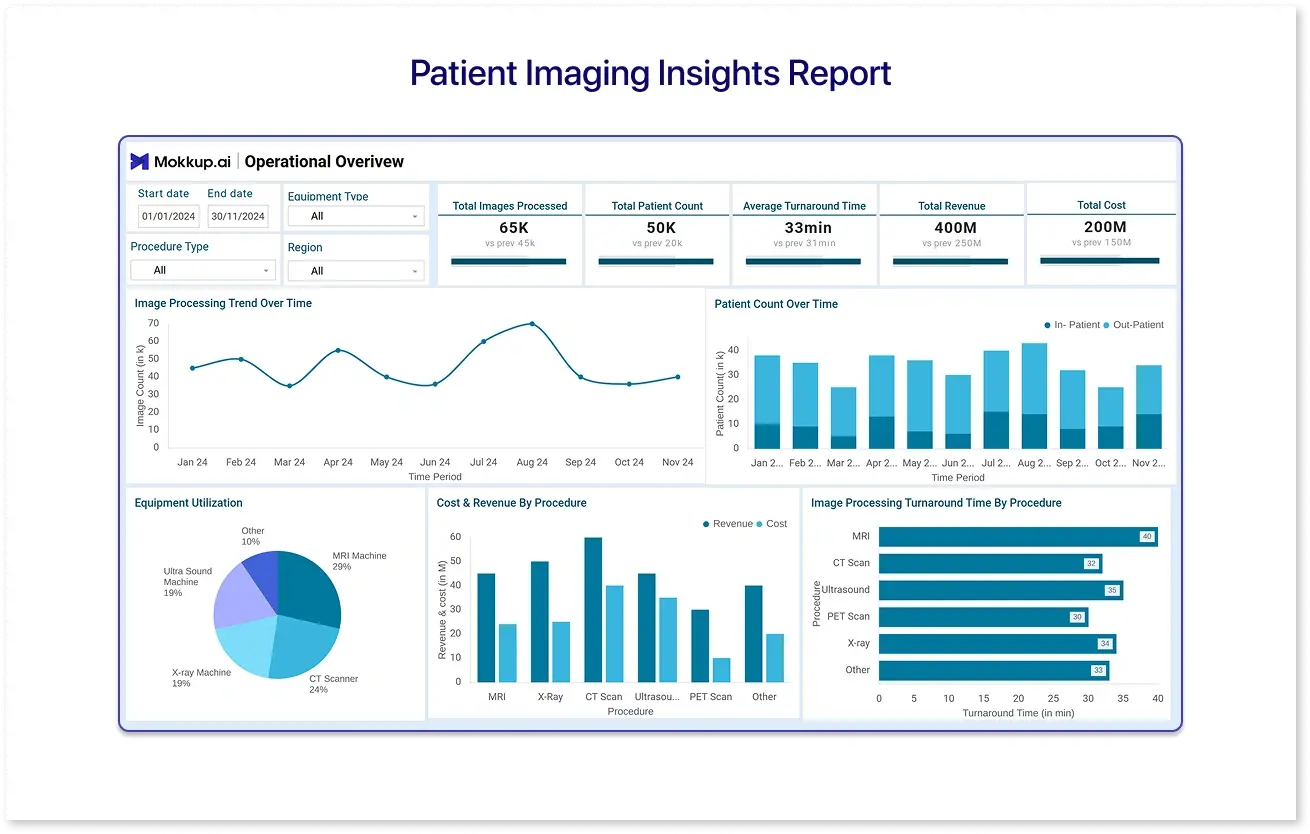
- Imaging Turnaround Time: Time from ordering diagnostic imaging to receiving results, crucial for timely interventions.
These KPIs can be visualized effectively through dashboards like Mokkup’s Recovery Progress Dashboard, which shows trends in patient recovery and treatment success, or the Patient Imaging Insights Dashboard, which tracks imaging turnaround times and diagnostic accuracy. By integrating such dashboards, care teams can quickly spot deviations, assess performance, and respond proactively.
Monitoring these clinical KPIs supports high standards of patient care, identifies opportunities for process improvement, and ensures treatments are effective and timely. Well-designed dashboards use charts, trend lines, and progress indicators to make these insights immediately actionable.
Operational KPIs Every Modern Healthcare Dashboard Needs
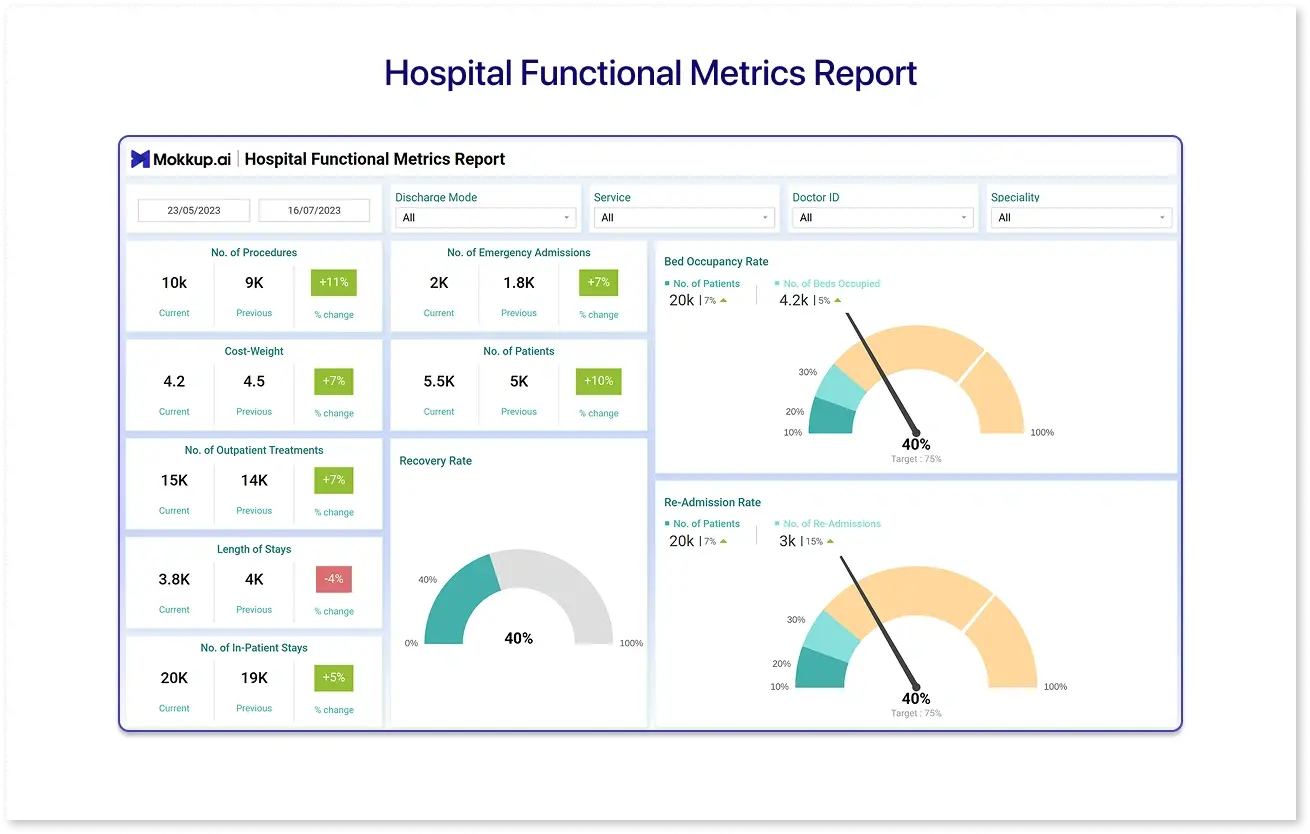
Operational KPIs track the efficiency and performance of hospital workflows, staff management, and resource utilization. These metrics are essential for optimizing day-to-day operations and ensuring clinical teams can focus on patient care without unnecessary delays or bottlenecks.
Key operational KPIs include:
- Bed Occupancy Rate: Measures the percentage of occupied beds at any given time, helping hospitals manage capacity and plan admissions effectively.
- Staff-to-Patient Ratio: This ratio tracks the availability of medical staff relative to the number of patients, ensuring adequate care coverage.
- Average Length of Stay (ALOS): Monitors how long patients remain in the hospital, highlighting opportunities for improved discharge planning and efficiency.
- Resource Utilization: Measures how effectively medical equipment, rooms, and staff are used, minimizing downtime and operational costs.
- Appointment Wait Times: Tracks patients' time for consultations, treatments, or procedures, reflecting overall service efficiency.
Dashboards like Mokkup’s Hospital Functional Metrics Report visualize these metrics, providing a clear overview of bed occupancy, staff allocation, and patient flow. By seeing trends at a glance, hospital administrators can adjust schedules, reallocate resources, and improve operational efficiency without disrupting patient care.
Monitoring operational KPIs ensures that hospitals run smoothly, reduce delays, and balance workload and available resources. Visual representations such as progress bars, heat maps, and trend charts make it easier to spot inefficiencies and take corrective action promptly. In addition, monitoring coding accuracy and claim acceptance rates can also help healthcare organizations identify revenue leakage and compliance risks. Integrating advanced healthcare coding software can streamline documentation workflows, improve coding precision, and support faster reimbursement cycles
Financial and Administrative KPIs for Success
Financial and administrative KPIs help healthcare organizations monitor revenue, control costs, and ensure smooth administrative operations. These metrics are critical for maintaining sustainability while delivering high-quality care.
Key financial and administrative KPIs include:
- Revenue Cycle Efficiency: Measures the time taken from patient registration to payment collection, helping identify bottlenecks in billing and claims processing.
- Cost per Patient: Tracks expenses associated with patient care, enabling better budgeting and resource allocation.
- Billing Accuracy Rate: Monitors the percentage of claims processed without errors, reducing denials and delays.
- Staff Productivity: Evaluates administrative and clinical staff output relative to workload, highlighting areas for optimization.
- Appointment No-Show Rate: Measures how often patients miss scheduled appointments, helping plan scheduling and resource allocation.
Tracking these KPIs ensures hospitals maintain financial health, optimize administrative processes, and allocate resources effectively, all while supporting better patient care and organizational growth.
Patient-Centric KPIs for Improving Care Quality
Patient-centric KPIs focus on the experience, satisfaction, and overall well-being of patients during their healthcare journey. These indicators provide insight into how effectively hospitals meet patient needs, both clinically and emotionally.
Key patient-focused KPIs include:
- Patient Satisfaction Score: Reflects overall patient perception of care, staff interaction, and hospital facilities.
- Average Waiting Time: Measures how long patients wait for appointments, treatments, or test results, directly affecting satisfaction levels.
- Discharge Process Efficiency: Tracks how smoothly and quickly patients are discharged after treatment, reducing frustration and delays.
- Patient Safety Events: Monitors incidents such as falls, medication errors, or infections, ensuring hospitals take corrective measures.
- Follow-Up Compliance: Evaluates whether patients adhere to follow-up visits or treatment plans, supporting long-term health outcomes.
Dashboards like Mokkup’s Patient Imaging Insights bring these KPIs together in a visual format, showing satisfaction trends, waiting times, and follow-up adherence at a glance. For example, a rising waiting time metric signals the need to review scheduling processes, while patient satisfaction scores can highlight service gaps that impact trust and retention.
By tracking patient-centric KPIs, healthcare organizations can continuously improve the quality of care, strengthen patient relationships, and foster a more positive hospital experience. Visualizing these metrics ensures patient voices are heard and integrated into hospital performance strategies.
Compliance, Safety & Risk Management KPIs
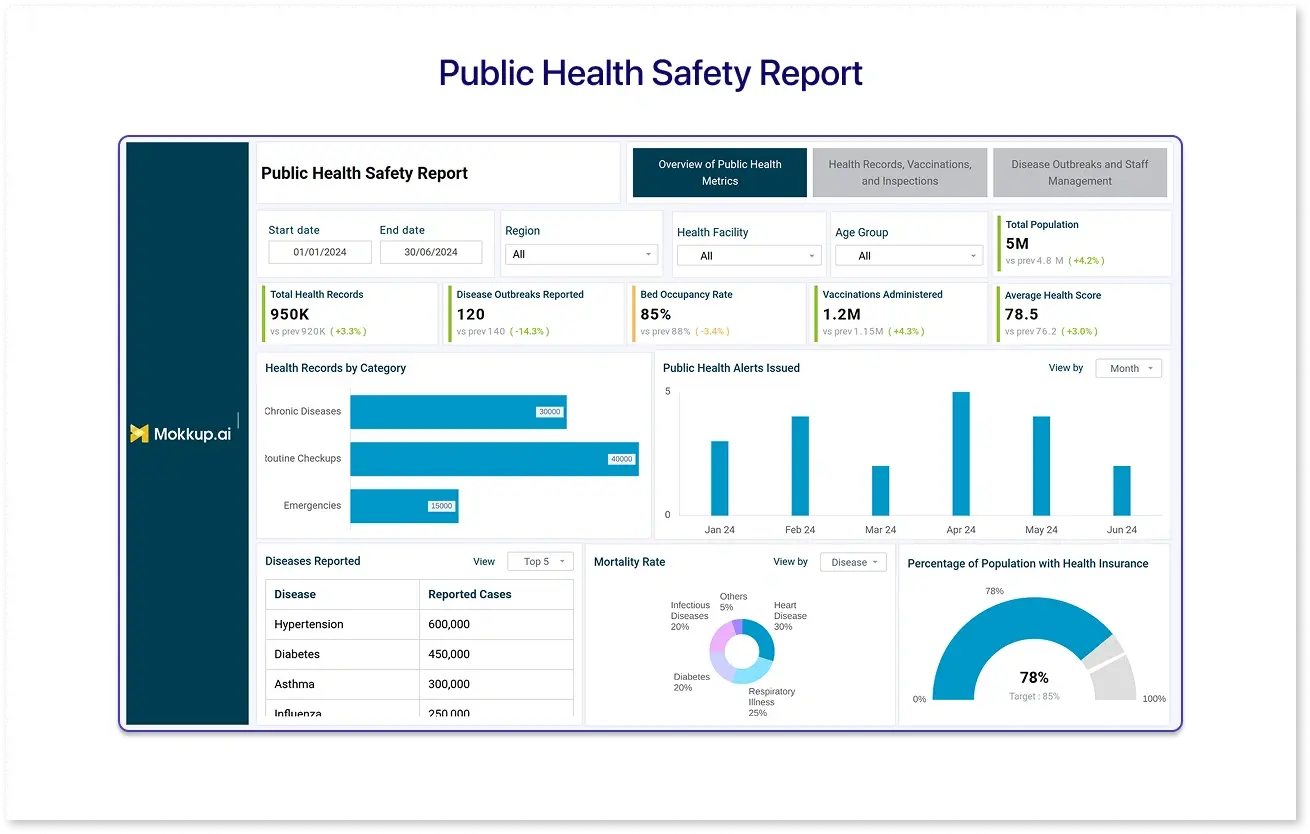
Compliance and safety KPIs ensure that healthcare organizations meet regulatory standards while minimizing risks to patients and staff. These hospital dashboard metrics are essential for maintaining trust, reducing liability, and creating a safe environment for care delivery.
Key compliance and safety KPIs include:
- Infection Control Rate: Tracks the occurrence of hospital-acquired infections, helping evaluate hygiene and safety protocols.
- Medication Error Rate: Measures how often prescription or administration errors occur, ensuring patient safety in clinical processes.
- Regulatory Compliance Score: Monitors adherence to healthcare regulations and accreditation standards, reducing the risk of penalties.
- Incident Reporting Frequency: Evaluates how often safety-related events are reported, promoting a culture of accountability.
- Staff Training Completion Rate: Ensures medical and administrative staff complete mandatory compliance and safety training.
Dashboards such as Mokkup’s Public Health Safety Report visualize these KPIs in real time, allowing hospital leaders to track safety incidents, infection rates, and training progress. By presenting this data in an accessible format, teams can quickly identify risk areas and take corrective action.
Monitoring compliance and safety KPIs helps hospitals meet external requirements and builds patient confidence. Consistently tracking these healthcare performance indicators ensures risks are minimized, safety standards are upheld, and regulatory obligations are met without disrupting care quality.
How to Select KPIs for Your Healthcare Dashboard
Choosing the right KPIs is one of the most important steps in building a healthcare dashboard. Too many metrics can make dashboards cluttered and hard to use, while too few may miss critical insights. The goal is to strike a balance between comprehensiveness and clarity.
Steps to select the right KPIs:
- Define organizational goals: Start by aligning KPIs with your hospital’s priorities, whether it’s improving patient outcomes, reducing costs, or enhancing efficiency.
- Engage stakeholders: Involve clinical teams, administrators, and compliance officers to identify which KPIs matter most to their functions.
- Prioritize measurable metrics: Focus on indicators with reliable data sources that can be tracked consistently.
- Balance categories: Include clinical, operational, financial, patient-centric, and compliance KPIs to cover all aspects of hospital performance.
- Leverage dashboard wireframes for clarity: Use tools like Mokkup’s Risk Response Assessment to bring selected KPIs together in one place, ensuring leaders and staff have a shared view of performance.
By carefully selecting KPIs, organizations avoid data overload and ensure dashboards deliver actionable insights. The best dashboards highlight only what matters most, helping decision-makers respond quickly and effectively.
Conclusion
A healthcare dashboard is more than just a reporting tool; it’s a way to bring clarity and focus to complex operations. By tracking key patient care KPIs across operations, finances, patient care, and compliance, healthcare providers can make decisions that improve both efficiency and outcomes. Many teams now rely on pre-built dashboard templates or AI-assisted designs, such as those offered by Mokkup, to set up modern healthcare dashboards quickly and ensure that critical hospital dashboard metrics are easy to interpret. Ultimately, well-designed medical dashboard analytics support a healthcare system that is more transparent, accountable, and patient-focused.
Frequently Asked Questions
Key KPIs include patient wait times, bed occupancy, readmission rates, staff utilization, and treatment costs. These give a balanced view of efficiency and care quality.
Select KPIs based on your organization’s goals, cost efficiency, patient satisfaction, or compliance, and ensure they align with decision-making needs. Templates like the Risk Response Assessment template help identify which metrics matter most for each focus area.
Healthcare dashboards include operational (staffing, scheduling), financial (billing, revenue), patient care (outcomes, satisfaction), and compliance (safety, incidents).
Operational and patient KPIs are best tracked daily, while financial and compliance metrics can often be reviewed weekly or monthly.
Keep dashboards simple, visually clear, and goal-driven, with grouped metrics, consistent color coding, and charts that highlight trends effectively. Structured designs, such as the Hospital Functional Metrics Report, ensure data is both easy to read and actionable.
Prompt it. Wireframe it with Mokkup.ai.