In project management, Key Performance Indicators (KPIs) are like guides that help us understand how well a project is doing. Picking the right KPIs is super important for success. This guide will talk about important things to think about when choosing project management KPIs. Whether you're starting a new project or improving an old one, knowing these things will make your project management better by keeping things clear, responsible, and always getting better.
Table of Contents
- Defining Project KPIs
- Types of Project KPIs
- Why Use KPIs in Projects
- Implementing KPIs Effectively by using Mokkup
Defining Project KPIs
Project Key Performance Indicators (KPIs) are the specific metrics and measurements used to evaluate and track a project's progress, performance, and success. These indicators serve as vital signposts, providing insights into how well a project aligns with its objectives and meets stakeholders' expectations.
Defining project KPIs involves carefully selecting and articulating the critical factors that will be monitored throughout the project lifecycle. These indicators should be directly tied to the project's goals, allowing for a clear assessment of whether the project is on the right track.
Types of Project KPIs
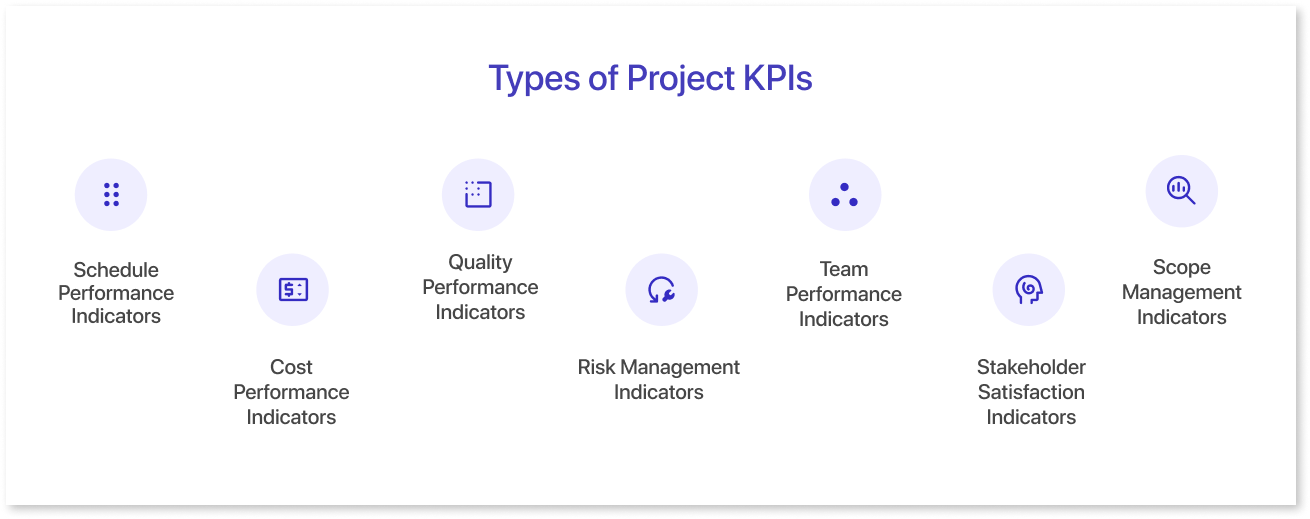
Project Key Performance Indicators (KPIs) come in various types, each serving a specific purpose in evaluating different aspects of a project's performance. Understanding these types is crucial for tailoring the measurement approach to a project's unique needs and goals. Here are some common types of project KPIs:
1. Schedule Performance Indicators:
- On-time delivery of project milestones.
- Adherence to project timelines and deadlines.
2. Cost Performance Indicators:
- Budget adherence and cost control.
- Cost efficiency in resource utilization.
3. Quality Performance Indicators:
- Defect rates and quality of deliverables.
- Customer satisfaction with project outputs.
4. Risk Management Indicators:
- Identification and mitigation of project risks.
- Response time to unforeseen issues.
5. Team Performance Indicators:
- Team productivity and efficiency.
- Collaboration and communication effectiveness.
6. Stakeholder Satisfaction Indicators:
- Stakeholder feedback and engagement.
- Meeting stakeholder expectations and requirements.
7. Scope Management Indicators:
- Adherence to project scope.
- Changes in project scope and their impact.
Selecting the right combination of these KPI types ensures a comprehensive evaluation of a project's overall performance, promoting a well-rounded understanding of its strengths, weaknesses, and areas for improvement. Tailoring KPIs to the project's specific needs contributes to more effective decision-making and successful project outcomes.
Why Use KPIs in Projects
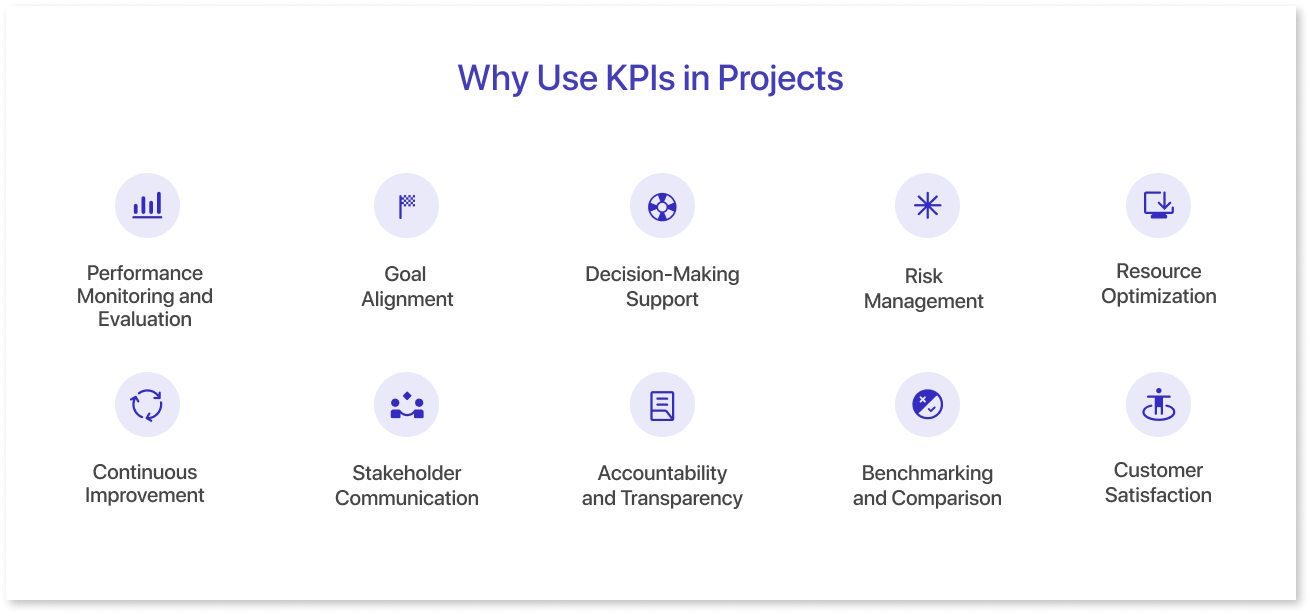
Using Key Performance Indicators (KPIs) in projects offers several compelling advantages, crucial in enhancing project management and ensuring successful outcomes. Here are key reasons why incorporating KPIs is essential:
1. Performance Monitoring and Evaluation:
- KPIs provide a systematic and measurable way to monitor and evaluate project performance.
- They offer real-time insights into progress, allowing timely identification of issues and areas needing improvement.
2. Goal Alignment:
- KPIs help align project activities with overall organizational goals and objectives.
- By focusing on key metrics, projects can ensure that their efforts contribute directly to the organization's strategic success.
3. Decision-Making Support:
- KPIs offer a data-driven foundation for decision-making.
- Project managers and stakeholders can make informed choices based on the quantitative performance data provided by KPIs.
4. Risk Management:
- KPIs assist in identifying and managing risks by highlighting deviations from the planned course.
- Early detection of potential issues allows for proactive risk mitigation strategies.
5. Resource Optimization:
- By measuring resource utilization and efficiency, KPIs help optimize time, budget, and workforce allocation.
- This leads to improved efficiency and cost-effectiveness in project execution.
6. Continuous Improvement:
- KPIs foster a culture of continuous improvement by providing feedback on what works well and what needs adjustment.
- Lessons learned from KPI analysis contribute to refining processes for future projects.
7. Stakeholder Communication:
- KPIs offer a clear and concise way to communicate project progress to stakeholders.
- Transparent reporting enhances trust and engagement among project team members and external stakeholders.
8. Accountability and Transparency:
- KPIs promote accountability by establishing clear expectations and measurable targets.
- Transparent reporting on KPIs ensures that all stakeholders know the project's status and performance.
9. Benchmarking and Comparison:
- KPIs enable benchmarking against industry standards or past project performance.
- Comparative analysis provides insights into how well the project is performing relative to expectations and benchmarks.
10. Customer Satisfaction:
- Quality and customer satisfaction KPIs help ensure that project deliverables meet or exceed stakeholder expectations.
- Customer-centric KPIs contribute to positive project outcomes and customer relationships.
In short, using KPIs in projects is instrumental in promoting efficiency, effectiveness, and overall success. By providing a structured and measurable approach to project management, KPIs empower teams to make informed decisions, adapt to changes, and continuously improve their project delivery processes.
Implementing KPIs Effectively by using Mokkup
Wireframing is a powerful technique that can significantly streamline the dashboard development process. By creating high-fidelity representations of your dashboard layout and functionality, you can identify potential issues early on, gather valuable feedback, and ensure your final product aligns with user needs. This is where Mokkup.ai comes into play, a cloud-based dashboard wireframing tool that empowers data analysts, developers, and business teams to collaborate seamlessly and create stunning data visualizations. offering a comprehensive cloud-based solution specifically designed to empower teams in crafting effective and visually appealing dashboards. Its intuitive interface, extensive library of elements and dashboard templates, and design capabilities make it an invaluable tool for anyone involved in the data visualization process.
How can Mokkup help you implement KPIs effectively?
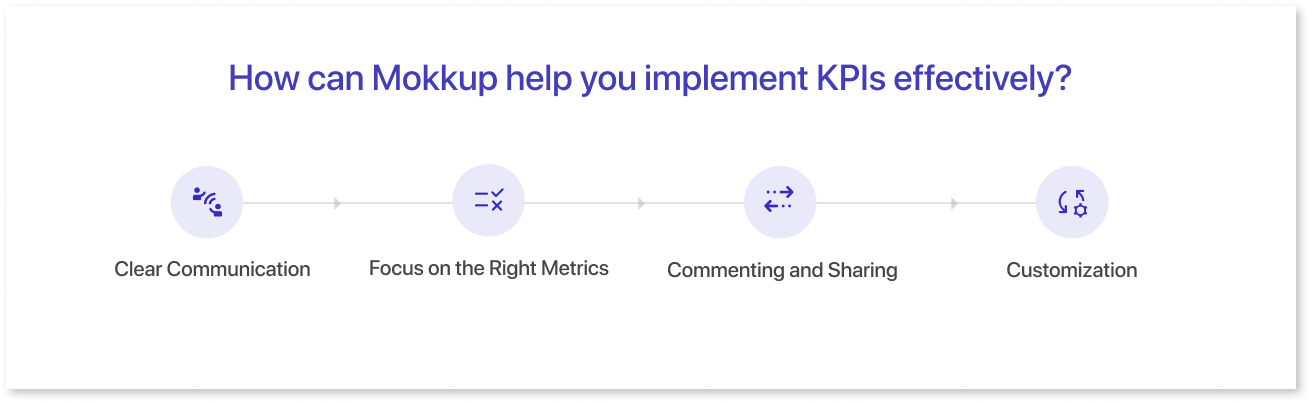
- Clear Communication: Mokkup allows you to present your KPIs in a clear and concise way. You can use charts, graphs, and other visuals to make the data easy to understand for everyone, from executives to frontline employees.
- Focus on the Right Metrics: Mokkup helps you prioritize your KPIs and focus on the ones that matter most. You can create different dashboards or use pre-built templates for different teams or projects, ensuring that everyone is tracking the metrics that are relevant to them.
- Commenting and Sharing: Mokkup makes sharing your dashboards with others easy. You can share them with your team or stakeholders. This fosters transparency, ensuring everyone is on the same page. Additionally, add your team members for collaboration during the prototyping phase.
- Customization: Mokkup offers a wide range of customization options so that you can create unique dashboards for your organization and brand.
KPI Dashboard Example
Let’s take Mokkup's project management dashboard wireframe, for example. This pre-built dashboard wireframe offers a solid foundation to quickly visualize your project's key metrics, like resource allocation, task completion rates, and project deadlines. But you're not limited to the default settings. Mokkup empowers you to adapt the template to your specific needs easily. Add custom KPIs relevant to your team, such as total work hours per project or project distribution across platforms. This flexibility ensures your dashboard not only reflects the core project planning metrics but also caters to your unique workflow, fostering clear communication with developers about your specific dashboard requirements.
In short, Mokkup's templates make creating dashboards faster and easier. They give you a head start and the freedom to customize them to fit your business perfectly. It's like having a quick launchpad and the ability to make it your own.
Conclusion
In conclusion, choosing the right project management KPI examples are crucial. It starts by having clear goals, ensuring everyone involved is on the same page, and adjusting as needed. Remember the importance of using tools like Mokkup, which makes the process faster and more user-friendly. It provides ready-made templates while allowing customization to fit the unique needs of each project. The key is to stay flexible, regularly check how things are going, and be willing to adapt your KPIs as the project evolves. Doing so creates a solid foundation for success, keeping your team accountable and always moving towards improvement.
Prompt it. Wireframe it with Mokkup.ai.