What Are Recruitment KPIs?
Recruitment KPIs (Key Performance Indicators) are measurable values that help recruitment managers evaluate the effectiveness and efficiency of their hiring processes. These HR KPIs provide insights into various aspects of recruitment, such as the time it takes to fill positions, the quality of hires, and the overall satisfaction of candidates and hiring managers. By tracking these metrics and performance, organizations can identify strengths and weaknesses in their recruitment strategies, make data-driven decisions, and ultimately improve their hiring outcomes. Common recruitment KPIs include time to hire, cost per hire, candidate quality, and offer acceptance rates, among others.
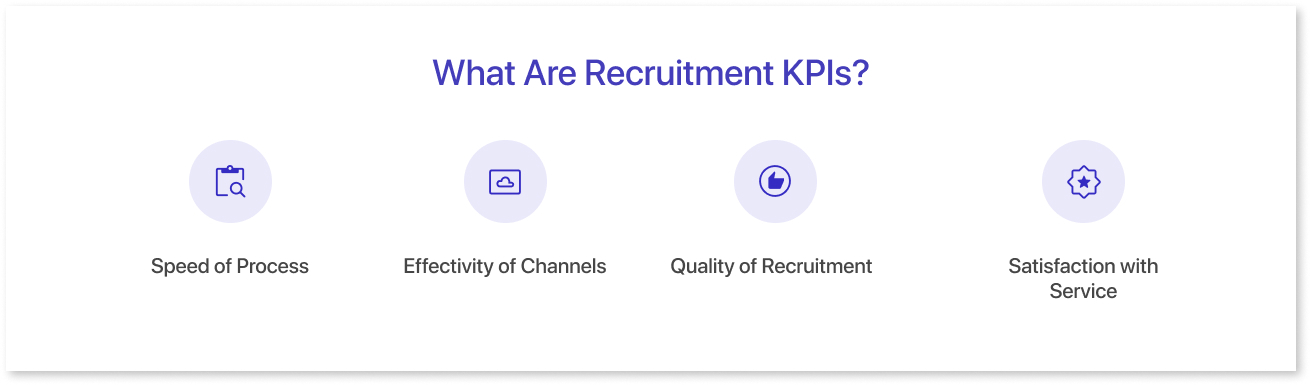
Table of Contents
- Why Do Recruitment KPIs Matter?
- What are the Most Important Recruiting KPIs to Track?
- How to Track Recruitment KPIs With Mokkup.ai?
In today’s competitive job market, recruitment managers play a crucial role in finding the right talent for their organizations. To enhance their performance and make informed hiring decisions, it’s essential to track hiring KPIs. These employee performance metrics provide valuable insights into the efficiency and effectiveness of the recruitment process. In this blog, we will explore the top 10 KPIs that recruitment managers need to focus on. By understanding and leveraging these indicators, managers can improve their hiring strategies and ultimately contribute to their organization's success.
Why Do Recruitment KPIs Matter?
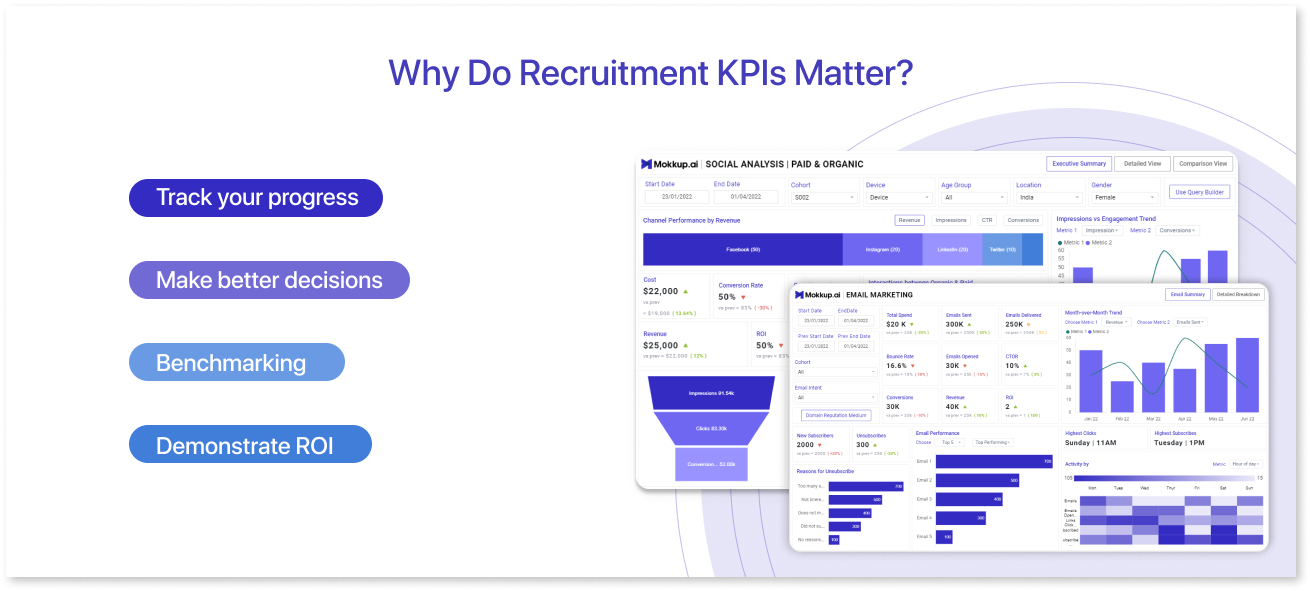
Recruitment KPIs are essential because they offer a clear view of how well the hiring process is working. By tracking these staffing KPIs, recruitment managers can understand whether they are meeting their goals, such as filling positions quickly or hiring high-quality candidates. Without KPIs, it’s difficult to pinpoint problems like hiring delays or ineffective recruitment channels.
Monitoring KPIs also helps reduce hiring costs and improve overall efficiency. For example, tracking the "cost per hire" allows managers to optimize spending, while metrics like "time to hire" ensure the process moves at the right pace. This leads to quicker hires and better resource use, saving both time and money.
These KPIs can help improve the candidate experience and employee retention. By tracking metrics like candidate satisfaction and turnover rates, managers can identify issues that may drive talent away. This leads to better hiring decisions, higher job acceptance rates, and a stronger workforce, all contributing to the company's long-term success.
Combining recruitment analytics with a structured employee engagement framework can also help HR teams improve workforce stability, onboarding experiences, and employee retention over time. Platforms like Sociabble help organizations centralize internal communication and employee engagement initiatives across teams.
What Are The Most Important Recruiting KPIs to track?
We’ve put together a list of key KPIs every recruitment manager should monitor. These KPIs can be grouped into four main categories: application, hiring, cost, and rejection.
Application KPIs
Application KPIs help track the early stages of the recruitment process. Even though this phase may seem passive—waiting for candidates to apply—there’s a lot you can do to attract the right talent.
1. Hiring Source Efficiency
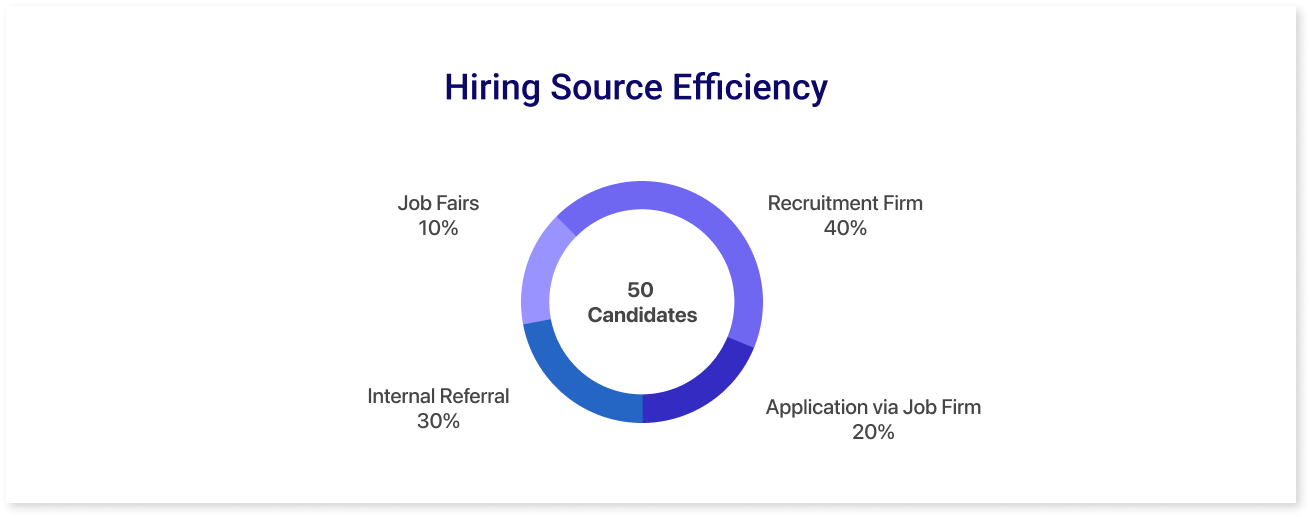
This KPI helps you see which recruiting channels give you the best candidates at the lowest cost, which is especially important if your company hires frequently.
2. Time To Hire
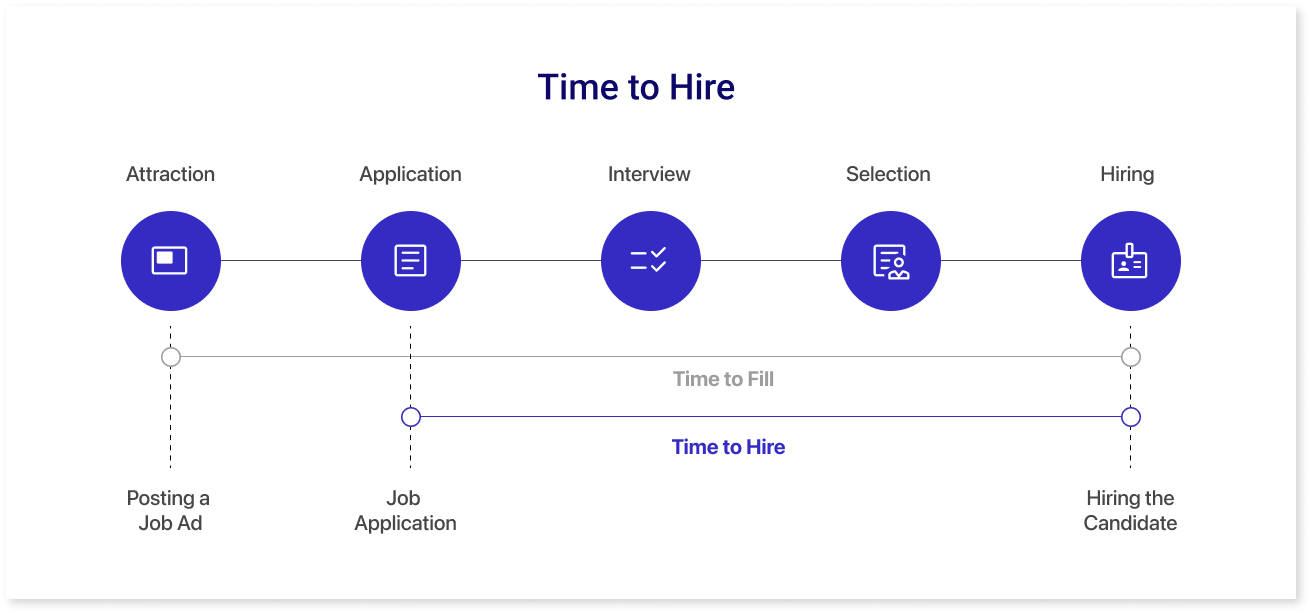
Time to hire tracks the time between receiving a job application and offering the job. Using tools like skill assessments can speed up this process and ensure you find the right candidate quickly.
3. Unfinished Application Rate
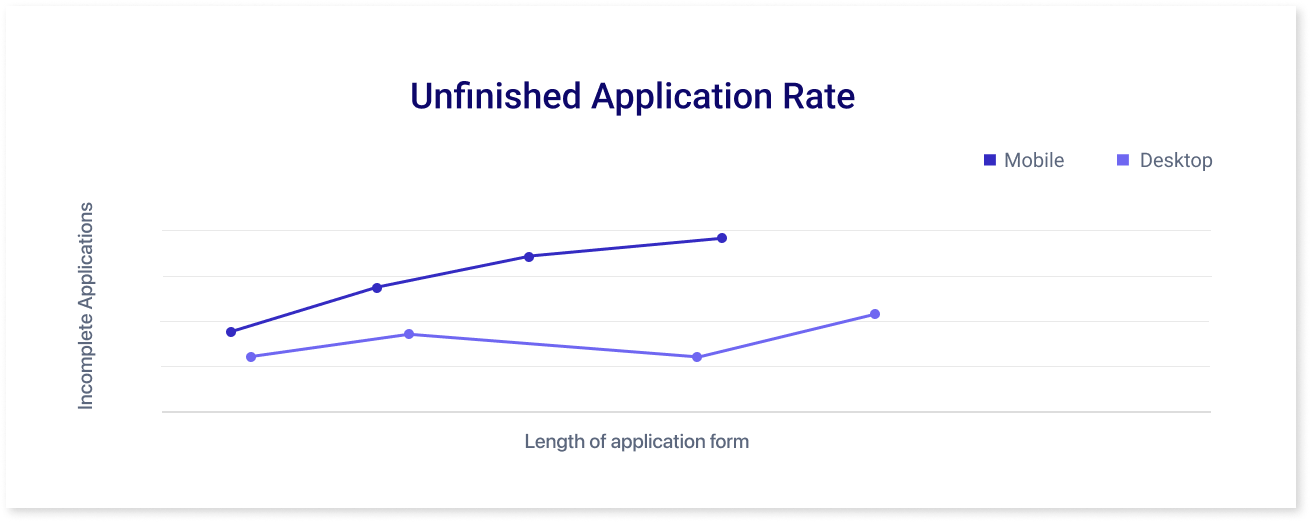
This KPI shows the number of candidates who start but don’t complete their applications. While a high rate isn’t always a concern, it’s something to monitor, especially if it leads to a lack of qualified applicants. Divide the number of submitted applications by the total number of started applications to calculate the unresolved application rate.
Hiring KPIs
Now that we've covered the KPIs in the recruitment industry examples for the application process, let's move on to hiring. This phase of recruitment covers the complex parts of recruitment, where you'll assess and interview candidates.
4. Offer Acceptance Rate (OAR)
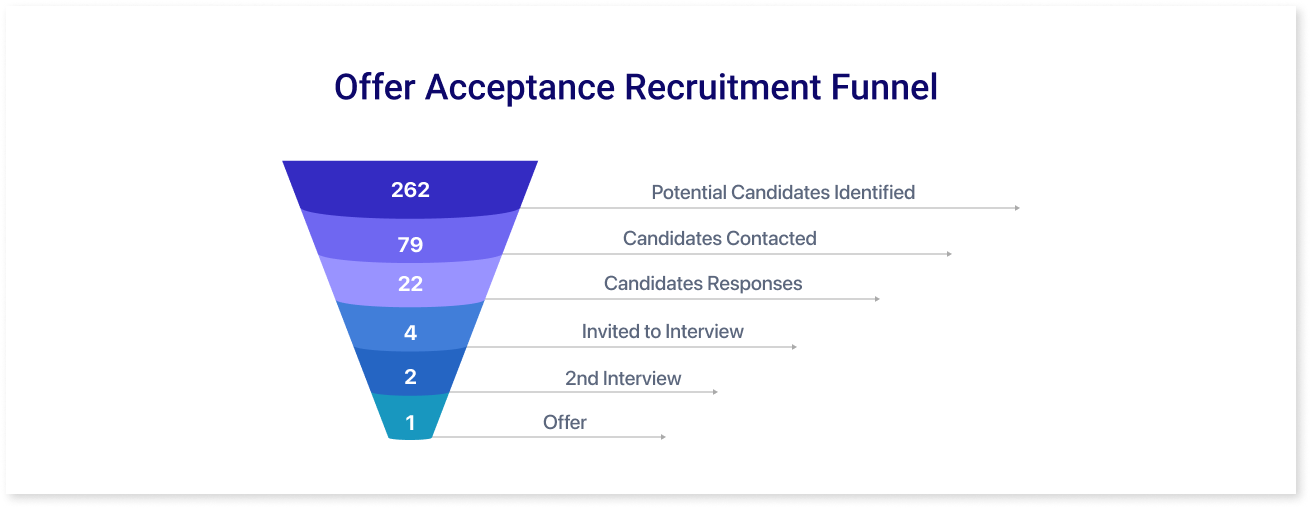
This KPI measures how many candidates accept the job offers you extend, expressed as a percentage.
5. Qualified Applicants Per Vacancy
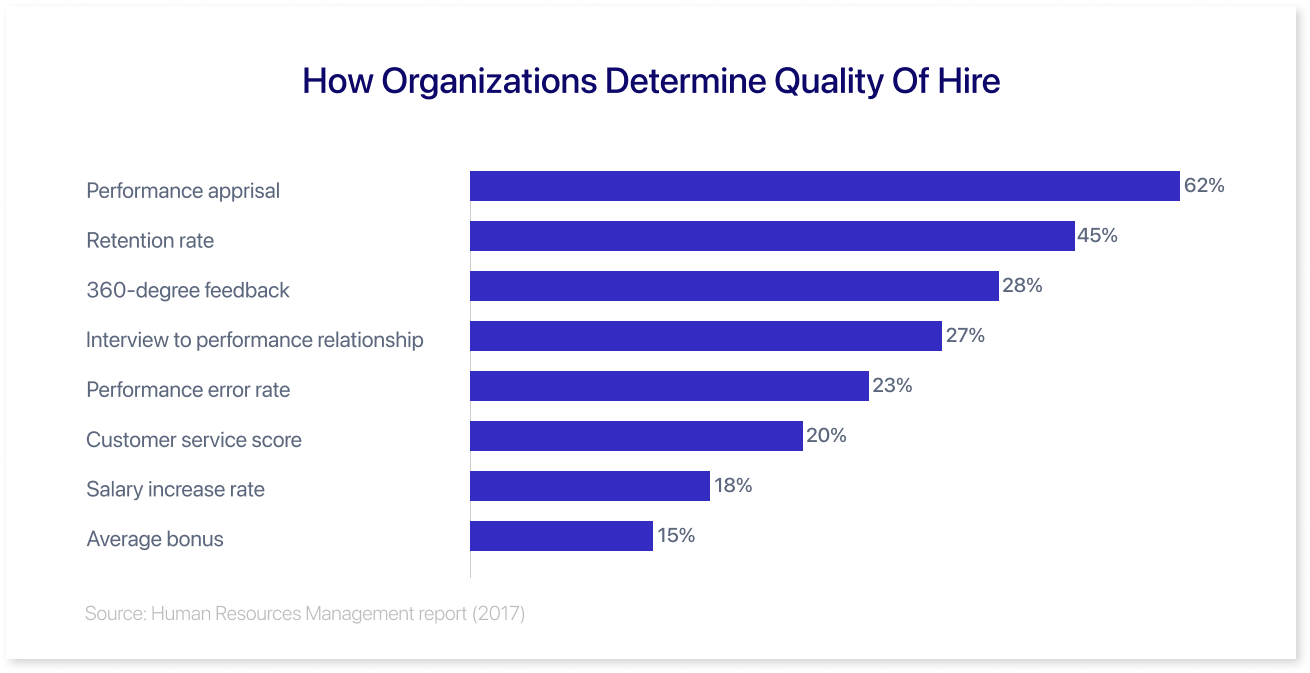
This tracks the number of qualified candidates you receive for each job opening. A high number indicates a successful recruitment process, while a low number may mean job descriptions need to be clearer.
6. Interviews Per Hire
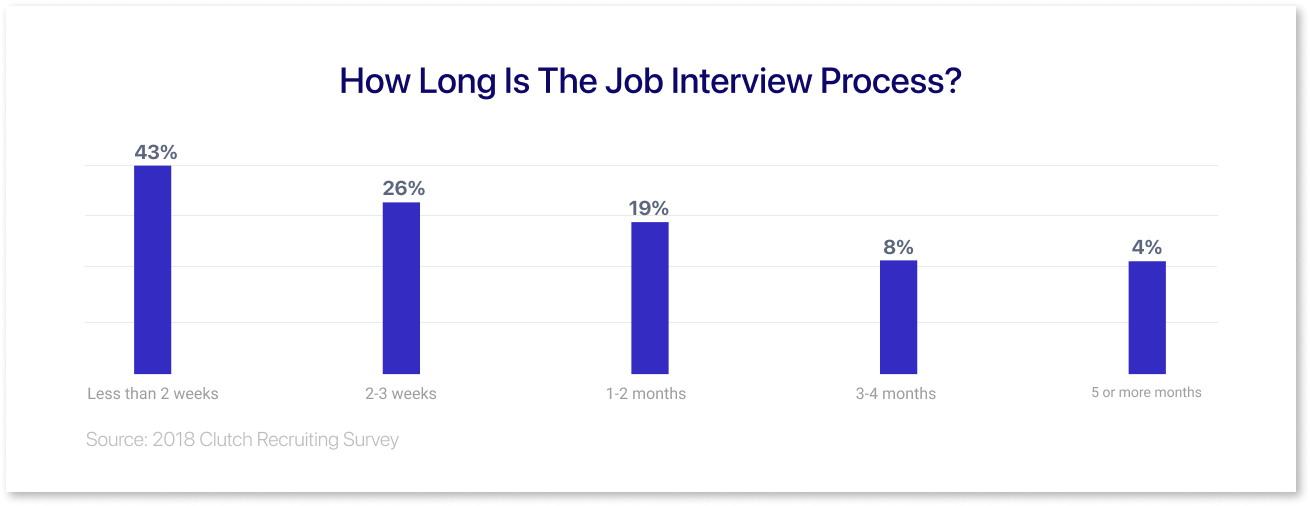
This tracks how many interviews are conducted before making a hire, helping you see if the interview process is efficient.
7. Candidate Experience Satisfaction
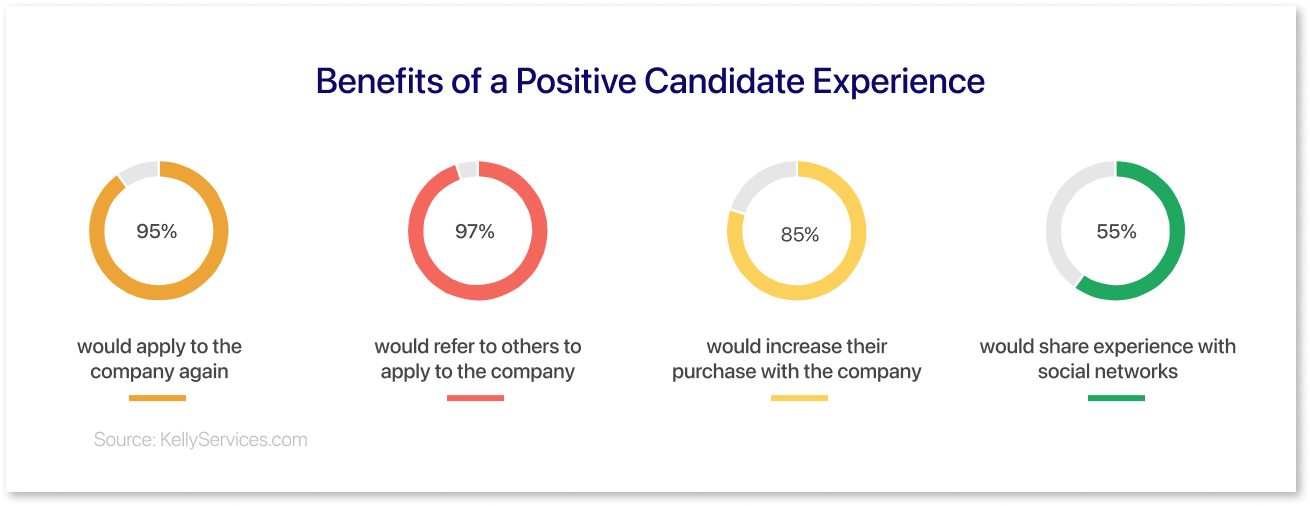
This metric measures how candidates feel about their experience throughout the hiring process. Surveys can be used to gather feedback, helping you improve candidate engagement. After the screening process is complete, you can send a survey to your candidates, asking them to rate their experience on a scale from 1 to 10. You can determine the average and track its evolution over time.
Cost KPIs
These KPIs focus on the financial side of recruitment, ensuring the process stays within budget.
8. Cost Per Hire
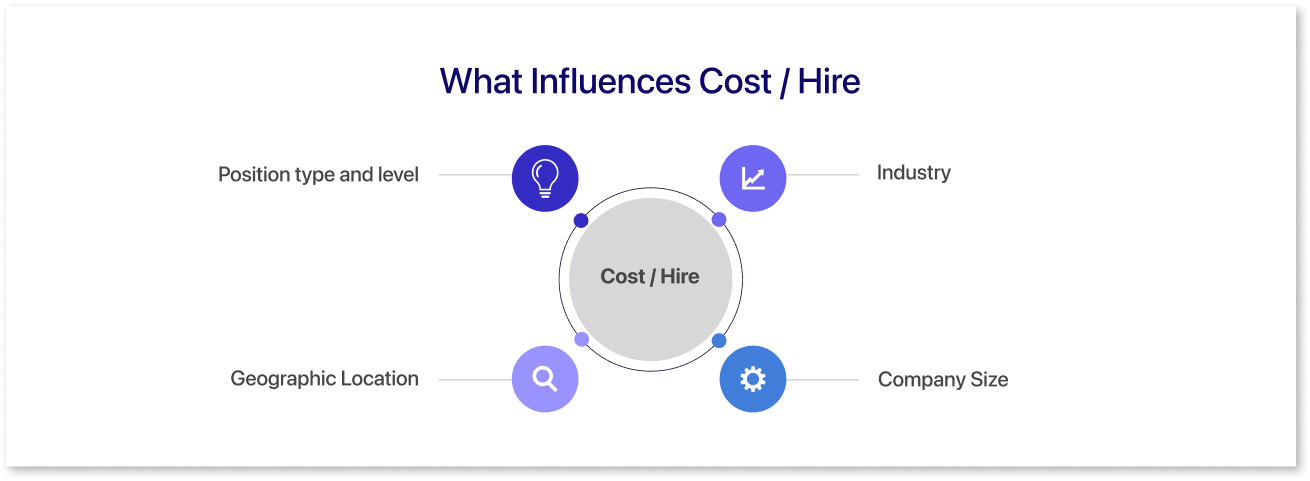
This KPI shows the average cost involved in hiring a new employee, including recruitment, onboarding, and training.
9. Cost Of Vacancy
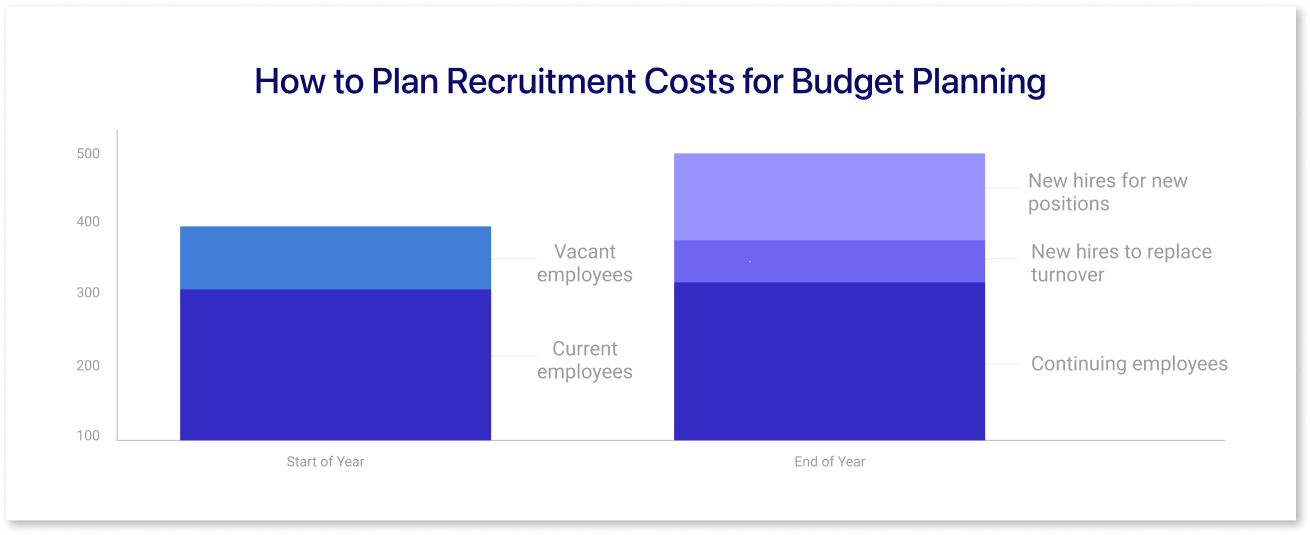
A vacant position can lead to a loss of productivity. This KPI estimates the financial impact of not filling a position in a timely manner.
Rejection Key Performance Indicators
10. Annual Turnover Rate
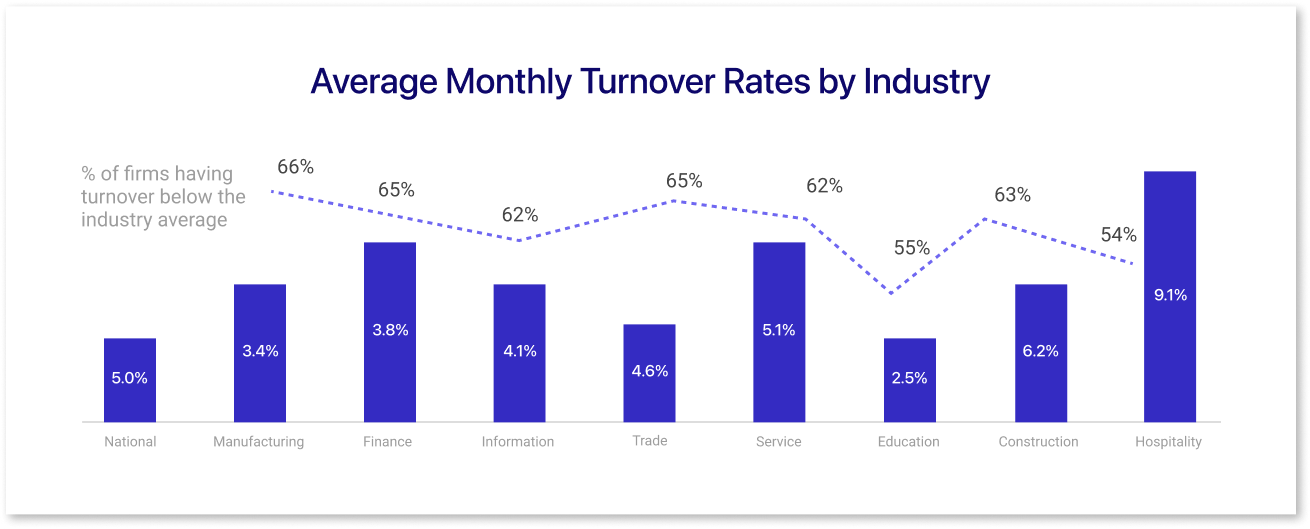
This tracks how many employees leave within their first year. A high turnover rate can indicate problems in hiring or onboarding.
11. Rate Of Rejection
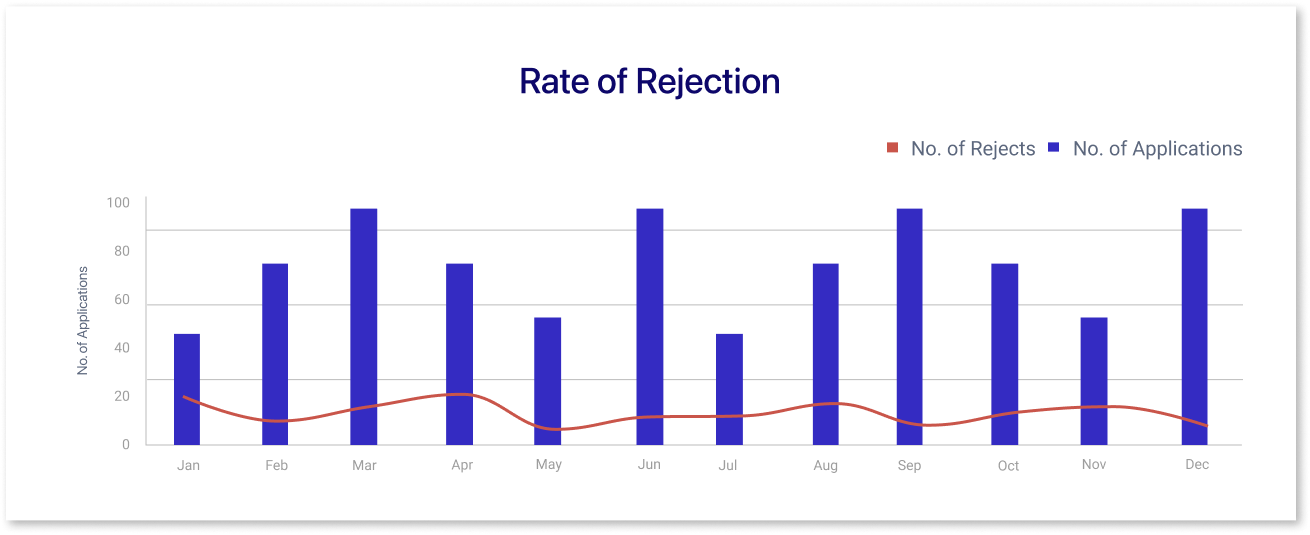
This measures how many candidates are rejected during the application process, often due to a lack of qualifications. Monitoring this helps refine job requirements and improve candidate matching.
How to Track Recruitment KPIs With Mokkup.ai?
Creating a KPI dashboard wireframe using Mokkup.ai will allow you to provide hiring managers with a clear, visual representation of recruitment data. It enables HR teams to create wireframes before they commit to building the final dashboard. This approach allows for strategic planning and visualization without the need for real-time data integration.
With Mokkup’s pre-built dashboard templates, such as the HR Recruitment Dashboard wireframe, users can design dashboards that reflect their organization’s specific hiring processes and goals. This approach helps streamline the visualization of key recruitment metrics, offering clarity on how the final dashboard will look and function once fully developed.
For instance, the HR Recruitment Dashboard wireframe offers:
- Data Overview: Key metrics like vacancies, applications, and shortlisted candidates can provide a quick, comprehensive view of the recruitment pipeline. By regularly entering the numbers for these, hiring managers can use the dashboard to identify patterns or areas that need attention.
- Trend Visualization: The wireframe includes a Hiring to Vacancy Trend graph, using historical data to visualize trends over time. This helps showcase the flow of vacancies and hires, highlighting any gaps that might need action—though these trends will require manual updates based on internal data.
- Source Analysis: By filling in the Hired Candidates by Source pie chart, recruiters can get a visual breakdown of where hires are coming from, such as LinkedIn, campus hiring, or referrals. This insight can help in optimizing recruitment channels.
- Compensation and Demographics: Charts like the Salary Distribution by Experience and Hired by Age Bracket allow for easy comparison of salary bands and age demographics. These sections give a clear and structured overview of how hires align with salary ranges and experience levels.
Overall, using Mokkup.ai’s wireframes, recruitment teams can create polished, data-driven dashboards that deliver clear insights to stakeholders. The flexibility of data input gives users full control over customizing their dashboards, providing a highly adaptable tool for visualizing recruitment performance.
Summing Up
In summary, understanding and utilizing staffing KPIs is crucial for effective talent management and improving recruitment outcomes. Organizations can make informed decisions that enhance their hiring processes by focusing on key metrics like the number of job applications received, the offer acceptance rate, the cost per hire, etc.
Human resources KPI examples not only help identify strengths and weaknesses but also drive improvements through HR analytics. These insights enable businesses to optimize their recruitment strategies, ensuring they attract and retain the best talent. By regularly monitoring these KPIs, companies can streamline their recruitment efforts, ultimately contributing to a more efficient and successful workforce. Embracing these practices will help organizations thrive in a competitive job market, ensuring they have the right people in the right roles to achieve their goals.
Prompt it. Wireframe it with Mokkup.ai.