
What is a Substance Use Disorder Recovery Aftercare Dashboard?
A Substance Use Disorder Recovery Aftercare Dashboard is a centralized tool designed for recovery program leadership to monitor post-treatment patient progress and program effectiveness. It provides visibility into long-term recovery retention, relapse rates, aftercare engagement, follow-up adherence, employment reintegration, and quality of life improvements. Unlike static reports, this dashboard acts as a comprehensive recovery aftercare tracking system, helping treatment centers track patient outcomes, program effectiveness, and support service utilization in one place.
How to Create a Substance Use Disorder Recovery Aftercare Dashboard
You don't need to build your report from scratch—just start with a ready-to-use Substance Use Disorder Recovery Aftercare Dashboard template from Mokkup. Add in your data and export it however you like. Here's how to do it:
Create or Log in to Your Mokkup Account
Start by signing up on Mokkup.ai using your email. If you already have an account, just log in, and you'll be good to go.
Choose and Customize Your Dashboard Template
Find the Substance Use Disorder Recovery Aftercare Dashboard template in the Templates section. Use the drag-and-drop editor to adjust KPIs, edit filters, or add elements based on your data.
Export to Your BI Tool
Once your dashboard wireframe is ready, use the BI Tool Export feature to send it directly to Power BI or Tableau for further analysis and enhancements. You can also download the dashboard as a PDF, PNG, or JPEG, embed it on a platform, or invite your team to collaborate.
Note: This is a Pro template. You'll need a Pro subscription on Mokkup to use and customize this dashboard wireframe. Upgrade anytime to unlock full access.
Substance Use Disorder Recovery Aftercare Dashboard Example
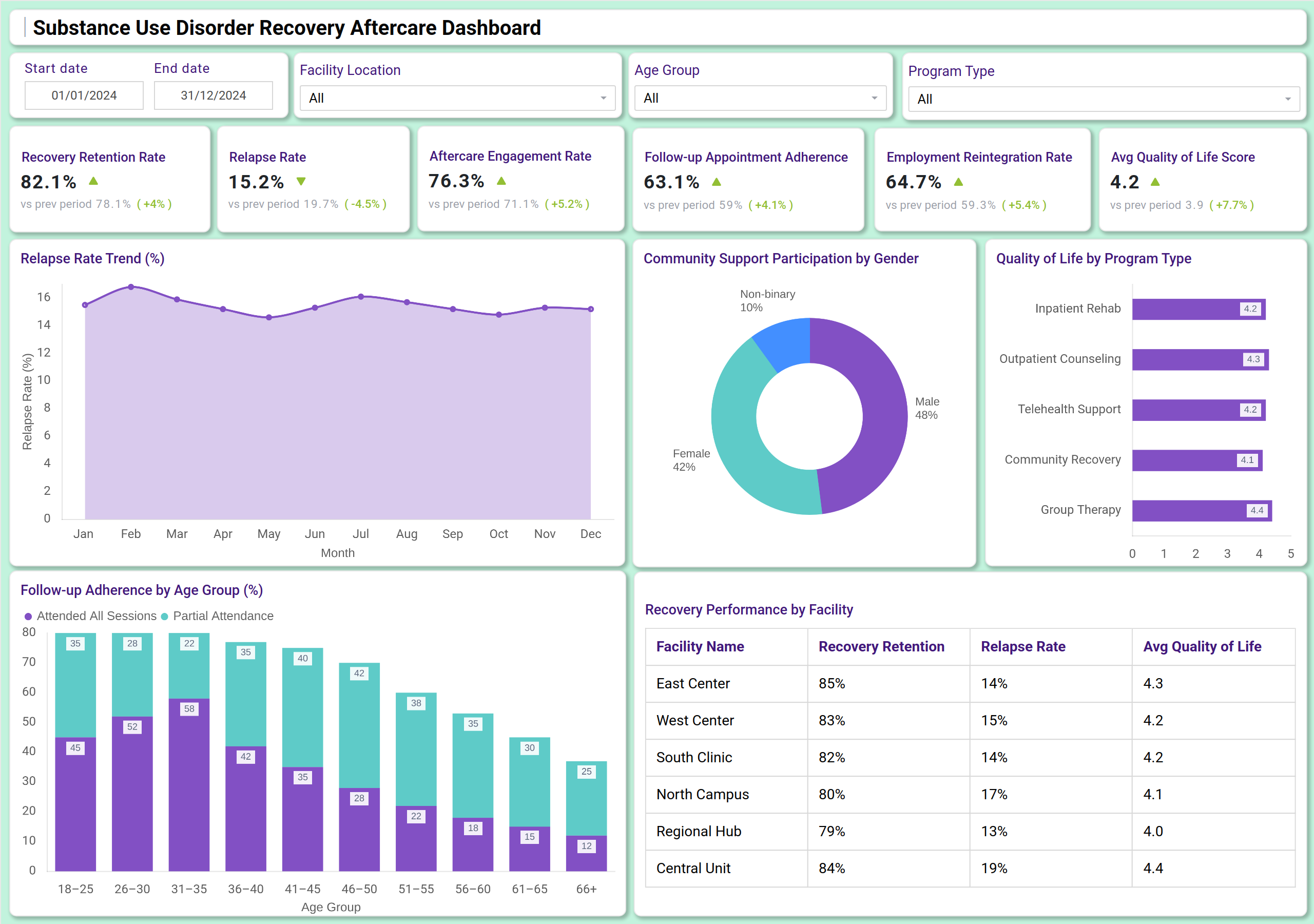
You can create a Substance Use Disorder Recovery Aftercare Dashboard with a mix of KPI tiles and visualizations. At the top, KPI cards track key metrics, including recovery progress rate, relapse rate, aftercare engagement, follow-up appointment adherence, employment reintegration, and average quality of life scores. Below that, charts show trends in relapse rates over time, community support participation by gender, quality of life by program type, and follow-up adherence by age group. Facility comparison tables help monitor performance across different treatment centers. Together, this dashboard serves as a tool for tracking recovery aftercare program metrics, ensuring leadership has visibility into both clinical and social recovery outcomes.
How to Analyze Data in Substance Use Disorder Recovery Aftercare Dashboards
Here's how recovery programs can make the most of the data available on the Substance Use Disorder Recovery Aftercare Dashboard:
- Track recovery progress: Use trend charts to monitor relapse rates and retention patterns over time.
- Monitor program engagement: Analyze aftercare participation rates across different demographics.
- Evaluate support effectiveness: Compare follow-up appointment adherence rates across age groups and facilities.
- Assess social reintegration: Connect employment rates with quality of life scores to measure holistic recovery.
- Compare facility performance: Review patient satisfaction, recovery rates, retention rates, relapse rates, and quality of life scores across different locations.
- Measure program impact: Analyze quality of life improvements by program type to identify the most effective treatments.
Benefits of Substance Use Disorder Recovery Aftercare Dashboards
- Improved outcome visibility: Comprehensive tracking of recovery metrics across clinical and social dimensions.
- Program effectiveness monitoring: Identifies which treatment approaches deliver the best long-term results.
- Resource optimization: Helps allocate support resources to programs and facilities with demonstrated success.
- Patient progress tracking: Monitors individual and group recovery journeys through critical phases of aftercare.
- Evidence-based program decisions: Quality of life and retention data help justify program investments.
- Stakeholder reporting: Works as a substance use disorder recovery reporting and compliance dashboard for funders and regulators.
Together, these elements provide leadership with visibility into clinical and social recovery, making it easier to align support services with patient outcomes. That's why many recovery program leaders call it the best aftercare dashboard for substance use recovery programs when scaling treatment effectiveness and patient success.
KPIs to Track in Substance Use Disorder Recovery Aftercare Dashboards
- Recovery Retention Rate: Percentage of patients maintaining recovery over a specified period after treatment completion.
- Relapse Rate: Proportion of patients who return to substance use during the aftercare monitoring period.
- Aftercare Engagement Rate: Percentage of patients actively participating in recommended aftercare support services.
- Follow-up Appointment Adherence: Rate of completed scheduled follow-up appointments with healthcare providers.
- Employment Reintegration Rate: Percentage of recovered individuals who have successfully returned to employment.
- Average Quality of Life: Patient-reported quality of life scores measured on standardized assessment scales.
- Community Support Participation: Demographic breakdown of engagement in community-based recovery support.
- Program Type Effectiveness: Comparison of outcomes across different treatment approaches and modalities.
Frequently Asked Questions
1. Who should use a Substance Use Disorder Recovery Aftercare Dashboard?
Program directors, clinical supervisors, aftercare coordinators, and funding organizations are responsible for recovery program performance monitoring.
2. Can this dashboard help improve recovery outcomes?
Yes. Leadership can make better program decisions by connecting aftercare engagement with long-term recovery rates and quality of life improvements.
3. How does it support patient recovery quality?
It combines clinical KPIs like relapse rates with social metrics like employment and quality of life to provide a holistic view of recovery success.
4. Is this dashboard useful for compliance and reporting?
Yes, because a substance use disorder recovery workflow and outcome analytics dashboard supports governance, funding reporting, and regulatory compliance.