
What is a Geothermal Plant Spare Parts Inventory Dashboard?
A Geothermal Plant Spare Parts Inventory Dashboard Template is a centralized digital platform used to monitor, manage, and optimize spare parts availability across geothermal power plant operations. It consolidates inventory data related to critical spares, stock levels, reorder points, supplier lead times, and procurement risks into a single operational view.
As a core geothermal inventory management system, the dashboard wireframe supports maintenance, supply chain, and operations teams by ensuring essential spares are available to sustain plant reliability. By enabling real-time geothermal plant inventory tracking, it helps reduce downtime caused by missing parts, long procurement cycles, or supplier dependency. The dashboard also plays a key role in aligning geothermal maintenance spare inventory with planned and unplanned maintenance activities.
How to Create a Geothermal Plant Spare Parts Inventory Dashboard
You don’t need to build your report from scratch, just start with a ready-to-use Geothermal Plant Spare Parts Inventory dashboard template from Mokkup. Add in your data and export it however you like. Here’s how to do it:
1. Create or Log in to Your Mokkup Account
Start by signing up on Mokkup.ai using your email. If you already have an account, just log in, and you’ll be good to go.
2. Choose and Customize Your Dashboard Template
Find the Geothermal Plant Spare Parts Inventory Dashboard template in the Templates section. Use the drag-and-drop editor to adjust KPIs, edit filters, or add elements based on your data.
3. Export to Your BI Tool
Once your dashboard wireframe is ready, use the BI Tool Export feature to send it directly to Power BI or Tableau for further analysis and enhancements. You can also download the dashboard as a PDF, PNG, or JPEG, embed it on a platform, or invite your team to collaborate.
Note: This is a Pro template. You’ll need a Pro subscription on Mokkup to use and customize this dashboard wireframe. Upgrade anytime to unlock full access.
Geothermal Plant Spare Parts Inventory Dashboard Example
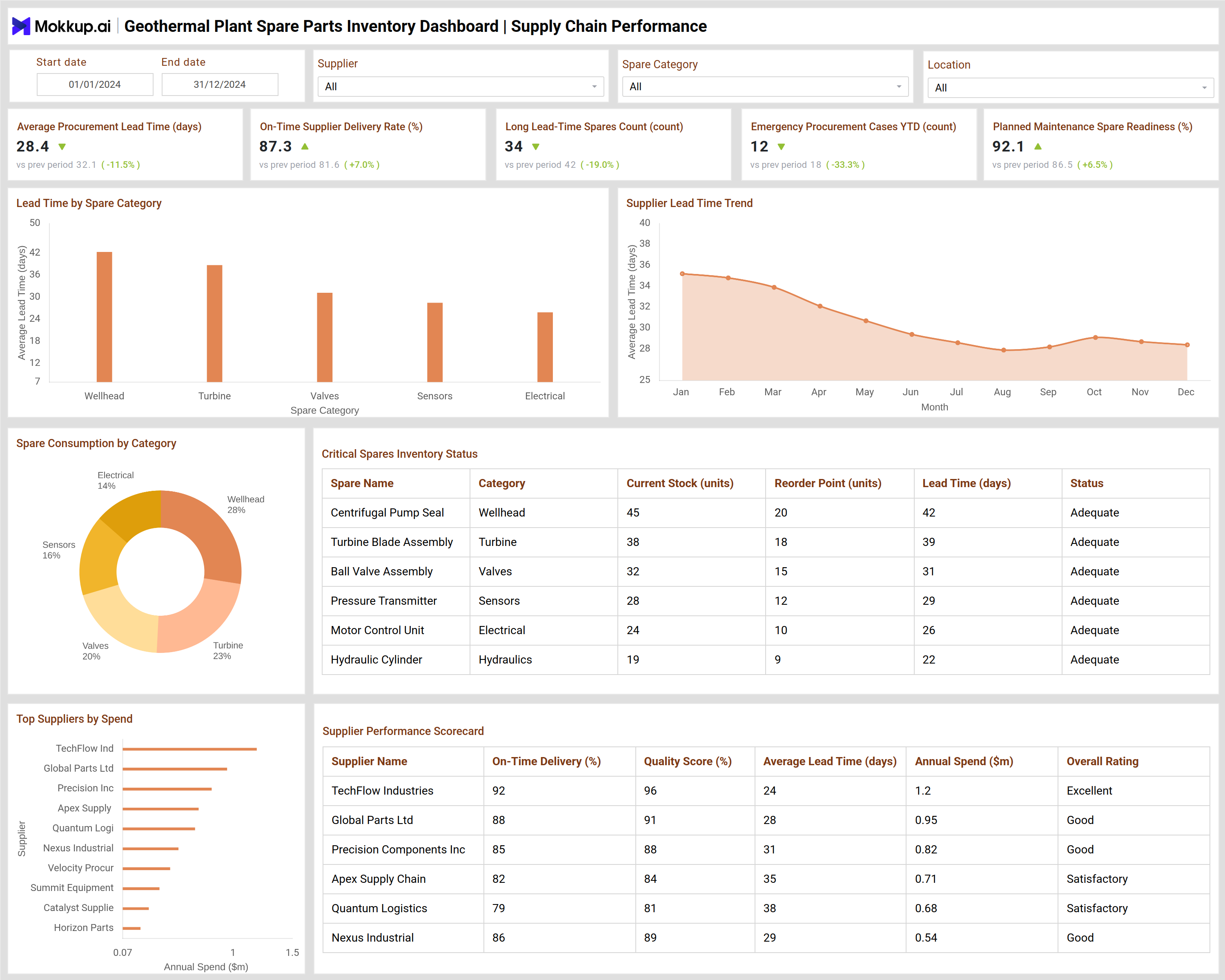
You can build a geothermal spare parts dashboard using the modules shown in the reference images to manage geothermal plant spare inventory and supply chain performance in a single view. The dashboard typically starts with high-level KPIs such as total critical spare SKUs, critical spares availability percentage, stockout incidents year-to-date, items below minimum stock levels, and readiness scores for wells and plant assets. These KPIs provide an immediate and clear snapshot of overall inventory health.The spare availability section then visualizes inventory availability trends over time, enabling teams to identify improvement patterns or emerging risks within the geothermal plant spare inventory. Stock status by criticality shows whether wellhead equipment, turbine parts, valves, sensors, or electrical components are adequately stocked, running low, or at risk of stockout.
Lead time distribution by supplier helps procurement teams using the geothermal spare parts dashboard compare vendor performance and identify sourcing and dependency risks.Detailed inventory tables present SKU-level data such as current stock, minimum stock levels, lead times, and unit value. This supports accurate geothermal spare stock monitoring and allows teams to prioritize high-value or long lead-time components. The supply chain performance view extends this analysis by tracking procurement lead times, emergency procurement cases, supplier delivery performance, and planned maintenance spare readiness, creating a complete and actionable inventory-to-procurement workflow.
How to Analyze Geothermal Plant Spare Parts Inventory Dashboard
Here is how you can analyze data from this dashboard:
- Critical Spare Availability Check: Review critical spare availability to confirm high-risk components are always in stock.
- Stockout Incident Analysis: Track stockout incidents to identify recurring gaps in inventory planning.
- Minimum Stock Breach Monitoring: Monitor items below minimum stock levels to prioritize urgent replenishment.
- Inventory Trend Assessment: Analyze inventory availability trends to detect seasonal or demand-driven fluctuations.
- Criticality-Based Stock Review: Compare stock status by criticality to focus on spares with the highest operational impact.
- Supplier Lead Time Evaluation: Evaluate supplier lead time distribution to identify vendors causing procurement delays.
- Long Lead-Time Risk Analysis: Track long lead-time spares to determine buffer stock or alternate sourcing needs.
- Consumption Pattern Analysis: Analyze spare consumption by category to align inventory levels with actual usage.
- Emergency Procurement Review: Review emergency procurement cases to uncover weaknesses in supply planning.
- Supplier Performance Optimization: Use supplier performance scorecards to improve sourcing and contract decisions.
Benefits of Geothermal Plant Spare Parts Inventory Dashboard
The following are the benefits of using this dashboard:
- Improved Spare Visibility: Improves visibility into spare availability across geothermal plants and well fields.
- Reduced Unplanned Downtime: Reduces downtime caused by spare shortages or delayed procurement.
- Stronger Maintenance Alignment: Strengthens maintenance planning by aligning spares with scheduled activities.
- Reliable Supply Chain Performance: Enhances supply chain reliability through continuous supplier tracking.
- Lower Emergency Costs: Minimizes emergency procurement costs with proactive inventory control.
- Optimized Inventory Levels: Supports data-driven optimization for high-value and critical spares.
- Higher Operational Readiness: Improves readiness for both corrective and preventive maintenance.
- Balanced Working Capital: Optimizes working capital by balancing spare availability and holding costs.
KPIs to Track in Geothermal Plant Spare Parts Inventory Dashboard
The following key KPIs can be tracked by using this dashboard:
- Total Critical Spare SKUs: Measures the number of spare parts classified as critical for plant operations.
- Critical Spares Availability (%): Indicates the percentage of critical spares currently available in inventory.
- Stockout Incidents (YTD): Tracks how often required spares were unavailable when needed.
- Items Below Minimum Stock Level: Identifies spares that have fallen below defined safety thresholds.
- High-Risk Single-Source Spares: Highlights spares dependent on a single supplier with no backup option.
- Readiness Score for Wells (%): Measures spare availability readiness for well maintenance activities.
- Average Procurement Lead Time (days):Shows the average time required to procure spare parts.
- On-Time Supplier Delivery Rate (%): Evaluates supplier reliability in meeting delivery commitments.
- Long Lead-Time Spares Count: Tracks spares that require extended procurement cycles.
- Emergency Procurement Cases (YTD): Measures the frequency of urgent, unplanned spare purchases.
- Planned Maintenance Spare Readiness (%): Indicates whether spares are available ahead of scheduled maintenance.
Frequently Asked Questions
Q1. Why is a spare parts inventory dashboard important for geothermal plants?
It ensures critical spares are available to maintain continuous operations and prevent downtime.
Q2. What types of spares does the dashboard track?
It tracks wellhead equipment, turbine components, valves, sensors, electrical parts, and control systems.
Q3. How does the dashboard support supply chain management?
It provides visibility into lead times, supplier performance, and procurement risks.
Q4. Can this dashboard reduce emergency procurement?
Yes, by identifying low stock and long lead-time risks early, it minimizes urgent purchases.
Q5. Who typically uses this dashboard?
Maintenance planners, supply chain teams, procurement managers, and plant operations leaders.