
What is an Electric Power Transmission Workforce Dashboard?
An electric power transmission workforce dashboard is a centralized analytics tool used to monitor, manage, and optimize workforce operations across transmission networks. It brings together workforce availability, utilization, productivity, safety compliance, certifications, and regional deployment into a single view. By combining operational and HR data, the dashboard supports electric grid workforce management by enabling utilities to align manpower with transmission activities such as maintenance, inspections, construction, and outage response. This data-driven approach improves workforce planning, reduces operational risks, and ensures regulatory compliance across transmission operations.
How to Create an Electric Power Transmission Workforce Dashboard
You don’t need to build your report from scratch, just start with a ready-to-use dashboard template from Mokkup. Add in your data and export it however you like. Here’s how to do it:
1. Create or Log in to Your Mokkup Account
Start by signing up on Mokkup.ai using your email. If you already have an account, just log in, and you’ll be good to go.
2. Choose and Customize Your Dashboard Template
Find the Electric Power Transmission Workforce Dashboard template in the Templates section. Use the drag-and-drop editor to adjust KPIs, edit filters, or add elements based on your data.
3. Export to Your BI Tool
Once your dashboard wireframe is ready, use the BI Tool Export feature to send it directly to Power BI or Tableau for further analysis and enhancements. You can also download the dashboard as a PDF, PNG, or JPEG, embed it on a platform, or invite your team to collaborate.
Note: This is a Pro template. You’ll need a Pro subscription on Mokkup to use and customize this dashboard wireframe. Upgrade anytime to unlock full access.
Electric Power Transmission Workforce Dashboard Example
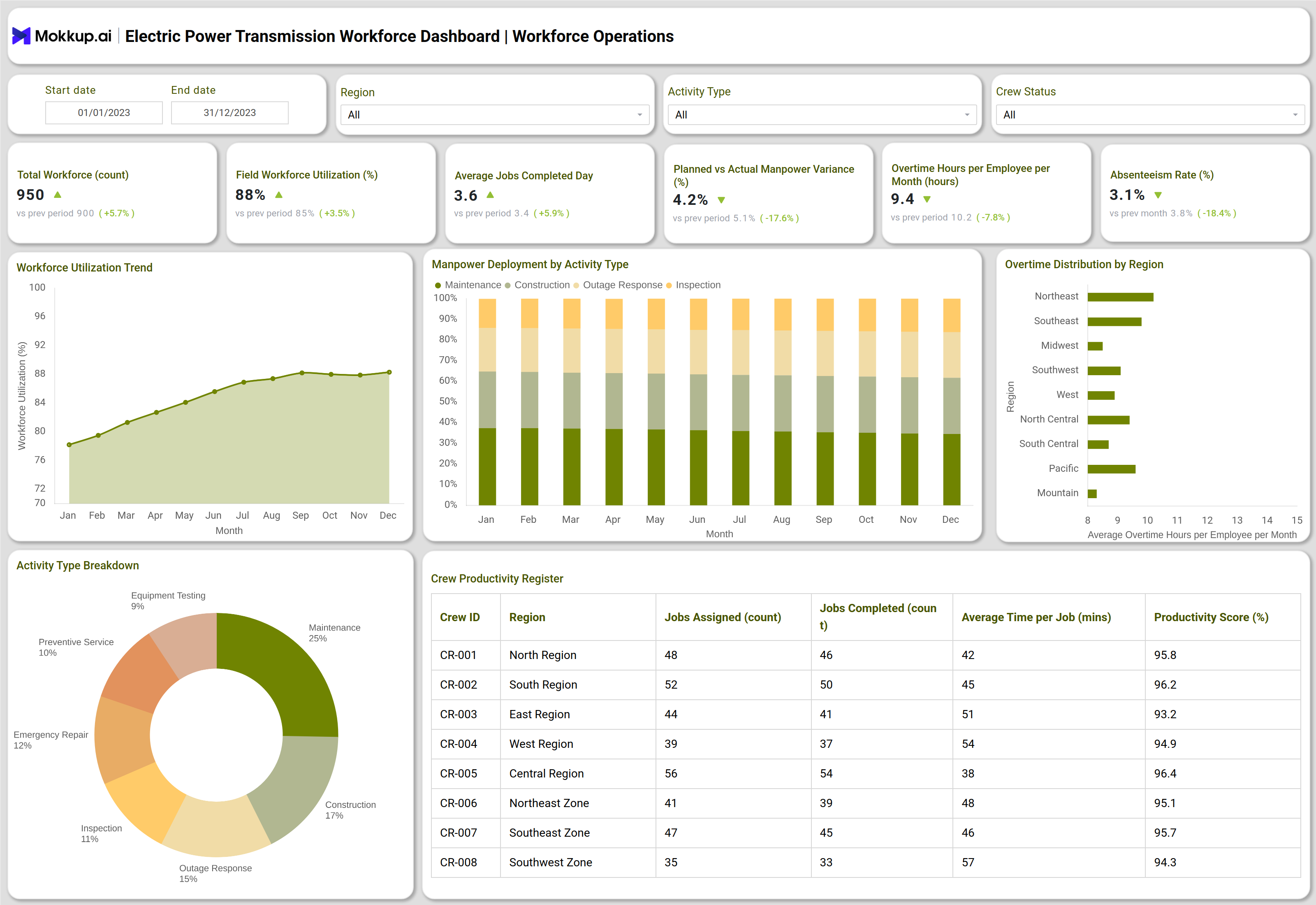
You can build your own electric transmission workforce dashboard to gain real-time visibility into workforce operations and compliance. A typical dashboard presents total workforce count, field workforce utilization, average jobs completed per day, and planned versus actual manpower variance. Workforce utilization trends highlight how effectively crews are deployed across months, while activity-based breakdowns show manpower distribution across maintenance, construction, inspections, and outage response. The dashboard also includes regional overtime analysis to identify fatigue risks and cost drivers. Crew productivity registers track jobs assigned, jobs completed, average time per job, and productivity scores by region. On the compliance side, certification status, training completion, and skill coverage are monitored to ensure transmission staff meet safety and regulatory requirements. Together, these insights support transmission operations workforce monitoring and improve decision-making across grid operations.
How to Analyze the Electric Power Transmission Workforce Dashboard
Here is how you can analyze data from this dashboard:
- Review total workforce and utilization metrics to assess manpower availability across transmission regions
- Compare planned versus actual manpower variance to identify staffing gaps or overstaffing
- Analyze workforce utilization trends to detect seasonal or regional demand patterns
- Monitor activity-type distribution to ensure balanced deployment across maintenance and outage response
- Evaluate overtime hours by region to control fatigue, safety risks, and labor costs
- Track crew productivity scores to identify high-performing and underperforming teams
- Assess certification and training status to ensure compliance with safety standards
- Use absenteeism and job completion rates to refine electric utility workforce planning
Benefits of Electric Power Transmission Workforce Dashboard
The following are the benefits of using this dashboard:
- Improves visibility into workforce capacity and deployment across transmission networks
- Supports data-driven power transmission workforce analytics for better planning
- Reduces operational risks through proactive certification and training monitoring
- Optimizes crew productivity and job completion efficiency
- Controls overtime costs and minimizes workforce fatigue
- Enhances compliance with safety and regulatory requirements
- Strengthens coordination during outage response and emergency operations
- Enables scalable workforce planning for grid expansion projects
KPIs to Track in Electric Power Transmission Workforce Dashboard
The following key KPIs can be tracked by using this dashboard:
- Total Workforce Count – Measures overall staffing levels across transmission operations
- Field Workforce Utilization (%) – Tracks how effectively crews are deployed in the field
- Average Jobs Completed per Day – Indicates operational productivity of transmission crews
- Planned vs Actual Manpower Variance (%) – Highlights staffing gaps or excess deployment
- Overtime Hours per Employee – Monitors workload balance and fatigue risk
- Absenteeism Rate (%) – Reflects workforce availability and attendance trends
- Crew Productivity Score (%) – Compares job output against expected performance
- Certification Compliance Rate (%) – Ensures workforce meets safety and skill requirements
Frequently Asked Questions
1. What is the purpose of an electric transmission workforce dashboard?
It helps utilities monitor workforce performance, compliance, and deployment to ensure efficient and safe transmission operations.
2. Who uses power transmission workforce analytics dashboards?
Transmission operators, HR teams, operations managers, and safety compliance teams use these dashboards
3. How does this dashboard support electric grid workforce management?
It aligns manpower planning with operational demand, reduces risks, and improves productivity across the grid.
4. Can the dashboard support outage and emergency response planning?
Yes, it provides real-time visibility into crew availability and readiness for faster response.
5. Is certification tracking important for transmission workforce monitoring?
Yes, certifications ensure staff are qualified for high-risk transmission tasks and regulatory compliance.