
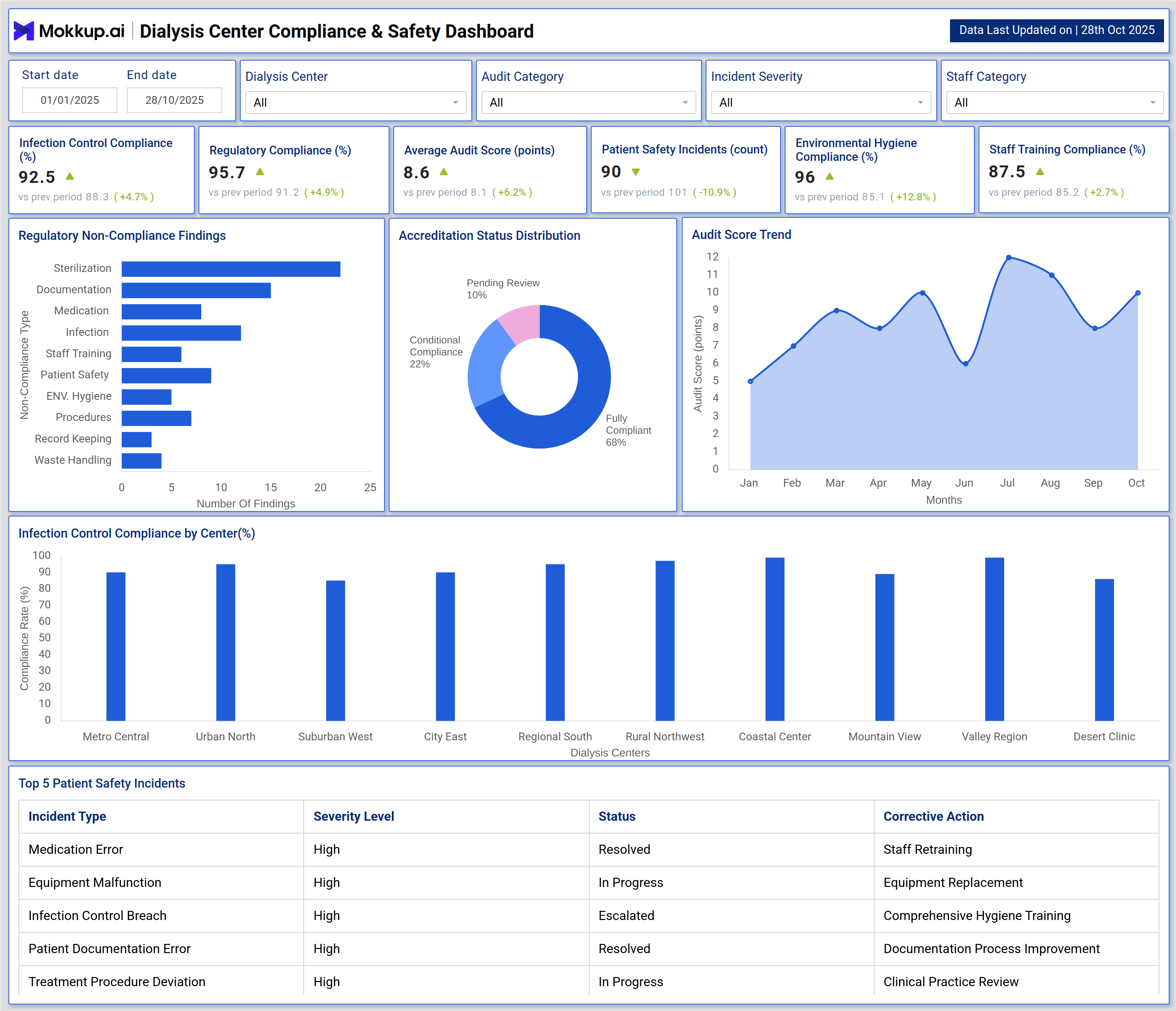
It helps track hygiene, audit, and safety metrics in one place, ensuring compliance, improving staff readiness, and reducing patient safety risks.
What is a Dialysis Center Compliance & Safety Dashboard?
A Dialysis Center Compliance and Safety Dashboard template monitors, assesses, and improves governance and safety standards across dialysis centers. It provides compliance leaders and clinical directors with visibility into infection control practices, regulatory adherence, audit performance, and patient safety indicators.
Dialysis networks use such dashboards to enhance accreditation readiness, minimize high-severity incidents, and ensure continuous quality improvement through evidence-based decision-making. It also acts as a key component of dialysis safety monitoring, focusing on eliminating infection risks, enhancing compliant care delivery, and maintaining regulatory excellence across facilities.
How to Create a Dialysis Center Compliance & Safety Dashboard
You don’t need to build your report from scratch—just start with a ready-to-use Dialysis Center Compliance & Safety dashboard template from Mokkup. Add in your data and export it however you like. Here’s how to do it:
1. Create or Log in to Your Mokkup Account
Start by signing up on Mokkup.ai using your email. If you already have an account, just log in, and you’ll be good to go.
2. Choose and Customize Your Dashboard Template
Find the Dialysis Center Compliance & Safety Dashboard template in the Templates section. Use the drag-and-drop editor to adjust KPIs, edit filters, or add elements based on your data.
3. Export to Your BI Tool
Once your dashboard wireframe is ready, use the BI Tool Export feature to send it directly to Power BI or Tableau for further analysis and enhancements. You can also download the dashboard as a PDF, PNG, or JPEG, embed it on a platform, or invite your team to collaborate.
Note: This is a Pro template. You’ll need a Pro subscription on Mokkup to use and customize this dashboard wireframe. Upgrade anytime to unlock full access.
Dialysis Center Compliance & Safety Dashboard Example
A Dialysis Compliance & Safety Dashboard visualizes key governance metrics with intuitive charts, focusing on infection control compliance in dialysis and audit and regulatory metrics for dialysis centers. A column chart shows compliance variation across centers, while a donut chart highlights accreditation status categories. A 10-month area trend tracks audit performance. A formatted table lists patient safety incidents by severity, ensuring prompt corrective action. Horizontal bar charts display regulatory non-compliance by risk level. This dashboard wireframe strengthens governance oversight by revealing operational risks, improvement opportunities, and patient safety readiness across dialysis facilities.
How to Analyze Data in Dialysis Center Compliance & Safety Dashboard
This dashboard wireframe provides an in-depth look at key quality indicators and governance metrics to ensure adherence to clinical safety standards and operational compliance:
- Monitor Infection Compliance Scores: Detect unsafe hygiene patterns early to prevent contamination risks.
- Track Audit Score Trends: Evaluate governance performance over time to identify improvement areas.
- Review Incident Severity Distribution: Prioritize high-risk incidents requiring immediate corrective action.
- Measure Staff Credentialing Completion: Ensure all personnel meet certification and competency standards.
- Evaluate Regulatory Non-Compliance: Identify and address issues to avoid penalties or accreditation delays.
- Use Risk Correlations: Understand how compliance gaps impact patient safety outcomes.
Together, these analytics help structured quality improvement across dialysis operations.
Benefits of Dialysis Center Compliance & Safety Dashboard
A well-structured compliance dashboard helps dialysis centers monitor performance, ensure patient safety, and maintain operational excellence:
- Real-Time Governance Visibility: Centralized dialysis safety monitoring enables continuous compliance oversight across centers.
- Enhanced Infection Control Compliance: Tracks infection control metrics to reduce contamination and improve hygiene standards.
- Faster Corrective Actions: Immediate safety alerts support prompt intervention during high-severity patient safety events.
- Improved Accreditation Readiness: Audit and regulatory insights close compliance gaps and strengthen accreditation preparedness.
- Ensured Workforce Competency: Training and credentialing compliance analytics confirm staff readiness for safe dialysis operations.
- Data-Driven Governance: Regulatory and audit insights enable informed leadership decisions and quality management.
- Strengthened Patient Care Safety: Integrated safety monitoring minimizes harm and elevates treatment quality across all facilities.
KPIs to Track in Dialysis Center Compliance & Safety Dashboard
Key performance indicators provide measurable insights into compliance and safety standards within dialysis centers:
- Infection Control Compliance (%): Evaluates adherence to hygiene and infection-prevention protocols.
- Regulatory Compliance (%): Measures alignment with healthcare standards and accreditation benchmarks.
- Average Audit Score: Reflects governance quality and operational efficiency based on audit results.
- Patient Safety Incidents (Count): Tracks occurrences of preventable harm affecting patient safety.
- Environmental Hygiene Compliance (%): Assesses the effectiveness of cleaning and contamination control measures.
- Staff Training & Credentialing Compliance (%): Ensures all staff meet certification and training requirements.
These metrics provide a complete view of compliance governance and patient safety accountability.
Frequently Asked Questions
Q1. How does this dashboard help reduce compliance-related risks in dialysis centers?
By continuously tracking infection control scores, audit gaps, and safety deviations, the dashboard flags high-risk trends in real time. It strengthens governance action using dialysis patient safety analytics to prevent escalation into regulatory penalties or patient harm.
Q2. Can leadership use this dashboard to improve accreditation readiness?
Yes. Accreditation elements like regulatory compliance percentage, staff credentialing status, and hygiene validation are visualized as audit and regulatory metrics for dialysis centers, helping Quality Managers close gaps and sustain inspection readiness.