
What is a Coal Power Plant Procurement & Logistics Dashboard?
A Coal Power Plant Procurement & Logistics Dashboard is a data visualization tool designed to optimize procurement, logistics, and supply chain operations in coal-based power generation. It enables energy companies to track key metrics related to coal sourcing, supplier performance, transportation efficiency, and fuel inventory management in real time. By integrating the power generation supply chain dashboard, power utilities gain complete visibility into coal procurement volumes, freight costs, transit losses, and delivery timelines. This data helps maintain a steady and cost-effective supply of fuel to power generation units while minimizing operational inefficiencies. The dashboard serves as a part of an energy plant procurement management system, streamlining every stage of coal movement from purchase order to stockyard delivery, ensuring data-driven decisions for cost control, vendor performance, and logistics optimization.
How to Create a Coal Power Plant Procurement & Logistics Dashboard
You don’t need to build your report from scratch just start with a ready-to-use dashboard template from Mokkup. Add in your data and export it however you like. Here’s how to do it:
1. Create or Log in to Your Mokkup Account
Start by signing up on Mokkup.ai using your email. If you already have an account, just log in, and you’ll be good to go.
2. Choose and Customize Your Dashboard Template
Find the Coal Power Plant Procurement & Logistics Dashboard template in the Templates section. Use the drag-and-drop editor to adjust KPIs, edit filters, or add elements based on your data.
3. Export to Your BI Tool
Once your dashboard wireframe is ready, use the BI Tool Export feature to send it directly to Power BI or Tableau for further analysis and enhancements. You can also download the dashboard as a PDF, PNG, or JPEG, embed it on a platform, or invite your team to collaborate.
Note: This is a Pro template. You’ll need a Pro subscription on Mokkup to use and customize this dashboard wireframe. Upgrade anytime to unlock full access.
Coal Power Plant Procurement & Logistics Dashboard Example
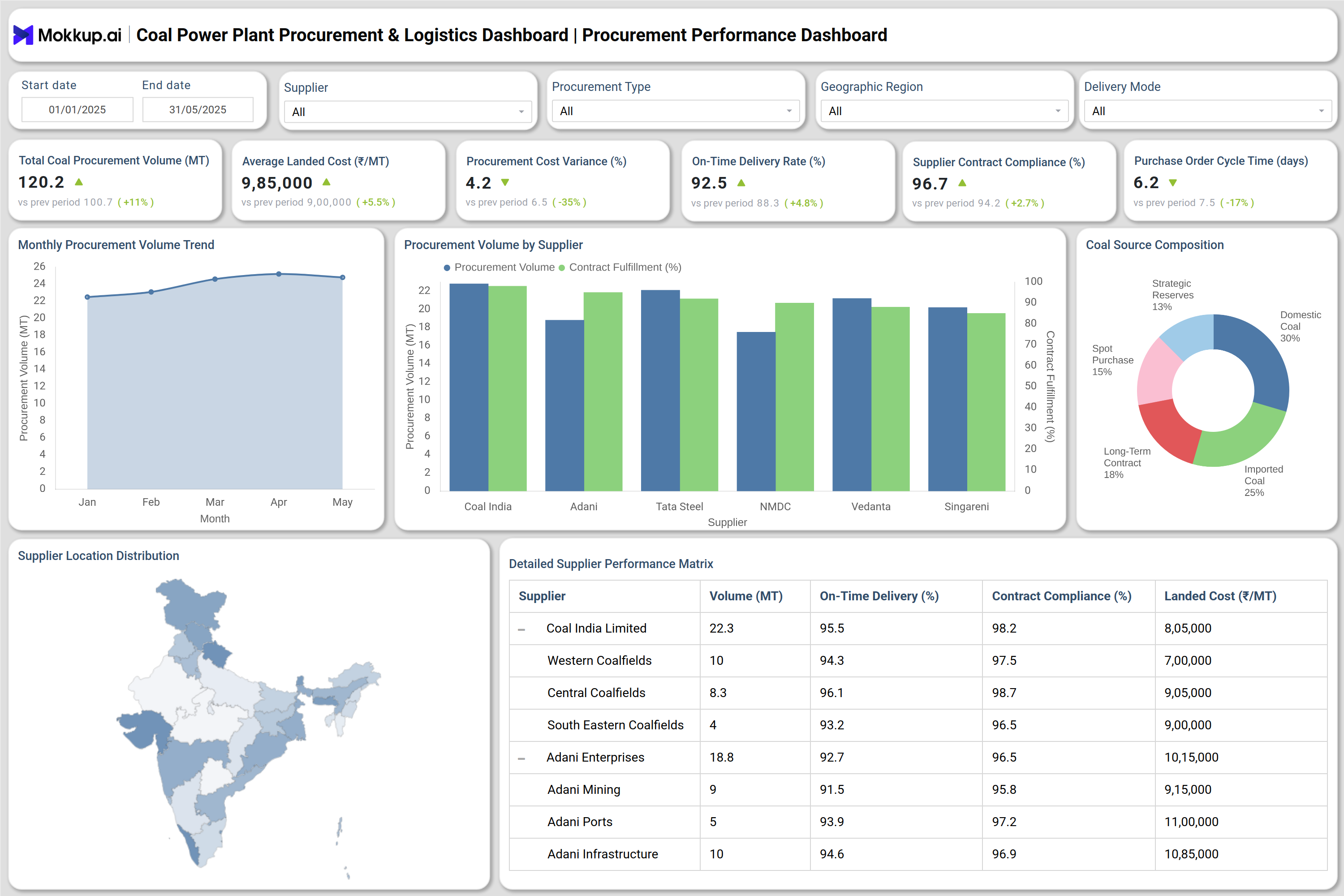
You can create a Coal Power Plant Procurement & Logistics Dashboard that unifies both procurement and logistics insights for improved operational decision-making. This solution leverages coal power plant procurement analytics to track sourcing performance, vendor compliance, and supply reliability in real-time, helping decision-makers optimize costs and efficiency across the fuel supply chain. The Coal Procurement Performance Dashboard provides detailed analytics on coal purchase volumes, supplier compliance, cost variance, and delivery timelines. It visualizes procurement trends over time, comparing planned versus actual performance. Supplier metrics, such as on-time delivery rate, contract compliance, and average landed cost, allow procurement managers to evaluate vendors like Coal India, Adani, NMDC, or Vedanta based on cost efficiency and reliability.
The Coal Logistics & Stockyard Efficiency Dashboard focuses on fuel transportation and handling performance. It captures data such as freight costs by mode (rail, road, or sea), transit loss percentage, and unloading turnaround time. The dashboard also displays coal stock levels, stock days available, and route-wise transporter reliability to ensure optimal material flow. Together, these dashboards form a robust power utilities material procurement dashboard that integrates coal plant logistics performance tracking and fuel inventory and transport monitoring. This combined system enhances end-to-end visibility, reduces logistics costs, and ensures uninterrupted plant operations.
How to Analyze Data in Coal Power Plant Procurement & Logistics Dashboard
Here’s how plant operators and managers can leverage the dashboard:
- Monitor Procurement Trends: Track monthly coal procurement volumes and cost fluctuations to identify supplier efficiency and market trends.
- Evaluate Supplier Reliability: Compare supplier performance across key metrics like contract fulfillment, landed cost, and on-time delivery.
- Optimize Freight and Transport Routes: Use transporter performance and freight cost analysis to identify high-cost or low-reliability routes.
- Control Procurement Costs: Assess cost variance to ensure adherence to planned budgets and identify cost-saving opportunities.
- Track Stockyard Utilization: Review coal stock levels, stock days, and silo distribution to ensure consistent fuel availability.
- Analyze Transit Losses: Monitor loss percentages and turnaround times to minimize wastage and delays in coal delivery.
Benefits of Coal Power Plant Procurement & Logistics Dashboard
- Provides end-to-end visibility across procurement and logistics operations.
- Reduces procurement and transportation costs through data-backed optimization.
- Enhances supplier and transporter accountability with real-time performance tracking.
- Improves inventory management using accurate fuel stock and delivery insights.
- Strengthens contract management by tracking supplier compliance and cost deviations.
- Reduces manual reporting through automated KPI monitoring and visual analytics.
- Ensures continuous plant operations with better demand-supply coordination.
KPIs to Track in Coal Power Plant Procurement & Logistics Dashboard
- Total Coal Procurement Volume (MT): Monitors the total quantity of coal purchased within a defined period.
- Average Landed Cost (₹/MT): Calculates the total cost of coal, including procurement and transportation.
- Supplier Contract Compliance (%): Measures adherence to procurement agreements and timelines.
- Procurement Cost Variance (%): Tracks deviations between planned and actual procurement spending.
- On-Time Delivery Rate (%): Evaluates supplier and transporter delivery reliability.
- Transit Loss Percentage (%): Monitors fuel losses during transportation and handling.
- Average Freight Cost (₹/MT): Compares logistics expenses across different transportation modes.
- Unloading Turnaround Time (hours): Assesses unloading efficiency and yard throughput.
- Stock Days Available (days): Calculates the number of operational days supported by the current coal inventory.
- Transporter Reliability (%): Measures route and transporter performance based on punctuality and consistency.
Frequently Asked Questions
Q1. What is the purpose of a coal procurement and logistics dashboard?
It centralizes procurement, transport, and fuel data to streamline operations, reduce costs, and ensure a reliable coal supply to power plants.
Q2. What departments typically use this dashboard?
Procurement, logistics, operations, and finance teams rely on it to coordinate coal supply chain activities.
Q3. How often should the data be updated?
Daily or weekly updates are recommended to ensure accurate visibility into procurement performance and fuel stock levels.