Artificial Intelligence (AI) is changing the way we approach cybersecurity. Cyber threats become more sophisticated as technology advances, making protecting our data and systems harder. AI offers new tools and methods to improve cybersecurity, but it also brings its own set of challenges.
On the positive side, AI can quickly analyze vast amounts of data, identify patterns, and detect anomalies that might indicate a cyber attack. It can automate repetitive tasks, allowing human experts to focus on more complex issues. AI systems can learn and adapt to new threats, providing a dynamic defense against cyber criminals.
However, will ai take over cyber security? The use of AI in cybersecurity is not without its problems. Attackers can trick or manipulate AI models, leading to false positives or missed threats. There's also the risk of over-reliance on AI, where human oversight is reduced, potentially causing security gaps.
Additionally, implementing AI solutions can be expensive and require specialized knowledge. Despite these challenges, the potential benefits of AI in cybersecurity are significant. By understanding the opportunities and the challenges, we can better prepare for a future where AI plays a crucial role in protecting our digital world.
Table of Contents
- What is the Current Cybersecurity Landscape?
- Traditional Cybersecurity Measures
- What is the Role of AI in Cybersecurity?
- How AI Helps in Cybersecurity?
- AI's Potential Benefits for Cybersecurity in the Future
- What are the Challenges of AI in Cybersecurity?
What is the Current Cybersecurity Landscape?
The current cybersecurity landscape is increasingly complex and challenging. Cyber threats are growing in number and sophistication, targeting individuals, businesses, and governments. Protecting data and systems requires advanced technologies, skilled professionals, and constant vigilance.
High-profile Data Breaches
Cyber attacks are happening more often and are becoming more advanced. Hackers are constantly finding new ways to break into systems, steal information, and cause damage, making it very hard for individuals, businesses, and governments to stay safe.
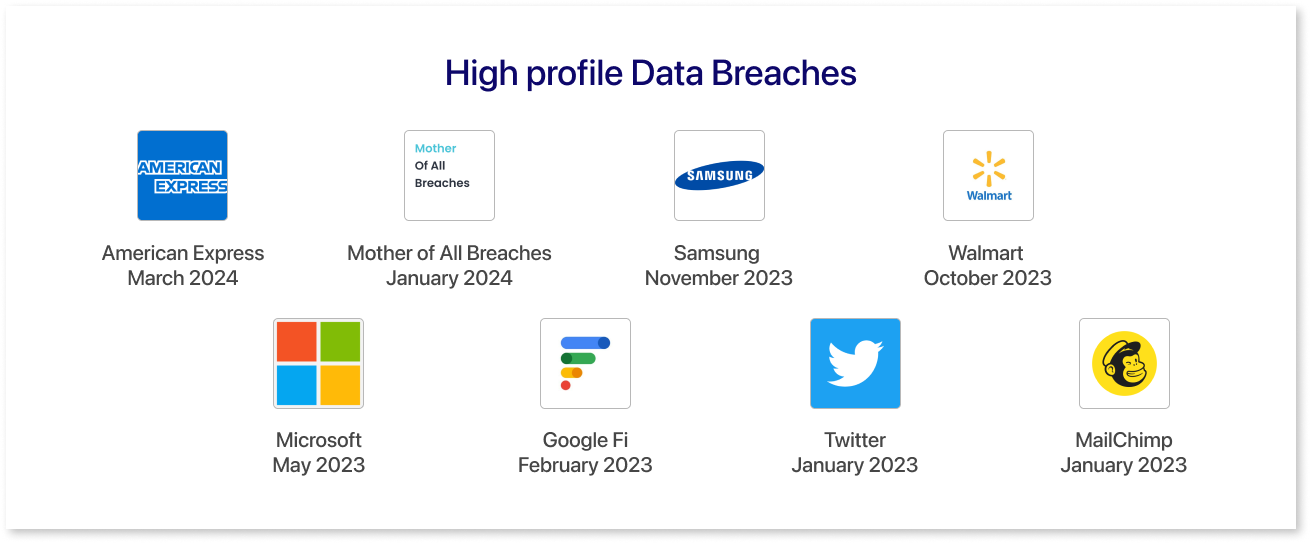
In recent years, there have been several high-profile breaches that show just how serious these attacks can be (Source)
-
American Express: March 2024
American Express alerted customers to a potential data breach in March of 2024. The breach was caused by unauthorized access to a third-party merchant processor and compromised customer names, account numbers, and card details. Customers were advised to monitor their accounts for unusual activity and enable real-time transaction alerts.
-
Mother of All Breaches: January 2024
A massive data leak dubbed the "Mother of All Breaches" exposed 12 TB of data and 26 billion records from various sources. The leak includes usernames, passwords, and sensitive information, posing risks for credential-stuffing attacks and phishing schemes. Users are urged to update passwords and enable two-factor authentication.
-
Samsung: November 2023
Samsung reported a data breach in November 2023 affecting UK customers who made online purchases in 2020. Personal information such as names, phone numbers, and addresses was compromised due to a vulnerability in a third-party app. This was Samsung’s third breach in two years.
-
Walmart: October 2023
Walmart's October 2023 breach affected over 85,000 customers, including protected health information. This incident follows a history of breaches at the retailer, emphasizing the need for improved cybersecurity measures.
-
Microsoft: May 2023
Microsoft revealed a breach in May 2023 where China-based hackers accessed customer email accounts by forging authentication tokens. The attack demonstrated the persistence of advanced threats and the importance of an "assume breach" mindset in cybersecurity.
-
Google Fi: February 2023
T-Mobile's January 2023 breach, which compromised customer phone numbers and highlighted the risks associated with shared network infrastructures, affected Google Fi.
-
Twitter: January 2023
Twitter, now X, saw 235 million user accounts and associated email addresses leaked in January 2023. This breach, stemming from a 2021 issue, posed significant user risks.
-
Mailchimp: January 2023
Mailchimp disclosed a breach in January 2023 following a social engineering attack that compromised internal customer support tools. The incident emphasized the importance of employee security training.
Traditional Cybersecurity Measures
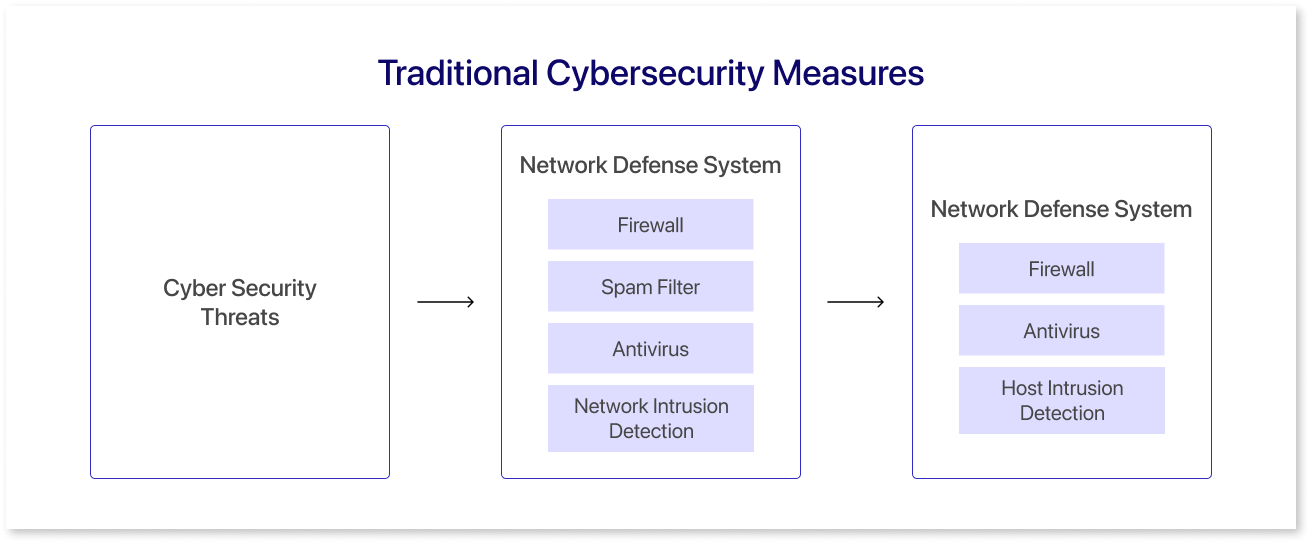
Traditional cybersecurity methods include various tools and techniques to protect systems and data from cyber threats. Some of these methods are:
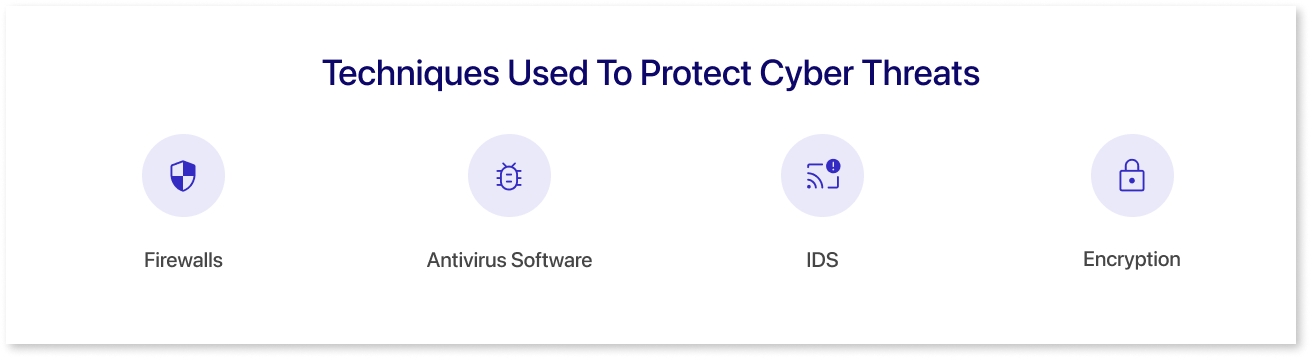
- Firewalls: Firewalls are like digital barriers that monitor and control incoming and outgoing network traffic based on predetermined security rules. They help prevent unauthorized access to a network and block malicious traffic.
- Antivirus Software: Antivirus software detects, prevents, and removes malicious software, such as viruses, worms, and trojans, from computers and networks. It scans files and programs for known malware signatures and quarantines or deletes them to prevent harm.
- Intrusion Detection Systems (IDS): monitor network traffic for suspicious activity or known attack patterns. They alert system administrators when they detect potential security breaches, allowing them to investigate and respond to threats promptly.
- Encryption: Encryption transforms data into unreadable formats using cryptographic algorithms. Only authorized parties can access and understand the information, even if unauthorized users intercept it.
Limitations of Traditional Cybersecurity Methods
How ai enhances cybersecurity measures? While traditional cybersecurity methods have been effective in addressing older threats, they have several limitations when facing modern, sophisticated cyber attacks:
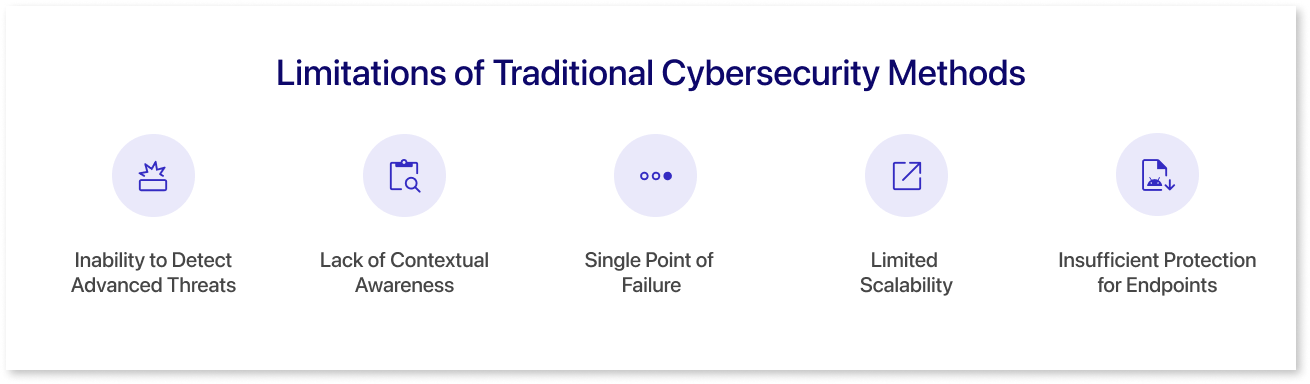
- Inability to Detect Advanced Threats: Traditional methods often rely on signature-based detection, which means they can only identify known threats. Advanced threats like zero-day exploits and polymorphic malware can evade detection because they don't match known signatures.
- Lack of Contextual Awareness: Traditional methods may lack context and insight into the broader environment, making distinguishing between normal and abnormal behavior challenging. This limitation can result in false positives or false negatives, where legitimate activities are flagged as suspicious or vice versa.
- Single Point of Failure: Some traditional methods, like firewalls and antivirus software, operate as single points of failure. If these defenses are bypassed or compromised, cyber attackers can gain unauthorized access to systems and data without detection.
- Limited Scalability: Traditional methods may struggle to scale and adapt to the evolving threat landscape. As cyber threats become more sophisticated and diverse, traditional solutions may struggle to keep pace and provide adequate protection.
- Insufficient Protection for Endpoints: With the rise of remote work and mobile devices, traditional methods may struggle to provide sufficient protection for endpoints outside the corporate network. This leaves organizations vulnerable to attacks targeting remote devices and endpoints.
What is the Role of AI in Cybersecurity?
AI or Artificial Intelligence is like a brain for computers. Just like humans learn from experience, AI learns from data. It's all about making computers smart enough to do tasks that normally need human intelligence.
Basic Principles of AI
-
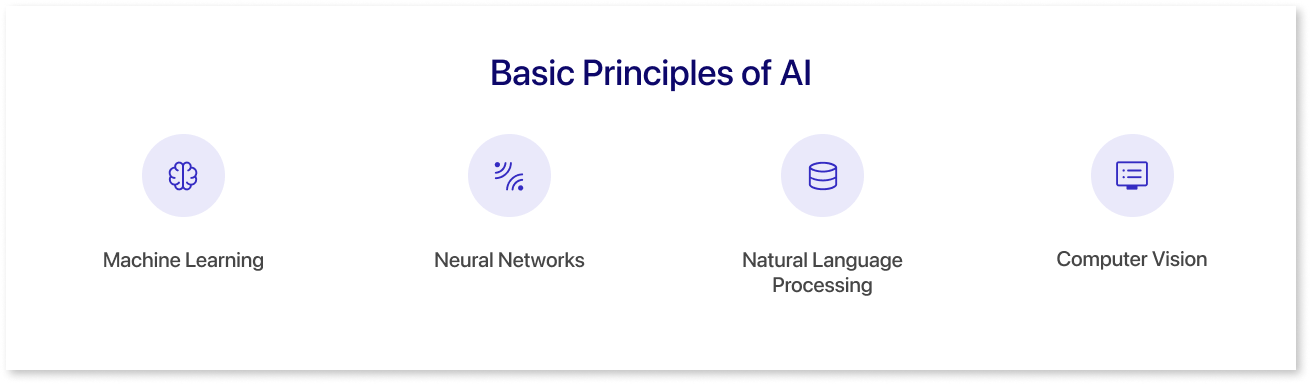
Machine Learning: is the backbone of AI. It's all about teaching computers to learn from data without being explicitly programmed. Imagine showing a computer a bunch of pictures of cats and dogs. Through machine learning for data security, it can be learned to distinguish between the two based on features like ears, fur, and tails. Once it learns these patterns, it can decide when it sees new pictures, like identifying whether a new image contains a cat or a dog.
-
Neural Networks: are at the heart of many AI applications. The structure of the human brain inspires them. Just like our brains process information through interconnected neurons, neural networks process data through layers of interconnected nodes. Each node receives input, processes it, and passes it on to the next layer. Through training, neural network security adjusts the connections between nodes to improve their ability to recognize patterns and make accurate predictions. This is how AI learns to recognize faces in photos, translate languages, or even play games like chess or Go.
-
Natural Language Processing (NLP): allows computers to understand and generate human language. It's like teaching a computer to speak and understand languages like we do. NLP enables virtual assistants like Siri and Alexa to understand our commands and respond in a way that makes sense to us. It involves tasks like parsing sentences, understanding context, and generating appropriate responses. NLP powers everything from language translation and sentiment analysis to chatbots and speech recognition systems.
-
Computer Vision: is all about enabling computers to see and interpret the visual world. It's like giving eyes to machines. Computer Vision algorithms analyze digital images or videos and extract meaningful information. This can include object detection, facial recognition, and image classification. For example, Computer Vision technology helps self-driving cars navigate safely by recognizing traffic signs and pedestrians. It also powers facial recognition systems used for security and unlocking smartphones.
How AI Helps in Cybersecurity?
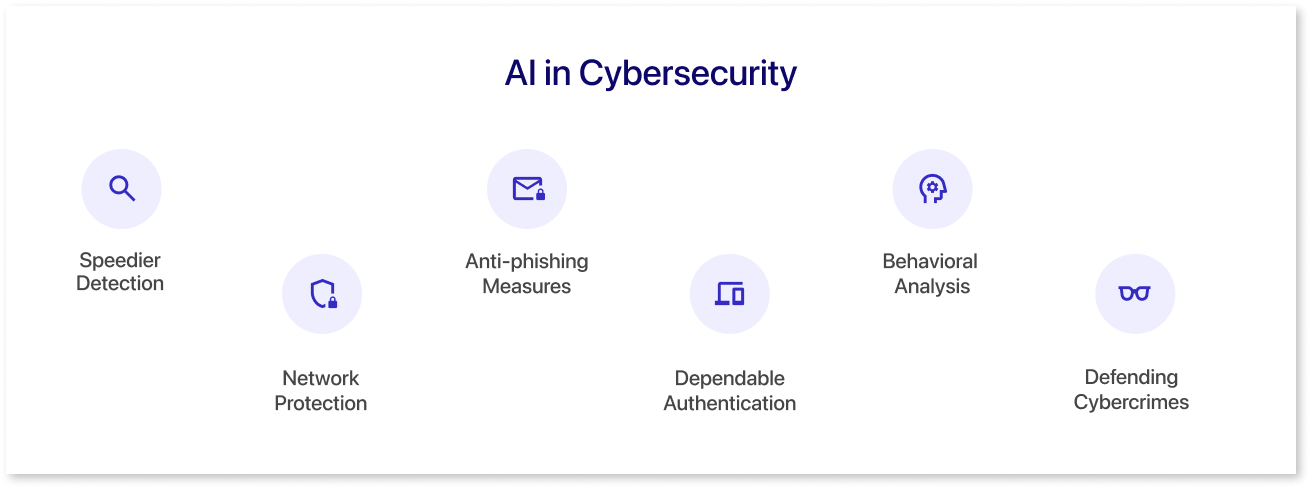
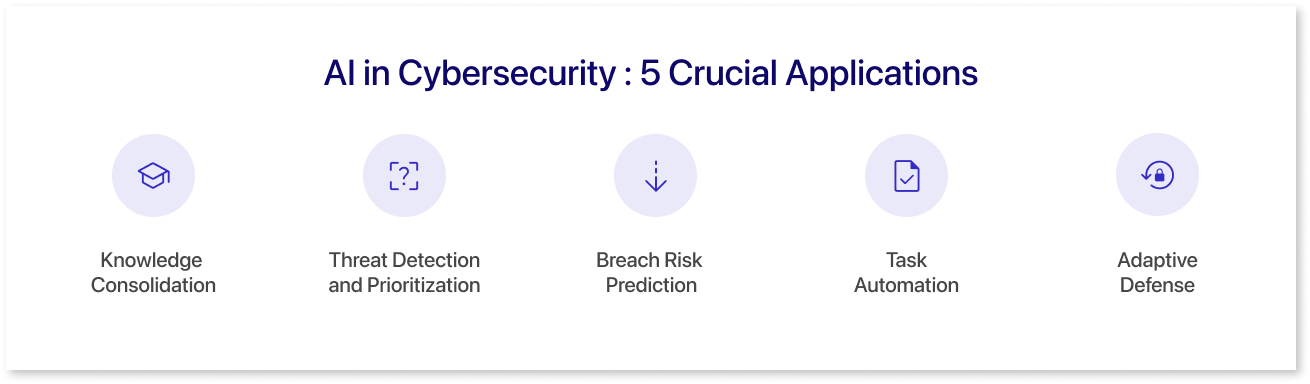
- Spotting Threats: AI can analyze huge amounts of data to detect patterns that might indicate a cyber attack. It can spot unusual behavior in networks or systems that humans might miss.
- Faster Response: AI can act fast when a cyber threat is detected. It can automatically block suspicious activity or alert cybersecurity experts for further action.
- Predictive Analysis: AI can predict potential cyber threats based on past patterns. It's like having a cyber fortune-teller warning us about possible future attacks.
- Fraud Detection: In banking and finance, AI helps detect fraudulent transactions by learning each customer's normal spending patterns.
- User Authentication: AI can make user authentication more secure. It can analyze typing patterns, facial features, or even voice to ensure the right person is accessing sensitive information.
- Vulnerability Management: AI can identify weaknesses in systems or networks before hackers exploit them. It helps in fixing those vulnerabilities to prevent attacks.
Incident Response and Recovery: AI-driven dashboards, such as the one designed by Mokkup, facilitate swift analysis of the nature and scope of cyber attacks. This dashboard efficiently guides organizations through containment, eradication, and recovery phases, ensuring minimal downtime and mitigating the impact of security breaches on systems and operations.
AI's Potential Benefits for Cybersecurity in the Future
-
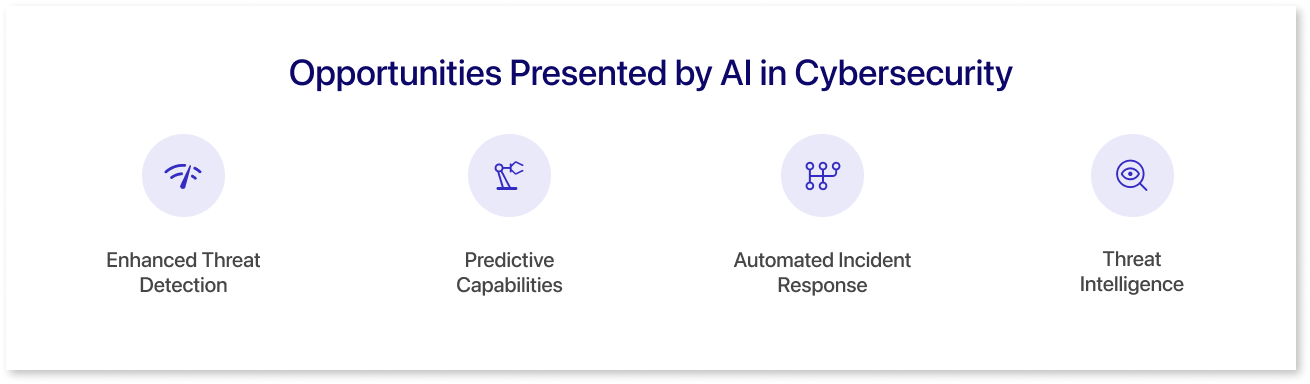
Enhanced Threat Detection:
AI can quickly analyze vast amounts of data to find unusual patterns that may indicate a cyber threat. For example, AI can flag this as suspicious if a user's behavior suddenly changes, like accessing sensitive files they usually don't.
AI works continuously, monitoring systems in real-time. This means it can detect and respond to threats as they happen, stopping attacks before they cause damage.
-
Predictive Capabilities:
AI can analyze past data to predict where future attacks might occur and identify weak spots in systems that hackers might target.
Based on these predictions, organizations can strengthen their defenses before an attack occurs. This proactive approach helps them stay ahead of cybercriminals.
-
Automated Incident Response:
AI can handle routine security tasks automatically. These include scanning for malware, updating software, and managing firewall settings.
With AI, responses to threats are faster and more accurate. Automated systems can act immediately, reducing the chance of human error and providing a quick reaction to threats.
-
Threat Intelligence:
AI can collect and analyze information about emerging threats from various sources. This helps us understand cybercriminals' tactics.
AI can share the insights it gathers with other organizations. This collective knowledge helps everyone improve their security measures and stay protected against the latest threats.
What are the Challenges of AI in Cybersecurity?
Change the names in the square with the names in the table.
| Challenges | Details |
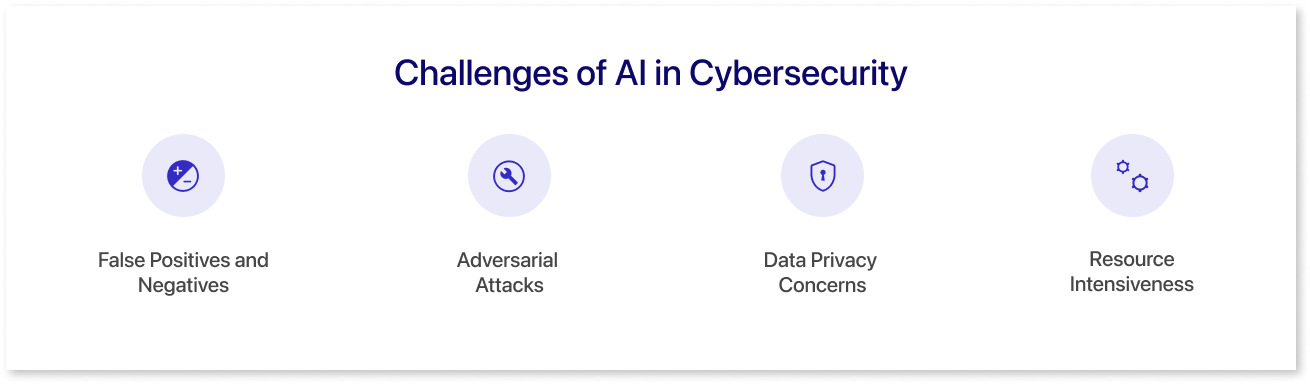
| False Positives and Negatives |
Incorrect Alerts: AI can generate false positives (harmless activity alerts) and false negatives (missed threats). Impact on Trust and Efficiency: Frequent false alerts lead to alert fatigue, reducing trust in the system and efficiency in threat detection. |
| Adversarial Attacks |
Manipulating AI Systems: Cybercriminals can exploit weaknesses by feeding misleading data to AI systems. Examples: Hackers use techniques like altering file names or adding noise to deceive AI models, allowing malicious activities to go undetected. |
| Data Privacy Concerns |
Need for Data vs. Privacy: AI needs large data volumes, but it must balance this with privacy regulations to protect personal information. Securing AI Data: Ensuring AI data is secure and compliant with privacy laws is crucial to preventing privacy violations. |
| Resource Intensiveness |
Computational and Financial Costs: Implementing and maintaining AI systems is expensive and resource-intensive. Barriers for Smaller Organizations: High costs and resource demands make it difficult for smaller organizations to adopt AI-based cybersecurity solutions. |
Final Thoughts!
AI is transforming the field of cybersecurity, offering powerful tools to detect and respond to cyber threats more efficiently. It can quickly analyze large amounts of data, identify suspicious patterns, and adapt to new attacks, providing a dynamic defense against cybercriminals. AI also helps automate routine tasks, allowing human experts to focus on complex security issues.
However, significant cybersecurity challenges remain. AI can sometimes generate false alerts, eroding trust and reducing security teams' efficiency. Cybercriminals can also trick AI systems, leading to missed threats or incorrect actions. Ensuring data privacy and managing the high costs of implementing AI are additional hurdles, particularly for smaller organizations.
Prompt it. Wireframe it with Mokkup.ai.