What are SaaS KPIs?
SaaS KPIs, or service key performance indicators, are a set of quantifiable metrics that offer invaluable insights into the performance, health, and growth potential of SaaS businesses. These KPIs, when tracked and analyzed through a SaaS KPI dashboard, go beyond traditional financial indicators to provide a comprehensive view of various factors that influence the success of subscription-based software models.
By leveraging a SaaS KPI dashboard, companies can make data-driven decisions, optimize strategies, and align their efforts with broader business goals. These essential metrics cover revenue, customer acquisition and retention, operational efficiency, and user engagement, helping shape a roadmap that enhances customer satisfaction, profitability, and long-term sustainability.
Table of Contents
- Why are SaaS KPIs Important?
- How to Choose the Right SaaS KPIs
- Financial SaaS KPI Examples
- How to Track Financial SaaS KPIs With Mokkup.ai?
Why are SaaS KPIs Important?
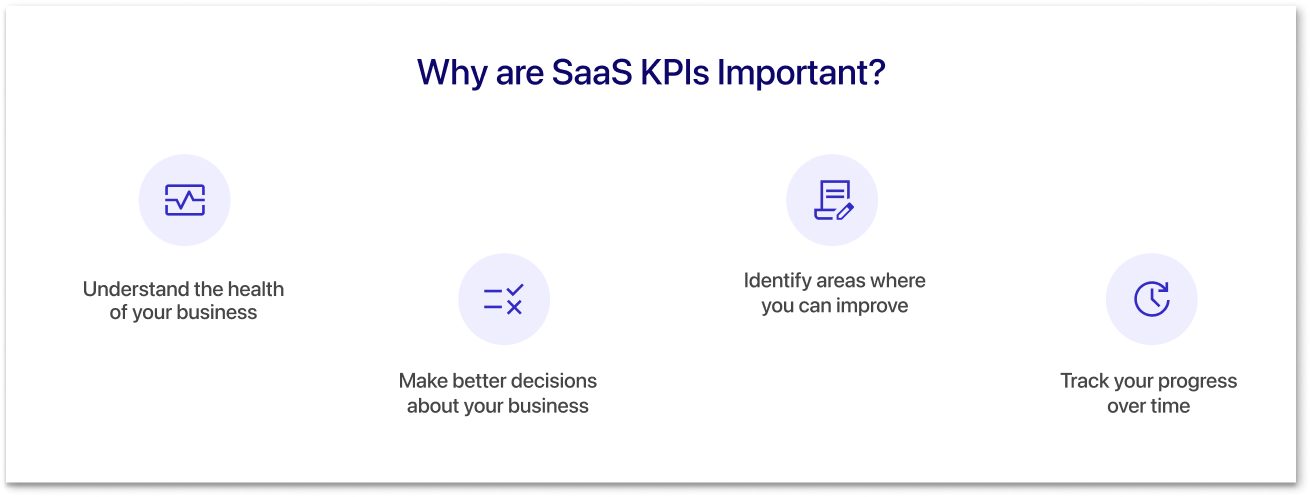
SaaS KPIs are paramount because they provide a clear and measurable understanding of a software-as-a-service business's performance and health. Here's why these metrics matter:
- Understand the health of your business: SaaS businesses typically have a recurring revenue model, so it's important to track metrics like monthly recurring revenue (MRR) and churn rate to understand how your business is performing financially. You can also track metrics like customer satisfaction and engagement to understand better how your customers use your product or service.
- Make better decisions about your business: KPIs can help you make better decisions about your SaaS business in several ways. Key performance indicators examples like Monthly Recurring Revenue (MRR), can guide how much you can allocate for marketing and sales. Similarly, KPIs such as churn rate can help you identify customers at risk of leaving, allowing you to take proactive steps to prevent churn and improve customer retention.
- Identify areas where you can improve: By tracking KPIs, you can identify areas where your SaaS business can improve. For example, if your churn rate is high, you can look for ways to enhance your customer support or reduce friction in the product journey. You can also track metrics like customer lifetime value (CLV) by using the customer lifetime value formula to estimate how much revenue you can expect to generate from each customer over their lifetime. This insight helps you focus on retaining high-value customers and improving long-term profitability.
- Track your progress over time: Tracking KPIs over time, including key B2B SaaS KPIs, can help you monitor your progress and understand how your SaaS business is improving. This data is crucial for staying motivated and focused on your goals. For instance, tracking your MRR growth over time can give you valuable insights into how your business is scaling, providing a clear picture of your long-term success.
Here are some specific examples of how SaaS KPIs can be used to improve a business:
|
Metric |
Indicator |
Insight |
|
Churn Rate |
High |
Friction in the product or service. It requires an immediate lookout into the product onboarding journey. |
|
Recurring Revenue |
Low |
Can indicate that you need to acquire more new customers or that you need to retain your existing customers. |
|
Customer Acquisition Cost |
High |
Can indicate spending too much money acquiring new customers. Can ensure you pay the right amount for new customers. |
|
Customer Lifetime Value |
Low |
Can indicate that you must price your products or services inappropriately. In simpler terms, if people aren't sticking around and buying from you for a long time, it could be because your prices are too high or not aligned with what they're getting. |
How to Choose the Right SaaS KPIs
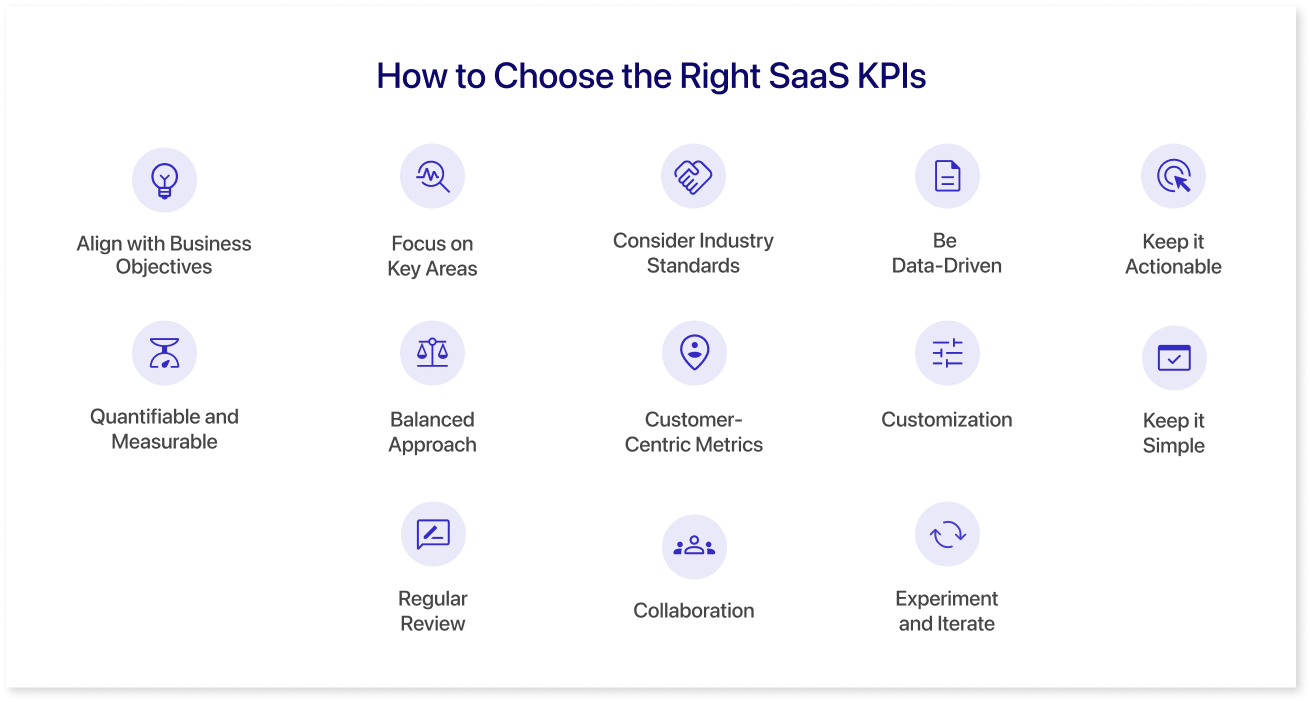
Choosing the right SaaS KPIs can be daunting, but it is essential for any SaaS business that wants to succeed. Here are some tips for choosing the right SaaS KPIs:
-
Align with Business Objectives: Start by identifying your primary business objectives. Your KPIs should directly align with these overarching goals: revenue growth, customer acquisition, retention, or operational efficiency.
-
Consider Industry Standards: Research industry benchmarks and standards to understand how your SaaS KPIs compare to those of your competitors. This will help you gauge your performance relative to the market.
-
Be Data-Driven: Base your KPI selection on accurate and reliable data availability. Ensure that you have the necessary tools and systems in place to track and measure these metrics effectively.
-
Keep it Actionable: Choose KPIs that provide actionable insights. Selecting metrics that can lead to specific improvements will make your efforts more productive. Ignore vanity metrics like "number of social media followers" and focus on metrics like "conversion rate" and "average order value" that can help you improve your business.
-
Quantifiable and Measurable: Opt for quantifiable KPIs. This ensures that you can track them consistently and observe trends over time.
-
Balanced Approach: Include a mix of lagging and leading indicators. Lagging indicators, like revenue, reflect past performance, while leading indicators, like customer engagement, offer insights into future trends.
-
Customer-Centric Metrics: Prioritize KPIs that reflect customer satisfaction and loyalty, such as Net Promoter Score (NPS), churn rate, and customer lifetime value. Happy customers drive growth.
-
Keep it Simple: Don't overwhelm yourself with too many KPIs. Focus on a manageable number covering your business's most critical aspects.
-
Regular Review: Business environments change, so your chosen KPIs should evolve accordingly. Regularly review and reassess your KPIs to ensure they remain relevant and aligned with your goals.
-
Collaboration: Involve key stakeholders in the selection process, such as department heads and team members. This ensures buy-in and a comprehensive understanding of the chosen KPIs.
-
Experiment and Iterate: Don't be afraid to experiment with different KPIs initially. As you gather data and insights, you can refine your choices and settle on the most impactful metrics.
By following these steps, you can effectively select the right SaaS KPI metrics that will guide your decision-making, measure your progress, and drive your software-as-a-service business toward success.
Financial SaaS KPI Examples
Revenue KPIs
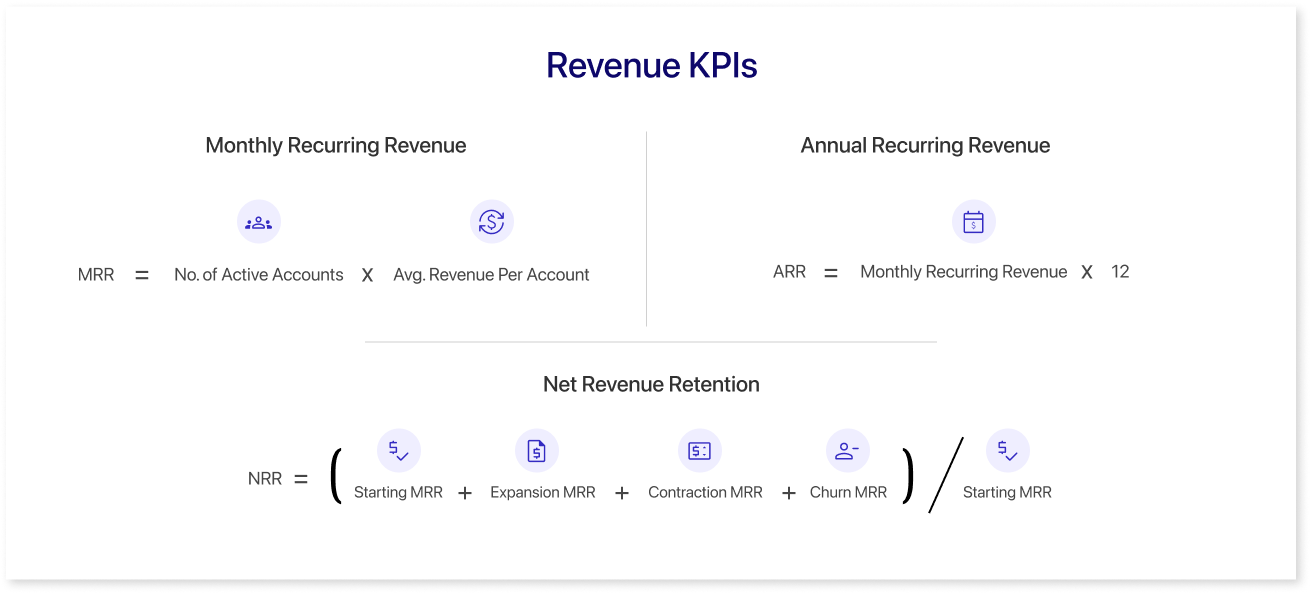
These KPIs measure the amount of money a company generates. Some examples include:
- MRR (Monthly Recurring Revenue): This is the revenue a company generates monthly from its recurring subscriptions. It is a good measure of a company's ability to generate predictable and sustainable revenue.
- ARR (Annual Recurring Revenue): This is the total amount of MRR a company expects to generate in a year. It is a more long-term view of SaaS revenue growth.
- NRR (Net Revenue Retention): This is the percentage of revenue a company retains from its existing customers yearly. It is a good measure of a company's ability to keep its customers happy and engaged.
Growth KPIs
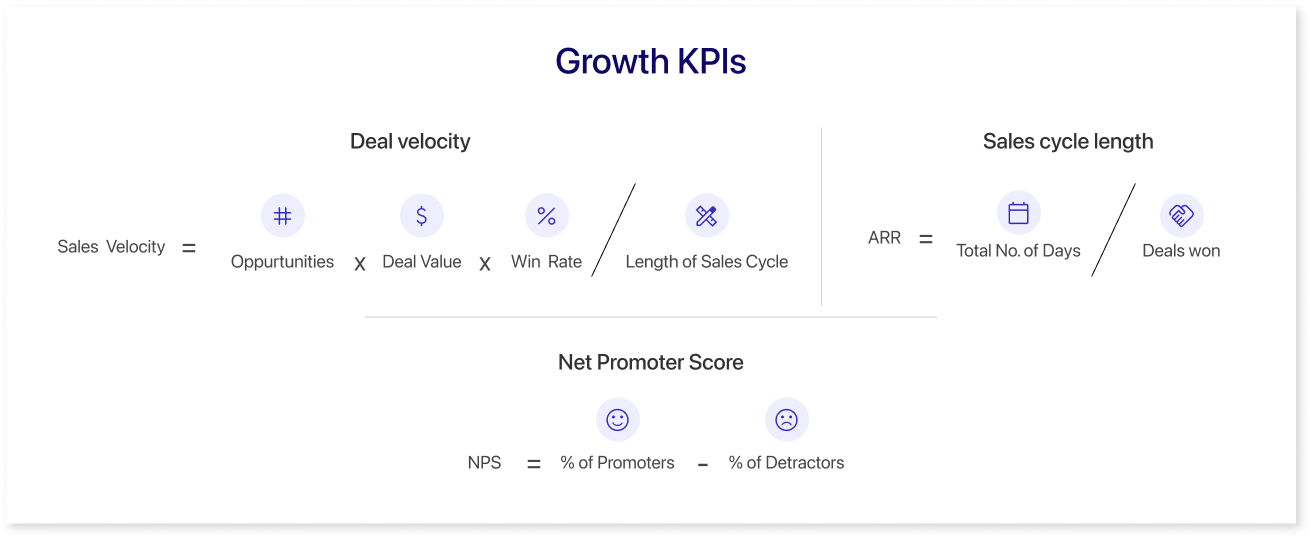
These KPIs measure the rate at which a company is growing. Some examples include:
- Deal velocity: This is the average number of days it takes to close a deal. It is a measure of how quickly a company is able to convert leads into customers.
- Sales cycle length: This is the average length of time it takes to close a deal. It is a measure of how long it takes a company to go from the initial contact with a lead to the final sale.
- Net promoter score (NPS): This is a measure of customer satisfaction. It is calculated by asking customers how likely they are to recommend a company to a friend or colleague on a scale of 0 to 10.
Health KPIs
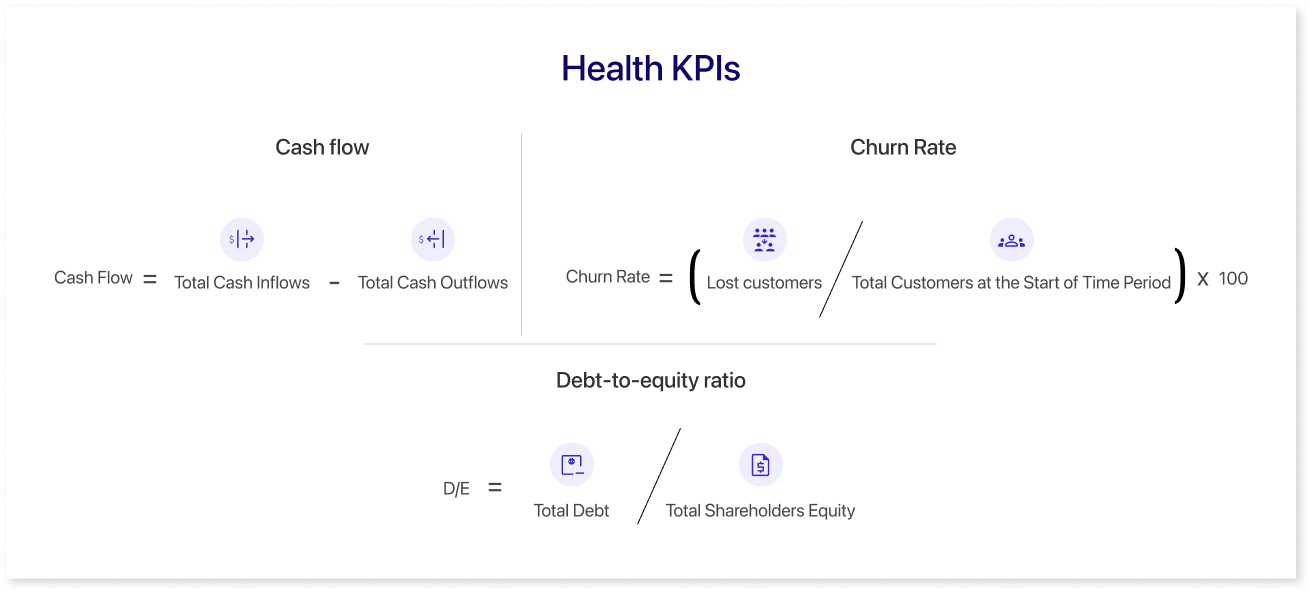
These KPIs measure the overall health of a company. Some examples include:
- Cash flow: This is the difference between a company's incoming and outgoing cash. It is a measure of a company's ability to generate enough cash to cover its expenses.
- Churn rate: This is the percentage of customers who cancel their subscriptions within a given period of time. A high churn rate can indicate that there are problems with a subscription business, such as poor customer service or a lack of value.
- Debt-to-equity ratio: This is the ratio of a company's debt to its equity. It is a measure of a company's financial leverage.
Risk KPIs
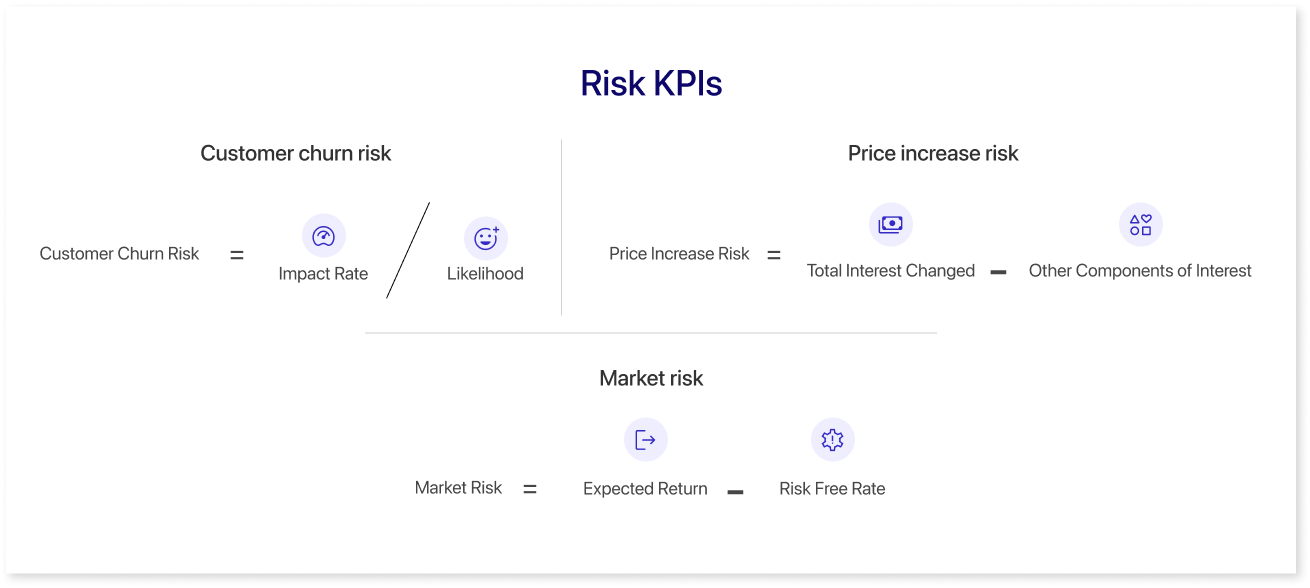
These KPIs measure a company's risks. Some examples include:
- Customer churn risk: This is the risk that a company's customers will cancel their subscriptions. It is calculated by the percentage of customers that churn each month.
- Price increase risk: This is the risk that customers will cancel their subscriptions if a company raises its prices.
- Market risk: This is the risk that a company's market will decline or become more competitive.
Operational Efficiency KPIs
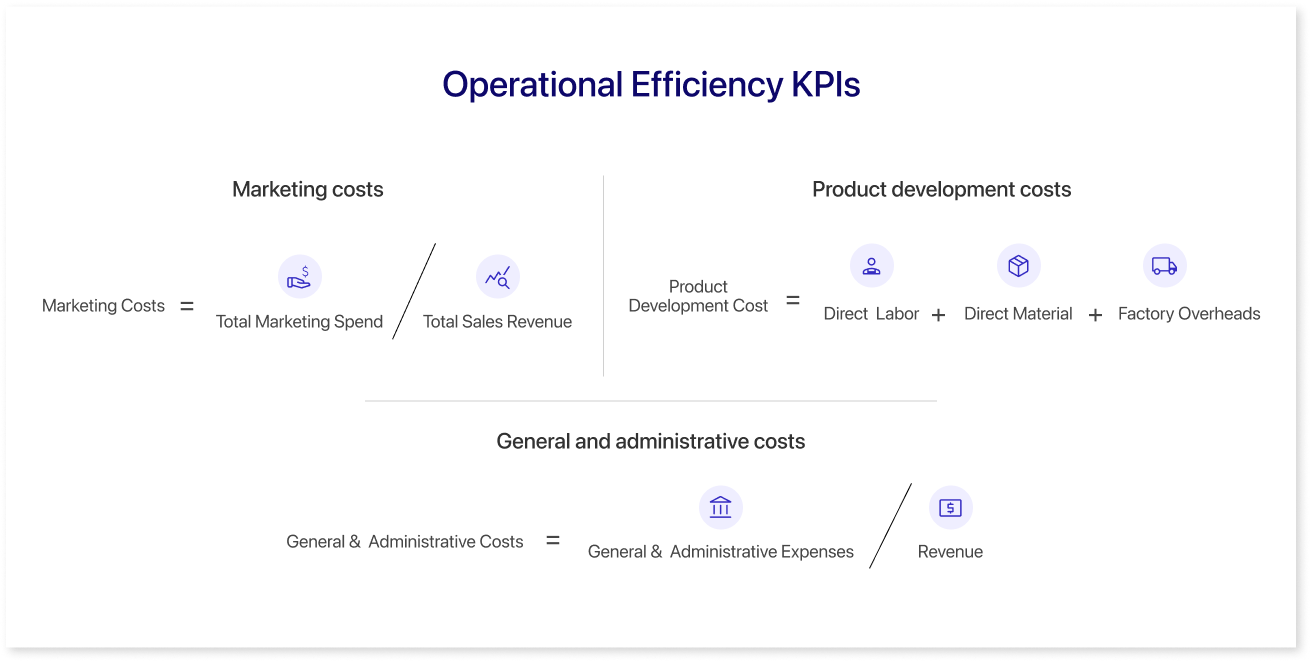
These KPIs measure how efficiently a company operates. Some examples include:
- Marketing costs: This is the amount of money that a company spends on marketing. It is a measure of how much a company is investing in acquiring new customers.
- Product development costs: This is the amount of money a company spends to develop new products or services. It measures how much a company is investing in its future growth.
- General and administrative costs: This is the amount of money that a company spends on its day-to-day operations. It is a measure of how efficiently a company is run.
Strategy KPIs
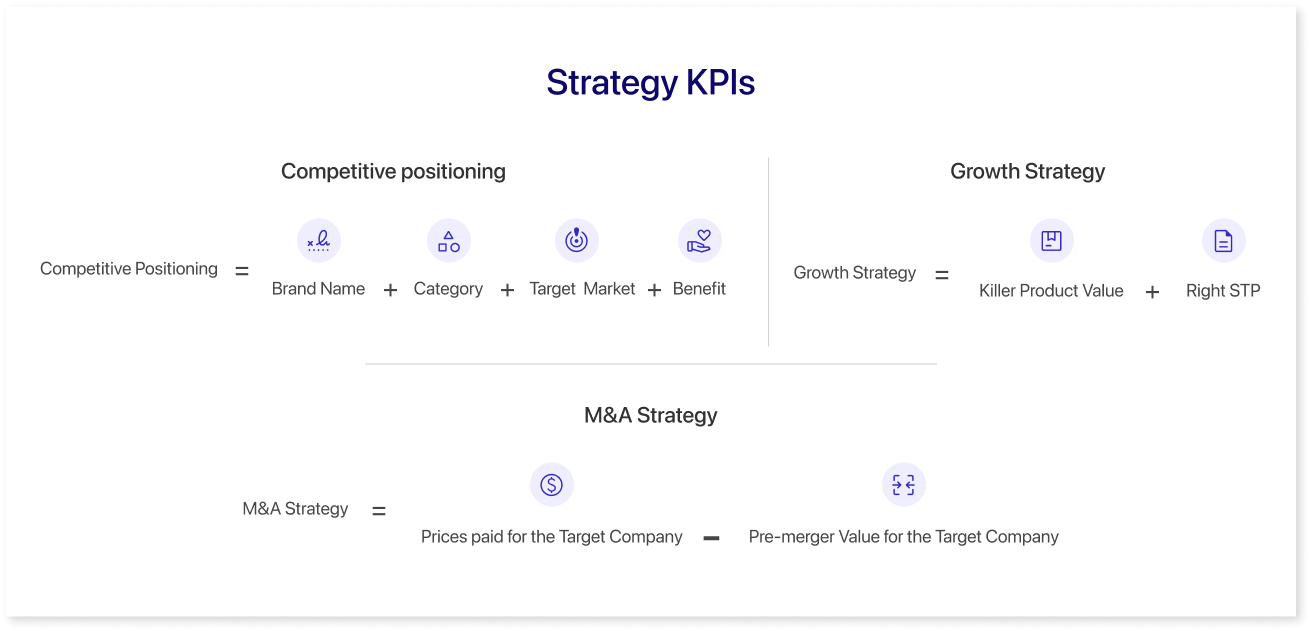
These KPIs measure how well a company is executing its strategic plan. Some examples include:
- Competitive positioning: This is how a company compares to its competitors in terms of price, features, and customer service.
- Growth Strategy: Growth strategy KPIs track the effectiveness of business expansion initiatives, such as entering new markets or launching new products.
- M&A Strategy: M&A (Mergers and Acquisitions) strategy KPIs evaluate the success and impact of acquisitions or mergers on a company's growth, financial performance, and key financial metrics.
How to Track Financial SaaS KPIs With Mokkup.ai?
Mokkup is a cloud-based dashboard wireframing tool for data analysts, BI developers, and business teams. It helps save time, money, and resources by eliminating the need for an in-house design team. It can be used to create wireframes to track a variety of KPIs, including financial KPIs for SaaS companies.
A Mokkup wireframe is like the starting point for making a great dashboard. It's a simple plan that shows where everything should go and how it should work. Think of it as a blueprint for building a house—it helps in creating a dashboard wireframe that's easy to use and works perfectly.
To track financial SaaS KPIs with Mokkup.ai, you will need to:
- Choose a financial dashboard template relevant to your business: Mokkup.ai offers a variety of SaaS templates designed to track specific KPIs. For example, if you are a SaaS company that offers subscription-based services, you can use the "Subscription Analysis" template to track your monthly recurring revenue (MRR), churn rate, and customer lifetime value (CLTV).
- Customize the template to fit your specific needs: Once you choose a KPI template, you can customize it to fit your needs. You can change the themes and add or remove elements.
- Edit data: All the data should be added manually. You can make changes to the pre-populated data, but you cannot add/import the data. Since Mokkup is a wireframing tool, the purpose is to put your thoughts into visuals. Users can manually upload data to get started with the visualization. All our visuals come pre-populated with dummy values to help you visualize metrics better.
- Streamline feedback and iterate: Share your SaaS financial dashboard wireframe and receive feedback directly on the design. You can add the comments in the design itself and let you team know about the iterations, keeping everyone on the same page.
- Share your financial KPI dashboard with others: Once your SaaS financial dashboard is complete, you can share it with others. You can share it via a PNG/JPEG/PDF or embed it on your website or blog.
Conclusion
Understanding and effectively monitoring Financial SaaS Key Performance Indicators (KPIs) is essential for today's digital age businesses. These KPIs, ranging from revenue growth and customer acquisition cost to churn rate and lifetime value, provide critical insights into the health and performance of financial software-as-a-service offerings. By closely tracking these metrics, organizations can make informed decisions, optimize operations, and drive sustainable growth in the highly competitive financial technology landscape.
Whether you're a fintech startup or an established financial institution, harnessing the power of these KPIs is key to staying ahead in a rapidly evolving industry.
Prompt it. Wireframe it with Mokkup.ai.