
With 46% of B2B marketers using webinar analysis in the content marketer's toolbox has been a big help. These webinars provide a chance to connect and interact with the target market, qualifying leads for advancement in the sales funnel. A company's lead generation or marketing strategy may be smoothly linked with the use of one-time webinars or a series of them. These online gatherings are intended to inform the audience about particular goods or subjects.
Compared to live events, evaluating the performance of webinars may take a lot of work. Marketers should look at a variety of indicators rather than just paying attention to attendance or landing page visits to gain a thorough understanding.
The Webinar Analysis dashboard's purpose is to monitor progress toward key objectives:
- Understanding user interactions with the Webinar channel
- Analyzing previous trends to improve webinar quality
- Increasing the conversion rate of the webinar channel
Screen 1: Summary
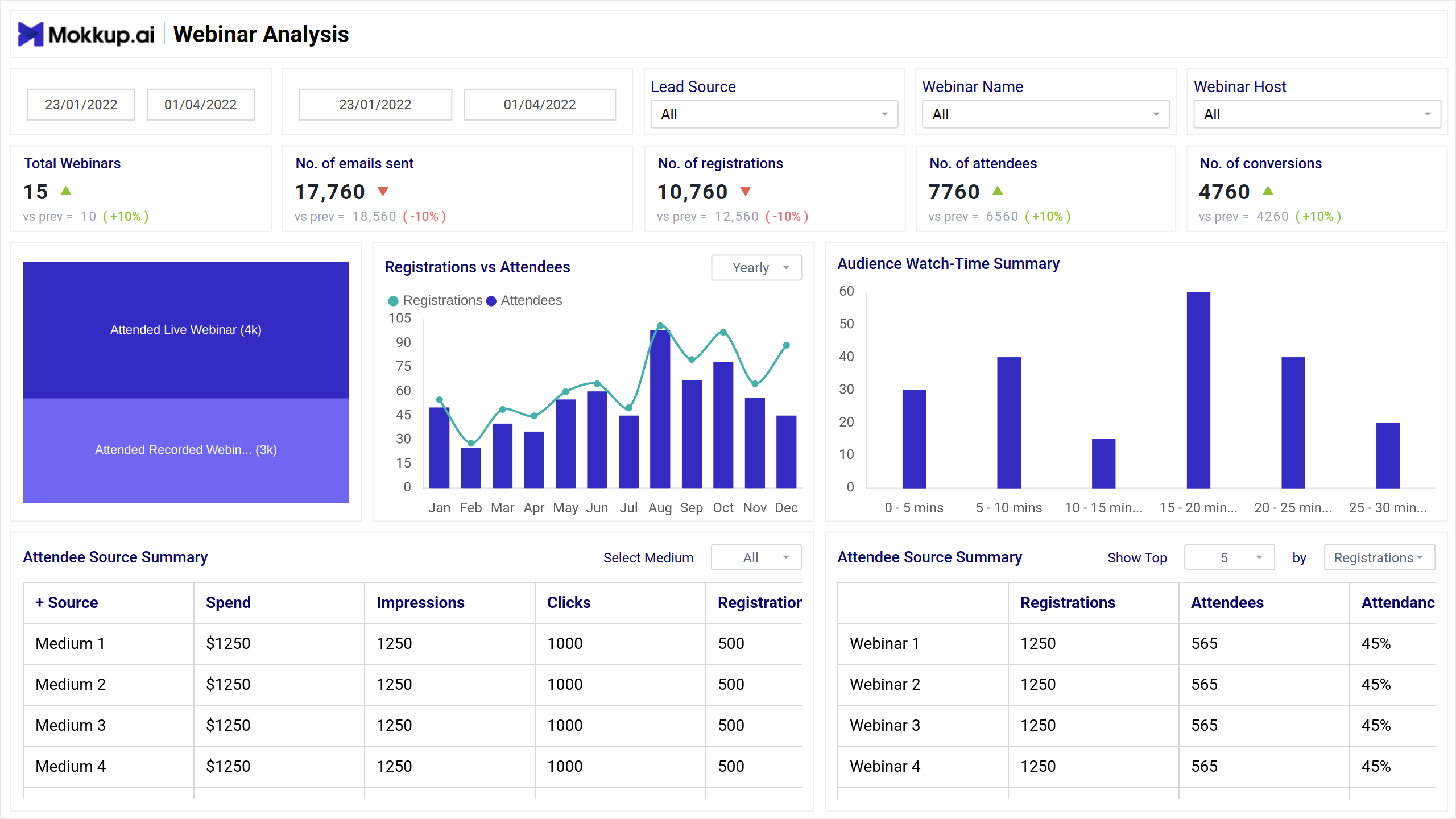
The Summary screen provides a comprehensive display of hosted webinars, presenting details such as registrations, viewing durations, and other pertinent information.
Key Terms to consider:
- Registration VS Attendees - Analyzing the disparity between registered participants and actual attendees to assess the effectiveness of webinar marketing strategies.
- Audience Watch-Time Summary - Summarizing the overall duration that the audience spends engaged with the webinar content, providing insights into viewer engagement levels.
- Attendee Source Summary - Identifying and summarizing the various sources from which attendees were sourced, aiding in understanding the success of promotional channels.
Screen 2: Engagement
The Engagement screen covers the webinar's performance, audience behavior, feedback, and questions.
Key Terms to consider:
- Scheduled length - Evaluating the planned duration of the webinar compared to the actual time spent, providing insights into audience attention and content relevance.
- Avg. Completion Rate Trend - Tracking the trend in average completion rates over multiple webinars to gauge the consistency and effectiveness of content delivery.
- Webinar Feedback Trend - Monitoring the trend in feedback received from attendees to identify areas of improvement and measure overall audience satisfaction.
- Webinar Engagement Summary - Summarizing key metrics related to audience interaction, participation, and engagement throughout the webinar.
- Lead Source - Identifying and categorizing the sources through which leads were generated during the webinar, aiding in understanding lead acquisition channels.
Dashboard Template Insights
Utilizing webinar analysis proves vital for B2B marketers, offering a powerful avenue to connect with the target market, qualify leads, and seamlessly integrate with lead generation or marketing strategies. By leveraging these insights, marketers can enhance upcoming webinars, efficiently generate leads, boost brand recognition, establish authority, and cultivate meaningful connections with prospects, ultimately influencing decision-making processes for optimizing future webinars and achieving overarching marketing objectives.
Conclusion
Marketers can enhance upcoming webinars by using indicators like registrations, participant acquisition, retention, database development, live vs. recorded views, and emerging trends. With the use of these insights, marketers can efficiently create leads, increase brand recognition, establish their authority, and cultivate connections with prospects. The analysis of webinars significantly influences decision-making procedures for optimizing future webinars and achieving marketing objectives.