
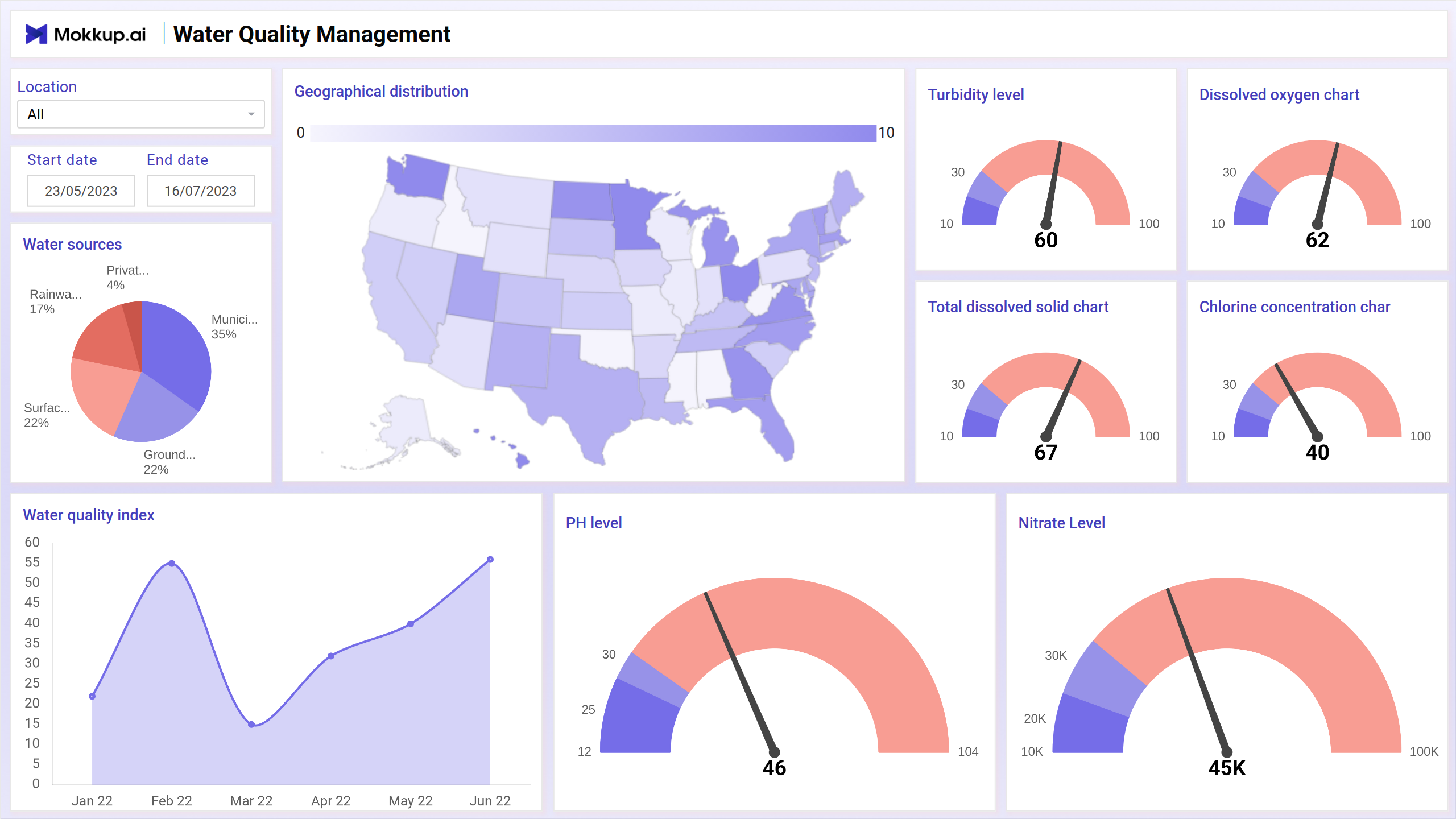
The Water Quality Management Dashboard is a comprehensive tool designed to monitor and analyze crucial data related to water quality in various locations. Through interactive charts, graphs, and color-coded maps, users can quickly assess the current state of water quality and identify potential areas of concern.
Screen 1: Dashboard overview
This centralized platform promotes efficient collaboration among environmental agencies, water treatment facilities, and regulatory bodies, fostering a proactive approach to water quality management and ensuring the health and sustainability of water resources for communities and ecosystems.
Key Terms to Consider:
- Location: This refers to the location where the water quality data is collected.
- Year and Month: This indicates the date and time the water quality data was recorded.
- Water Consumption: This refers to the total amount of water used within a specific area or by a specific group.
- Water quality index (WQI): This single number provides a comprehensive overview of the overall water quality based on multiple parameters.
- PH level: This measures the acidity or alkalinity of water, with a neutral value of 7.
- Turbidity level: This measures the cloudiness or clarity of water caused by suspended particles.
- Nitrate level: This measures the amount of nitrate in water, which can harm human health in high concentrations.
Dashboard Template Insights
The Water Quality Management Dashboard is a crucial template, employing interactive charts and maps to monitor and analyze water quality data efficiently. It fosters collaboration among environmental agencies, regulatory bodies, and water treatment facilities, enabling informed decision-making to preserve water resources at various levels.
Conclusion
The Water Management in this dashboard is invaluable for stakeholders at all levels, from government agencies and environmental organizations to water utilities and individual citizens. By leveraging the power of data visualization and analysis, the dashboard empowers communities to take informed action toward safeguarding their water resources for generations to come.