
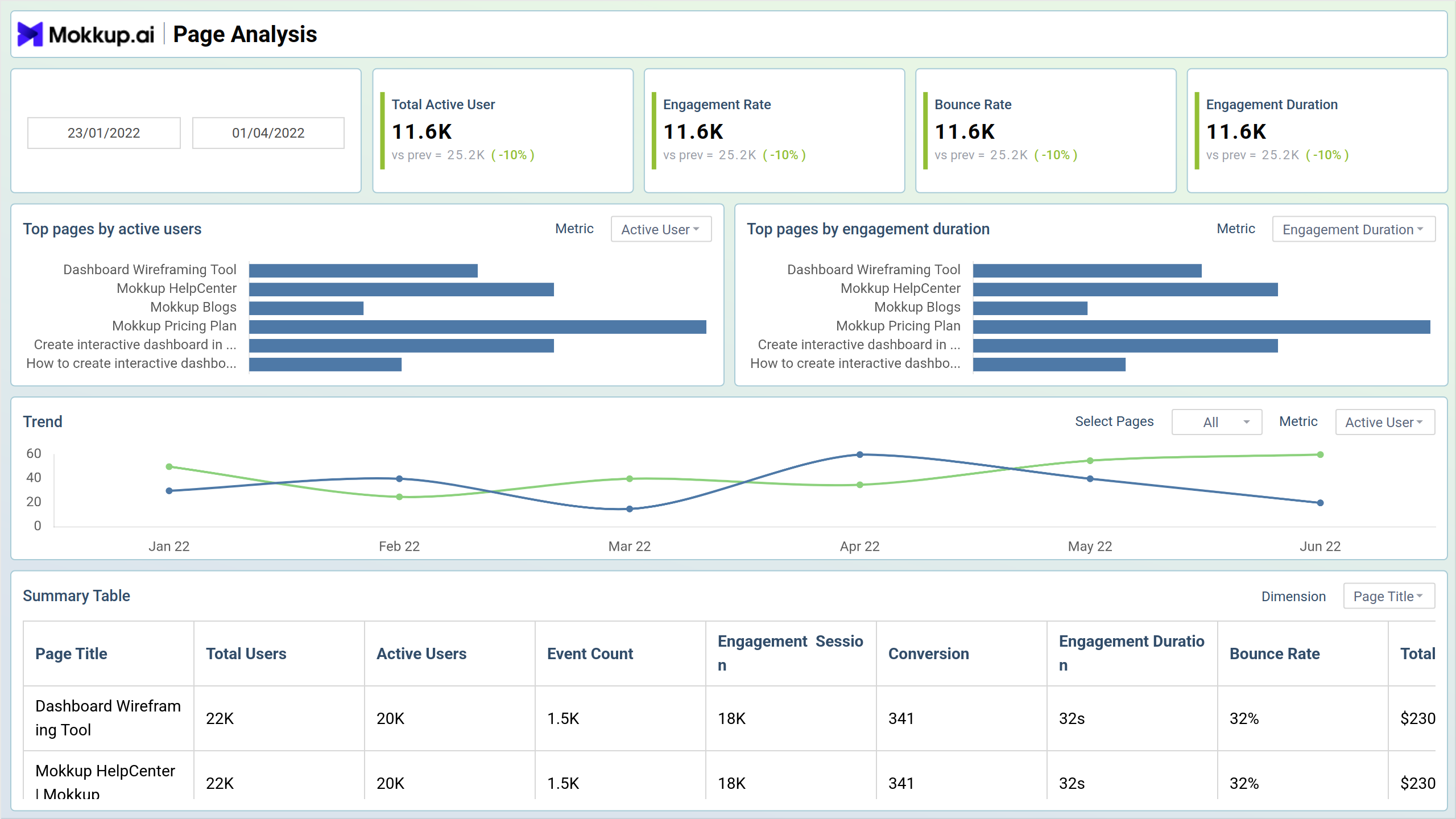
Google Analytics is a tool that empowers businesses to measure and understand customer behavior like never before. It offers insightful data on user behavior, traffic patterns, the demographics of the audience, and much more. Companies can use Google Analytics to understand how customers interact with their online platforms. This information helps improve digital marketing strategies and enhance user experiences.
Screen 1: Page Analysis
The template is built to analyze a user's journey on your product or website. The Page Analysis shows you which webpage is performing better, where your user drop-off is, and ultimately, which page is driving the most conversions.
Key Terms to consider:
- Engagement Rate - Measures the level of user interaction with content or ads on a platform.
- Bounce Rate - Represents the percentage of visitors who navigate away from the site after viewing only one page.
- Summary Table - Provides a consolidated overview of key metrics and performance indicators.
- Trend - Illustrates the direction or pattern of change in metrics over a specific period.
Screen 2: Website Analysis
This screen covers the primary sources of your website traffic and how your revenue compares to your current users and new conversions. The template also analyzes how your organic traffic compares to paid traffic and which is performing better. It also offers an analysis of how your various ad campaigns are helping drive conversions.
Key Terms to consider:
- Conversions - Indicates the number of desired actions completed by users, such as making a purchase or filling out a form.
- Revenue - Reflects the total income generated through sales or other monetization methods.
- Purchase Summary - Offers a concise report on the details of customer transactions.
- Users Acquired by Source - Identifies the origin of users, helping assess the effectiveness of different acquisition channels.
- Channel Performance by Revenue, Conversions, Total Users, Engaged Sessions - Evaluates the performance of various channels based on key metrics.
Screen 3: Organic Vs Paid
This section focuses on key metrics such as Organic Conversion Rate, Paid Conversion Rate, and Revenue from Paid vs. Organic sources, offering valuable insights to optimize digital marketing strategies and allocate resources effectively.
Key Terms to consider:
- Organic Conversion Rate - Measures the percentage of organic traffic that converts into desired actions.
- Paid Conversion Rate - Calculates the rate at which paid traffic leads to conversions.
- Revenue Paid Vs Organic - Compares the revenue generated from paid sources against organic sources.
- Trend Organic Vs Paid - Highlights the changing patterns or direction in performance between organic and paid sources.
Screen 4: AD Campaign Analysis
These screen empowers businesses to track, measure, and optimize their digital presence efficiently. By providing tailored insights, these play a crucial role in helping companies to make data-driven decisions to achieve their objectives.
Key Terms to consider:
- AD Group Performance - Assesses the effectiveness of different ad groups in achieving campaign objectives.
- Top Search Term - Identifies the most frequently used search terms that lead users to the website.
- Campaign Performance - Analyzes the overall effectiveness of marketing campaigns.
- CPC (Cost Per Click) - Represents the cost incurred for each click on an advertisement.
- ADCost - Represents the total cost of advertising, including expenses like creative production and media buying.
Dashboard Template Insights
Google Analytics is a powerful template that provides businesses with insights into customer behavior, enabling them to enhance digital marketing strategies and improve user experiences. The dashboard's analysis screens offer a comprehensive view of webpage performance, user interactions, conversions, and the effectiveness of different traffic sources and ad campaigns.
Conclusion
Embracing GA4 dashboards is a step towards gaining a competitive edge in the digital world, as it allows you to unlock the true potential of your website or mobile app's performance.
Remember, the key to effectively leveraging Google Analytics 4 metrics is to align them with your unique business objectives and constantly monitor and analyze the data. With GA4, businesses can stay ahead in the digital landscape, create impactful marketing strategies, and deliver exceptional user experiences that drive success and growth in today's competitive market.