
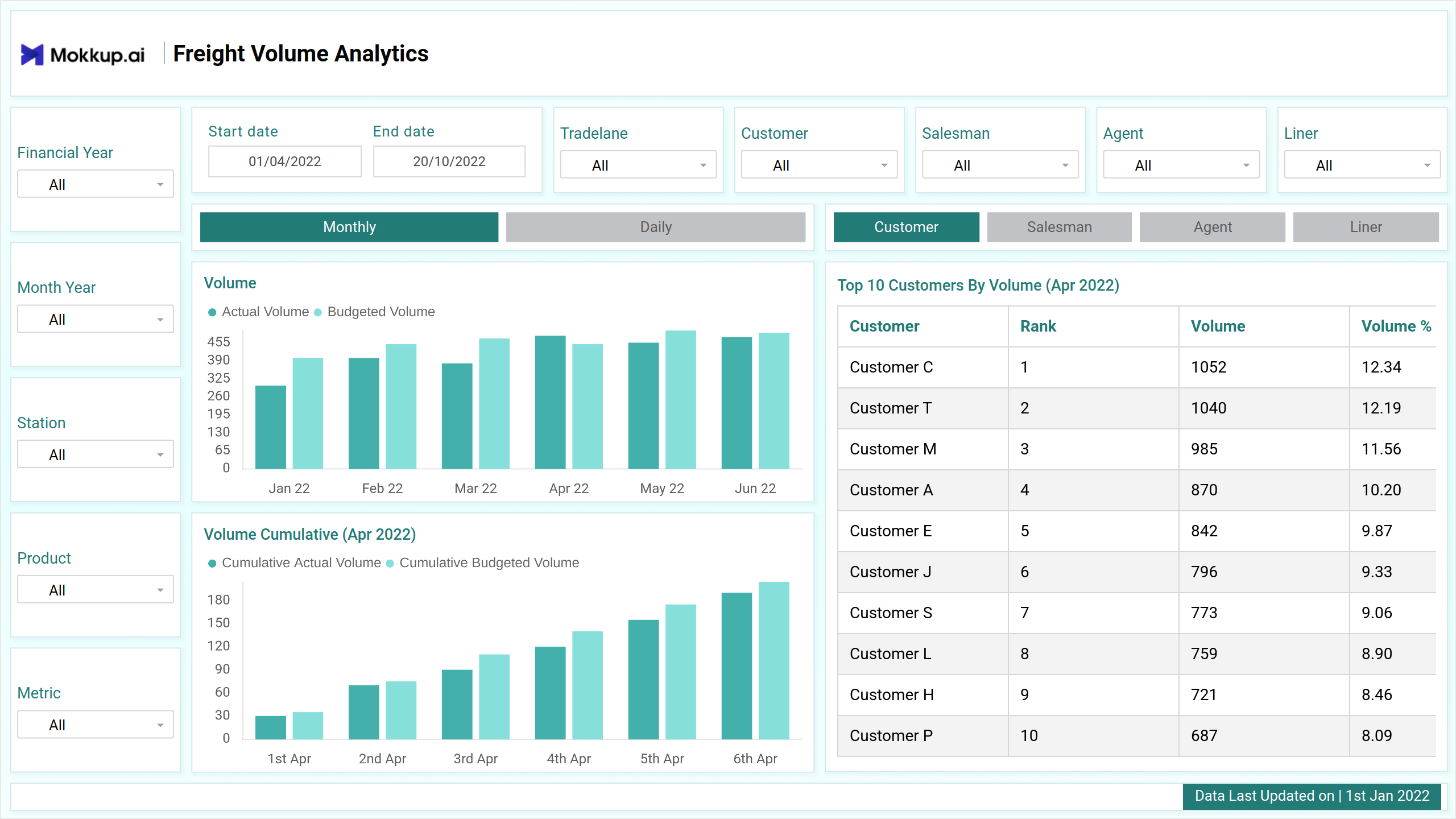
The Freight Volume Analytics dashboard template offers detailed insights into freight volume metrics, including volume, cumulative volume, and the top 10 customers by volume. It also provides an overview of freight activity and customer engagement within logistics operations.
Key Terms to Know
- Volume Tracking: Monthly volume metrics allow for monitoring of freight activity over time, providing insights into demand patterns and operational trends. This tracking helps businesses understand peak periods, manage resources effectively, and plan for future capacity needs.
- Cumulative Volume: Cumulative volume data offers a broader perspective on overall freight volume trends, facilitating long-term performance analysis and forecasting. By examining cumulative figures, organizations can identify growth patterns, assess year-over-year performance, and make strategic decisions to support business objectives.
- Top Customer Analysis: Identifying the top 10 customers by volume enables businesses to prioritize customer relationships, identify key revenue drivers, and tailor service offerings to meet customer needs effectively. This analysis helps in recognizing high-value clients, enhancing customer satisfaction, and fostering long-term partnerships.
Dashboard Template Insights
The dashboard wireframe provides real-time tracking of freight volume, enabling logistics professionals to stay informed about current shipping activity. This real-time data allows for quick adjustments to operational strategies, ensuring timely deliveries and maintaining service standards.
- Cumulative volume metrics provide insights into broader trends and patterns, helping organizations make informed decisions for future planning and resource allocation.
- Identifying the top customers by volume allows businesses to prioritize relationship-building efforts, tailor services to meet specific customer needs, and drive revenue growth. This insight supports personalized customer engagement strategies, improving customer retention and loyalty.
- By analyzing volume data, logistics companies can identify areas for operational improvement, streamline processes, and enhance overall efficiency. This analysis helps in pinpointing bottlenecks, reducing operational costs, and improving service delivery.
Conclusion
The Freight Volume Analytics dashboard template provides access to comprehensive volume analytics, enabling organizations to make data-driven decisions, adapt to changing market conditions, and maintain a competitive edge in the freight industry. By using detailed freight volume metrics and customer insights, logistics companies can enhance operational efficiency, optimize customer relationships, and drive sustained business growth.