
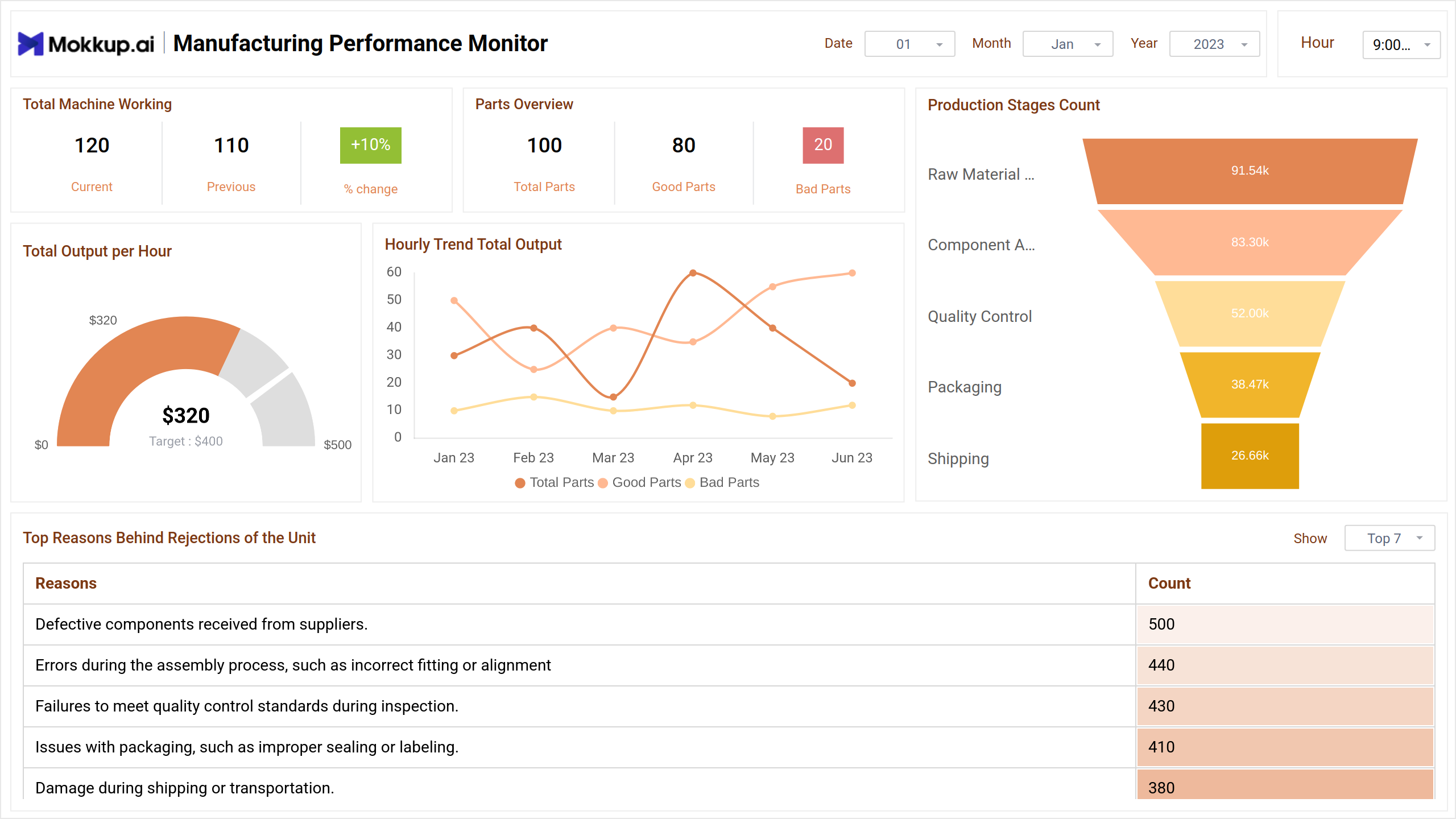
The manufacturing performance monitor dashboard template is a visual representation of key manufacturing metrics that allows users to monitor the health and efficiency of their production lines. The dashboard provides an at-a-glance view of critical information such as total machine working, parts overview, production stages count, raw material remaining, total output per hour, quality control, packaging, and shipping. The dashboard also includes a section on the top reasons behind unit rejections, which can help identify and address quality control issues.
Key Terms to Know
- Total Machine Working: Displays the overall number of machines in operation at any given time.
- Parts Overview: Provides a comprehensive summary of available parts and their respective quantities.
- Production Stages Count: Indicates the number of stages completed in the manufacturing process, tracking progress.
- Total Output per Hour: Measures the quantity of units produced within each hour, reflecting production efficiency.
- Top Reasons Behind Rejections of the Unit: Identifies the primary causes for unit rejections, aiding in quality improvement efforts.
Dashboard Template Insights
Empowering manufacturing operations with essential insights, this dashboard wireframe achieves significant milestones:
- Maximizes productivity by monitoring total machine working and identifying opportunities to minimize downtime.
- Streamlines inventory control with a comprehensive overview of parts availability and usage.
- Optimizes workflow efficiency by tracking production stages count, facilitating better resource allocation.
- Identifies and addresses top reasons behind unit rejections, fostering continuous improvement in product quality.
Conclusion
In conclusion, the manufacturing performance monitor dashboard wireframe emerges as a pivotal tool for enhancing manufacturing operations. By providing insights into equipment utilization, parts management, production processes, and quality control, it facilitates informed decision-making and continuous improvement. With its ability to streamline operations and drive efficiency, it serves as a catalyst for achieving manufacturing excellence and meeting production targets effectively.