
E-commerce customer segmentation dashboard template is essential for understanding and engaging your customers. By segmenting your customers into different groups based on their demographics, behavior, and preferences, you can develop more targeted and effective marketing campaigns, improve product recommendations, and create a more personalized shopping experience for each customer. You can segment your customers by demographics such as age, gender, and location to develop targeted marketing campaigns for each group. For example, you might send a different email campaign to new and returning customers.
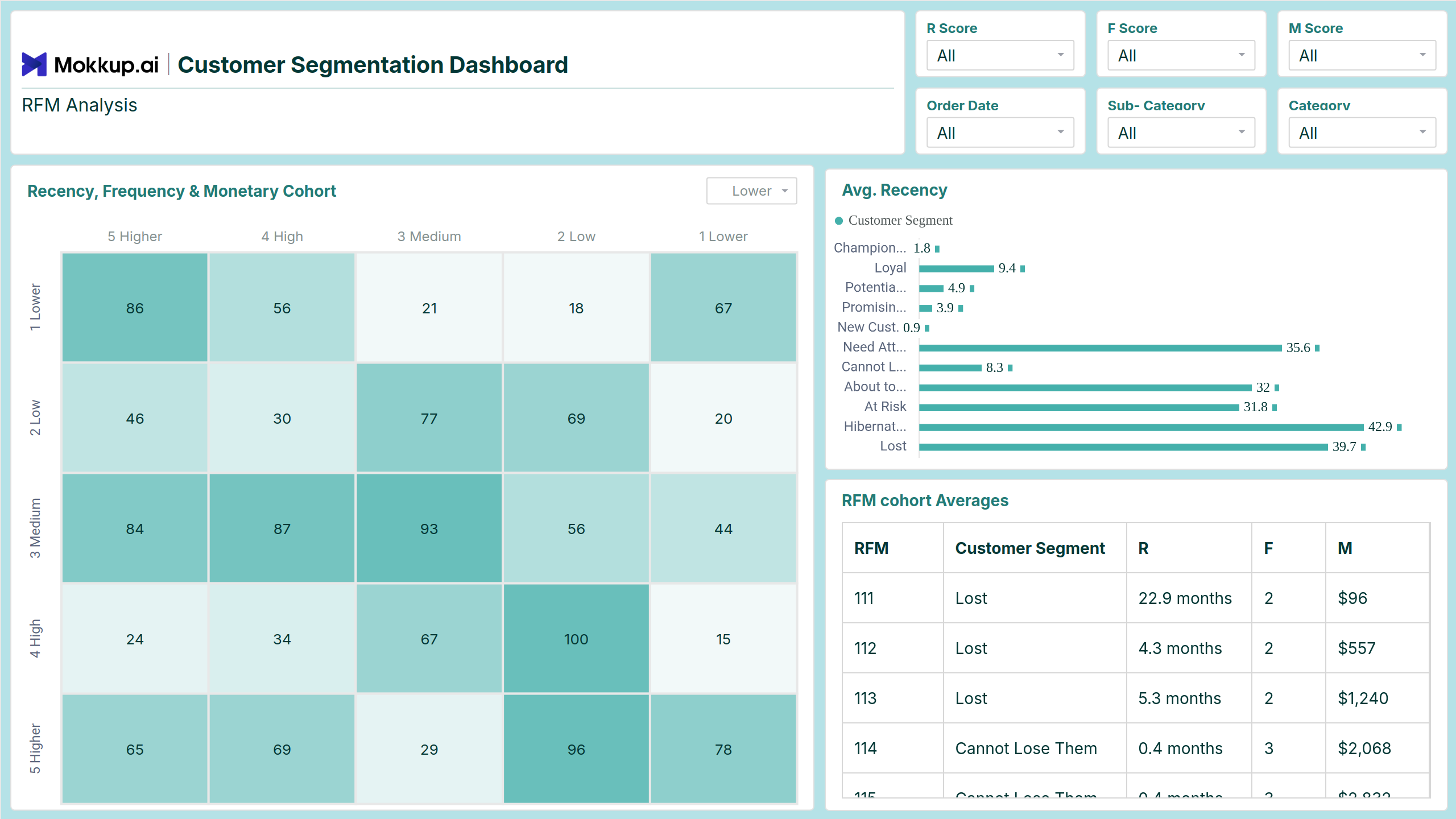
The dashboard wireframe comprises two screens, Customer Segmentation Dashboard, & Geographical Customer Segmentation, each of which is explained briefly below.
Customer Segmentation Dashboard
This screen provides a comprehensive view of customer data, enabling businesses to categorize their audience into distinct groups based on various criteria.
Key Terms to Know
- Recency, Frequency, And Monetary Cohort: Track RFM cohort averages over time to identify trends and areas for improvement.
- Average Recency: Calculate average recency by cohort to identify which cohorts are most at risk of churning.
- Rfm Cohort Averages: Track RFM cohort averages over time to identify trends in customer behavior.
Geographical Customer Segmentation
This screen offers businesses a visual breakdown of customer demographics based on geographic location. It also helps analyze key metrics such as order date, M-score, F-score, etc across regions.
Key Terms to Know
-
Polymap: The poly map displays the geographic customer segmentation of the United States, with purple regions indicating areas with a high concentration of customers.
Dashboard Template Insights
- Gain a deeper understanding of regional preferences and behaviors to inform product offerings and promotions.
- Identify high-value geographic markets and allocate resources strategically to drive sales growth.
- Deliver customized customer experiences based on location, enhancing satisfaction and loyalty.
Conclusion
RFM will enable organizations to understand customers based on their recency of purchase, money spent per basket, and frequency of purchase. This will help decision-makers categorize customers into different categories and thereby make marketing investments accordingly. It will not only save costs but also maximize revenue and enhance customer satisfaction levels.