
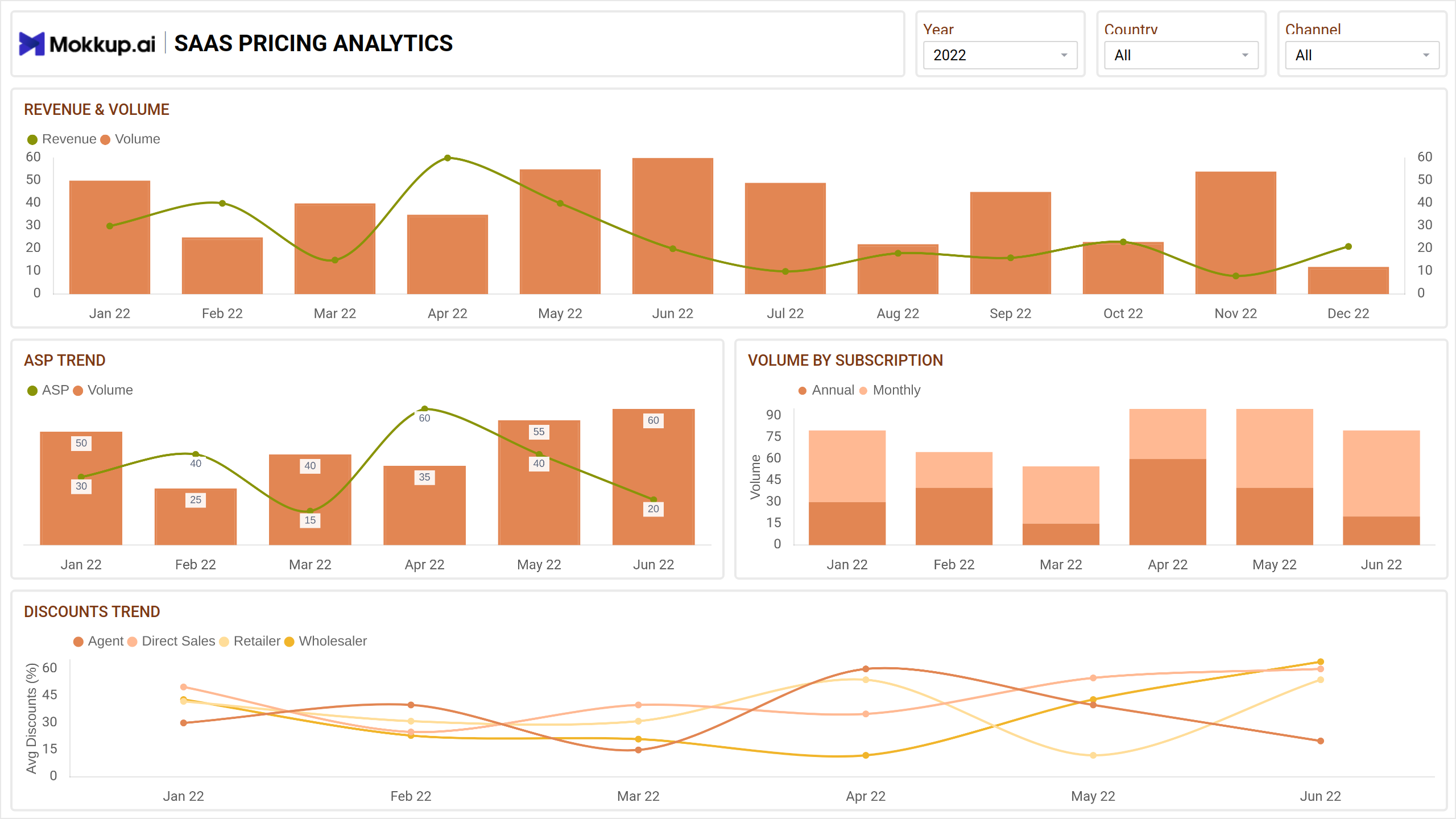
The SaaS Pricing Analytics dashboard template should be your go-to starting point for optimizing pricing strategies as your company scales. As SaaS businesses grow, pricing becomes a critical lever, directly influencing customer acquisition and overall company performance.
In today's data-driven market, leveraging big data for pricing decisions is more crucial than ever. A mere 1% price increase can lead to an impressive 8.7% boost in operational profit. Ignoring data insights in pricing can lead to missed revenue opportunities, making informed decisions a must for long-term success.
SAAS Pricing Analytics
This dashboard enables businesses to optimize their pricing strategies. It involves analyzing key metrics such as revenue, volume, ASP trend, volume by subscription, and discount trend.
Key Terms to Know:
- Revenue & Volume: Central to SAAS Pricing Analytics, this term refers to the income generated and the quantity of services or products sold, providing insights into overall business performance.
- ASP Trend: Average Selling Price (ASP) Trend is a crucial metric that tracks the changes in the average price of products or services over a specific period, helping businesses understand pricing dynamics.
- Volume by Subscription: This key term focuses on the quantity of subscriptions or users, offering insights into customer engagement and the growth of the subscriber base.
- Discount Trend: Examining the Discount Trend involves analyzing the variations in discounts offered, helping businesses understand the impact on sales and customer acquisition.
Plan Pricing Strategy
Well-crafted SAAS plan pricing strategies play a pivotal role in achieving business success. Utilizing a thoughtfully designed dashboard is essential for analyzing key metrics and making informed decisions to support these strategies effectively.
Key Terms to Know:
- MRR by Price: Monthly Recurring Revenue analyzed by different pricing tiers, providing insights into revenue distribution and customer preferences.
- LTV vs CAC Trend: Comparison of Customer Lifetime Value (LTV) against Customer Acquisition Cost (CAC) trends helps evaluate the long-term profitability of customer acquisition efforts.
- Feature Score Analysis: Assessment of the performance and popularity of product features, aiding in prioritizing and optimizing feature development.
- Customer Summary: A concise overview of customer data, including demographics, behaviors, and preferences, offering valuable insights for targeted marketing and product improvement.
Dashboard Template Insights
- SaaS companies in competitive markets require strategic pricing to succeed.
- Pricing strategy must consider its impact on client acquisition.
- Leveraging big data is essential for effective decision-making.
- This sales dashboard provides key metrics such as revenue and ASP (Average Selling Price) trends.
- Effective SaaS pricing plans involve tracking important metrics like: MRR (Monthly Recurring Revenue) by Priceand LTV (Lifetime Value) vs CAC (Customer Acquisition Cost) Trend
- Tailored discounting strategies and customer segmentation are crucial for optimizing revenue.
- These factors help transform pricing strategies within the SaaS industry.
Conclusion
Last but not least, because it meets the diverse demands of clients, establishing a customized discounting strategy across various channels is important. Furthermore, discounts can help customers switch from monthly to yearly subscriptions, increasing subscription-based income. Quantifying customer profiles based on demands, preferences, spending plans, demographics, and employment information is necessary when creating a pricing strategy. This segmentation revolutionizes the pricing strategies for SaaS companies.