
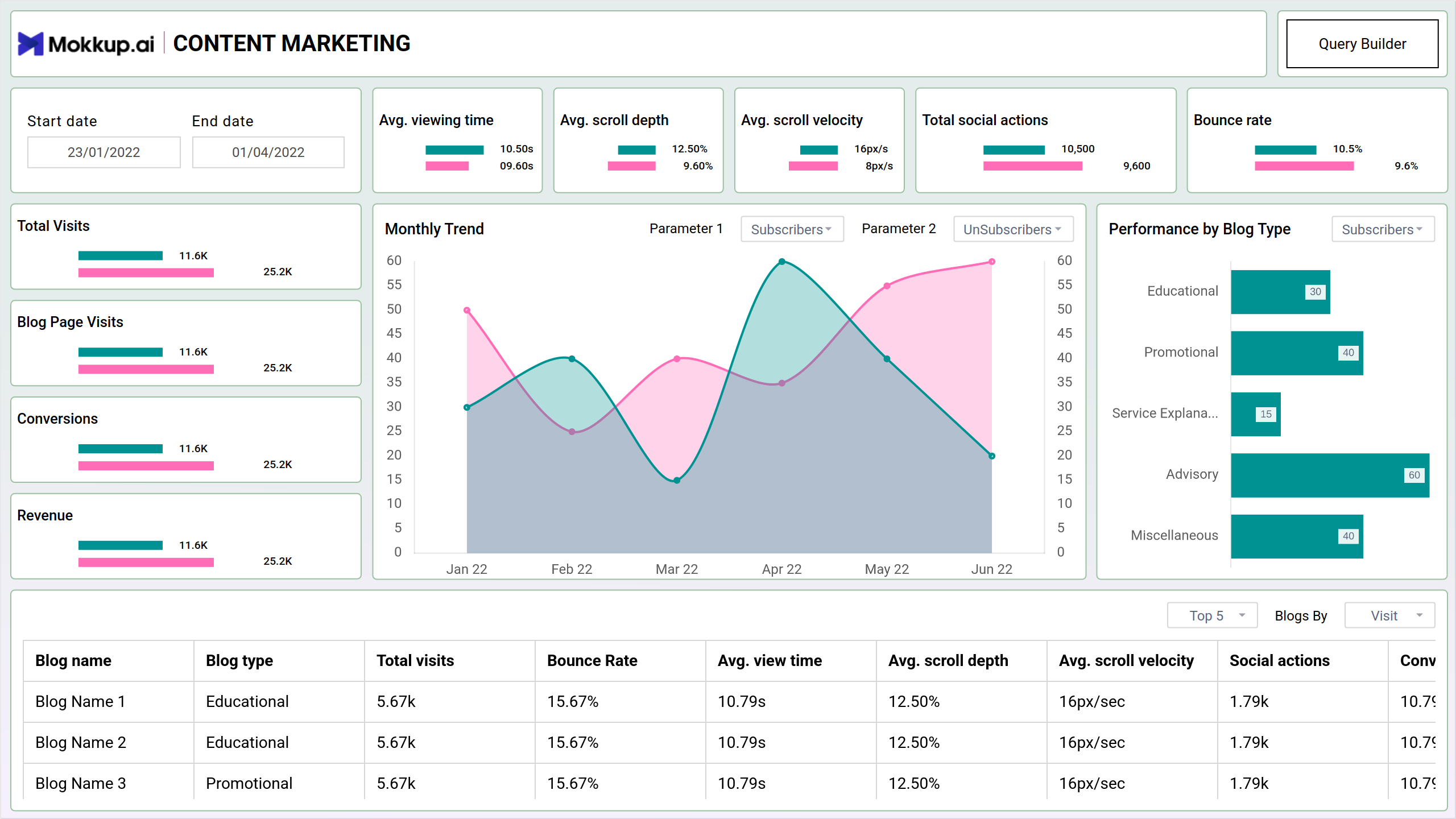
Content marketing analysis looks at various variables to see if your material or your rivals is effective. It helps monitor campaign development and identifies opportunities for marketing strategy enhancements.
Screen 1: Summary
The Summary View provides high-level knowledge of client preferences about blogging.
Key Terms to consider:
- Avg. Scroll Depth - It gauges the average distance users scroll down a webpage, providing insights into content engagement.
- Avg. Scroll Velocity - It measures the average speed at which users scroll down a webpage, indicating user interest and engagement dynamics.
- Social actions - It quantifies user engagement on social media platforms, reflecting the impact of social media marketing efforts.
- Performance by Blog Type - It evaluates the effectiveness of different blog types in terms of engagement and conversion rates.
- Bounce Rate - This indicates the percentage of visitors who navigate away from a website after viewing only one page, offering insights into website usability and content relevance.
Screen 2: Detailed View
The Detailed View delivers more in-depth information about channel effectiveness.
Key Terms to consider:
- Channel with Conversion - It identifies the specific content marketing channel leading to conversions, crucial for refining marketing strategies.
- Sub-Channel with conversion - It pinpoints the sub-category within a channel that contributes to successful conversions.
- Backlink Performance - It assesses the effectiveness and impact of backlinks on website performance and engagement.
- CTR - Click-Through Rate measures the proportion of users who click on a specific link to the total number of users who view a page or content.
Dashboard Template Insights
The content marketing analysis dashboard provides a holistic evaluation of content effectiveness and competitor performance. With key metrics like Avg. Scroll Depth, Social Actions, and Channel with Conversion, businesses can make data-driven decisions to refine marketing strategies and enhance conversion rates, staying ahead by adapting content based on client preferences.
Conclusion
The content marketing dashboard offers insightful data that can be used to boost conversion rates and make content more effective. It supports data-driven decision-making to improve brand performance and optimize marketing tactics. Businesses can remain ahead of their rivals by constantly updating and upgrading their content depending on client preferences and interactions.