
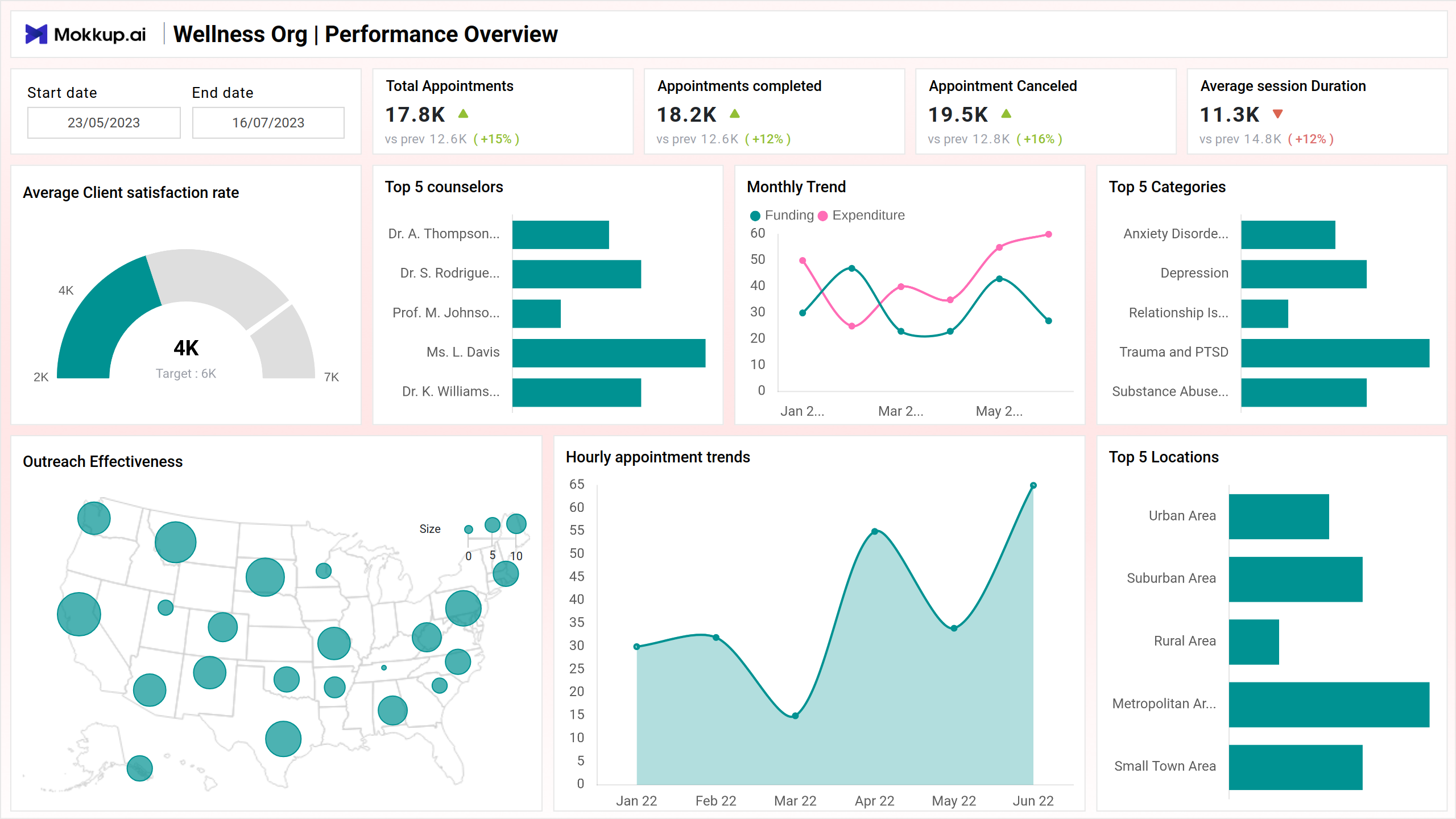
An employee wellness dashboard visually represents the most important metrics and KPIs (key performance indicators) related to employee health and well-being. It provides a quick and easy way to track employee engagement in wellness programs, health risk factors, and overall health status. A well-designed dashboard can help employers identify areas where they can improve their wellness programs and make informed decisions about improving their employees' health and well-being.
Screen 1: Wellness Overview
This screen encompasses various data points including start and end dates, department, wellness program, challenges, employee details, participation rates, engagement levels, top program participation, goal completion percentage, participation trends, wellness trends, employee engagement metrics, participation summaries, overall employee wellness assessments, and details of top wellness programs, including their names, types, descriptions, and participation breakdowns by department.
Key Terms to consider:
- Department: Organizes employees by their respective departments, aiding in targeted analysis and intervention strategies.
- Wellness Program: Identifies the specific wellness initiatives offered to employees, guiding program evaluation and effectiveness assessment.
- Challenge: Refers to specific wellness challenges or activities employees can participate in, fostering engagement and healthy competition.
- Employee: Provides individual-level data, allowing for personalized analysis and intervention strategies tailored to employee needs.
- Participation Rate: Quantifies the level of employee engagement in wellness programs, indicating program effectiveness and interest.
- Engagement Level: Measures the depth of employee involvement in wellness activities, reflecting the overall effectiveness of wellness initiatives.
- Top Program Participation: Highlights the most popular wellness programs among employees, guiding resource allocation and program promotion efforts.
- Goal Completion Percentage: Evaluates the achievement of wellness-related goals set by employees or the organization, indicating program effectiveness and employee commitment.
- Participation Trend: Tracks changes in employee participation rates over time, identifying patterns and informing program adjustments.
- Wellness Trend: Monitors changes in employee wellness indicators over time, guiding program adjustments and intervention strategies.
- Employee Engagement: Assesses the level of employee involvement and satisfaction with wellness programs, guiding program refinement and enhancement.
- Participation Summary: Provides a concise overview of employee participation in wellness initiatives, facilitating program evaluation and strategic planning.
- Overall Employee Wellness: Offers a holistic assessment of employee well-being, incorporating various wellness indicators and participation metrics.
- Top Wellness Programs with Name, Type, and Description: Identifies the most effective wellness programs, providing details on program type, description, and participation breakdowns.
- Participation by Department: Analyzes employee participation rates across different departments, identifying disparities and guiding targeted interventions.
Screen 2: Physical Health
This screen presents a range of data including start and end dates, departmental information, details on wellness programs and challenges, individual employee data, overall participation and activity completion rates, top challenge participation, goal completion percentages, average participation per activity, participation breakdown by department, challenge types, participation frequency, trends in average step counts, leaderboard for top participation, challenge progress tracking, physical activity goals, and a summary of BMI statistics.
Key Terms to consider:
- Wellness Program: Identifies specific initiatives aimed at promoting employee well-being, guiding program evaluation and effectiveness assessment.
- Challenge: Refers to specific wellness challenges or activities designed to engage employees and promote healthy behaviors.
- Employee: Provides individual-level data, allowing for personalized analysis and intervention strategies tailored to employee needs.
- Overall Participation Rate: Quantifies the level of employee engagement in wellness activities, indicating program effectiveness and interest.
- Activity Completion Rate: Measures the percentage of completed wellness activities, reflecting employee involvement and program effectiveness.
- Top Challenge Participation: Highlights the most popular wellness challenges among employees, guiding resource allocation and program promotion efforts.
- Goal Completion Percentage: Evaluates the achievement of wellness-related goals set by employees or the organization, indicating program effectiveness and employee commitment.
- Average Participation per Activity: Calculates the average level of employee engagement per wellness activity, providing insights into program effectiveness and interest.
- Participation by Department: Analyzes employee participation rates across different departments, identifying disparities and guiding targeted interventions.
- Challenge Type Breakdown: Provides a breakdown of wellness challenges by type, guiding program refinement and promotion efforts.
- Frequency by Participation: Tracks the frequency of employee participation in wellness activities, identifying trends and informing program adjustments.
- Average Step Count Trends: Monitors trends in average step counts over time, providing insights into employee physical activity levels and wellness program effectiveness.
- Top Participation Leaderboard: Ranks employees based on their level of participation in wellness activities, fostering healthy competition and motivation.
- Challenge Progress: Tracks employee progress in completing wellness challenges, motivating participation and goal achievement.
- Physical Activity Goal: Sets targets for employee physical activity levels, guiding behavior change and promoting overall health and well-being.
- BMI Summary: Provides a summary of employee Body Mass Index (BMI) data, enabling assessment of overall health and wellness trends within the organization.
Screen 3: Mental Health
This screen offers a variety of features, including tracking challenge progress, displaying a leaderboard of top participants, logging meditation sessions, presenting stress level distribution, analyzing participation by department, breaking down challenges by type, and monitoring participation frequency.
Key Terms to consider:
- Challenge Progress: Tracks employee progress in completing wellness challenges, motivating participation and goal achievement.
- Top Participation Leaderboard: Ranks employees based on their level of participation in wellness activities, fostering healthy competition and motivation.
- Meditation Session Log: Records employee participation in meditation sessions, promoting mindfulness and stress reduction.
- Stress Level Distribution: Analyzes the distribution of stress levels among employees, guiding intervention strategies and wellness program development.
- Participation by Department: Examines employee participation rates across different departments, identifying trends and disparities to inform targeted interventions.
- Challenge Type Breakdown: Provides a breakdown of wellness challenges by type, guiding program refinement and promotion efforts.
- Frequency by Participation: Tracks the frequency of employee participation in wellness activities, identifying trends and informing program adjustments.
Screen 4: Employee Feedback
This screen offers various feedback-related features, including feedback types and trends, a summary of feedback incorporation, which includes ID, date, action status, and date of action, challenge ratings, and a summary of feedback submissions.
Key Terms to consider:
- Feedback Type: Identifies the different types of feedback received, facilitating categorization and analysis for improvement.
- Feedback Trend: Tracks changes in feedback over time, enabling identification of patterns and areas for enhancement.
- Feedback Incorporation Summary: Provides a summary of how feedback has been incorporated, including details such as ID, date, action status, and date of action, guiding responsiveness and improvement efforts.
- Challenge Ratings: Displays ratings or evaluations of wellness challenges, offering insights into participant satisfaction and program effectiveness.
- Feedback Submission Summary: Summarizes feedback submissions, enabling quick assessment of trends and areas for improvement in wellness initiatives.
Dashboard Template Insights
The employee wellness dashboard offers a comprehensive view of key metrics and KPIs related to employee health and well-being. It enables businesses to track engagement in wellness programs, identify health risk factors, and assess overall well-being. With features such as breakdowns by department, trends analysis, and feedback summaries, it empowers employers to tailor wellness initiatives effectively and drive meaningful change in the workplace.
Conclusion
An employee wellness dashboard is a valuable tool for tracking the health and well-being of your employees. It can help you identify areas where your employees struggle and need more support. This can also help you track your progress over time and see how your wellness programs affect your employees' health and well-being. This can be a valuable tool for communicating with your employees about their health and well-being so they can take ownership of their health.