
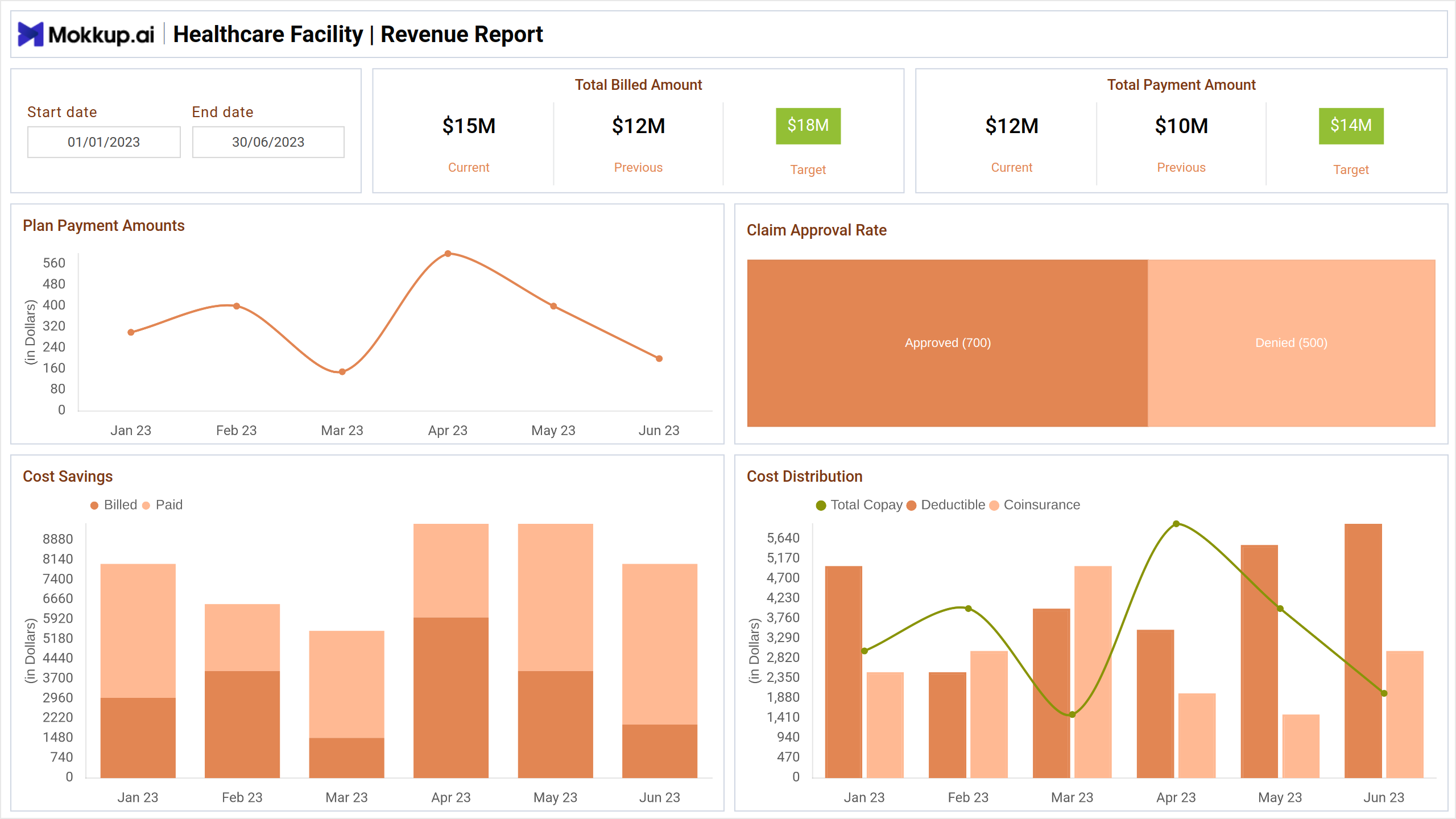
The Healthcare Facility Revenue Report dashboard template provides a comprehensive overview of key performance indicators (KPIs) and various metrics critical to understanding the financial health and efficiency of the facility. It allows stakeholders to monitor, analyze, and make informed decisions based on the data presented.
Key Terms to Know
- Total Billed Amount: Represents the aggregate monetary value of all healthcare services and treatments invoiced by the facility within a specified period.
- Total Payment Amount: Refers to the total sum of money received by the healthcare facility as payment for the services rendered within a specified period.
- Plan Payments Amounts: It displays the trend of payments over time, allowing for an analysis of payment patterns and the identification of any fluctuations or anomalies.
- Claim Approval Rate: It represents the approval rates of claims, categorizing them to provide insights into the efficiency and effectiveness of the claim approval process.
- Cost Savings: Illustrates the cost savings achieved, comparing billed amounts versus paid amounts. It helps in understanding financial efficiency and identifying areas for potential savings.
- Cost Contribution: Breaks down the total cost contributions from different components.
The patient's share of the costs, the amount patients pay before insurance begins to cover expenses, and the percentage of costs covered by the patient after the deductible is met.
Dashboard Template Insights
The dashboard wireframe highlights essential financial metrics:
- It shows revenue potential from invoiced services.
- The dashboard wireframe indicates actual funds received, reflecting cash flow.
- Visualizing payment trends and claim approval rates helps identify patterns and process efficiency.
- Analyzing cost savings and contributions highlights financial efficiency and patient cost responsibilities.
Conclusion
The Healthcare Facility Revenue Report dashboard template is crucial for monitoring financial performance and optimizing revenue cycles. It helps stakeholders make informed decisions, ensuring financial stability and efficient operations, ultimately supporting high-quality patient care.