
Are you fascinated by the world of data and its storytelling potential? If you've ever been captivated by insightful visualizations, becoming a Tableau Developer could be your next exciting endeavor.
In today's data-driven era, Tableau Developers play a pivotal role in uncovering hidden insights and driving organizational success. Join us as we explore the pathway to becoming a Tableau Developer, unlocking doors to a rewarding career where data meets creativity. Let's dive in and discover the power of Tableau together.
Table of Contents
- What is Tableau?
- Key Features and Benefits
- What is a Tableau Developer?
- Importance in Data Visualization
- Roles and Responsibilities of Tableau Developer
- How to Become a Tableau Developer?
- Career Growth and Opportunities for Tableau Professionals
- Why are Companies Hiring More Tableau Professionals?
What is Tableau?
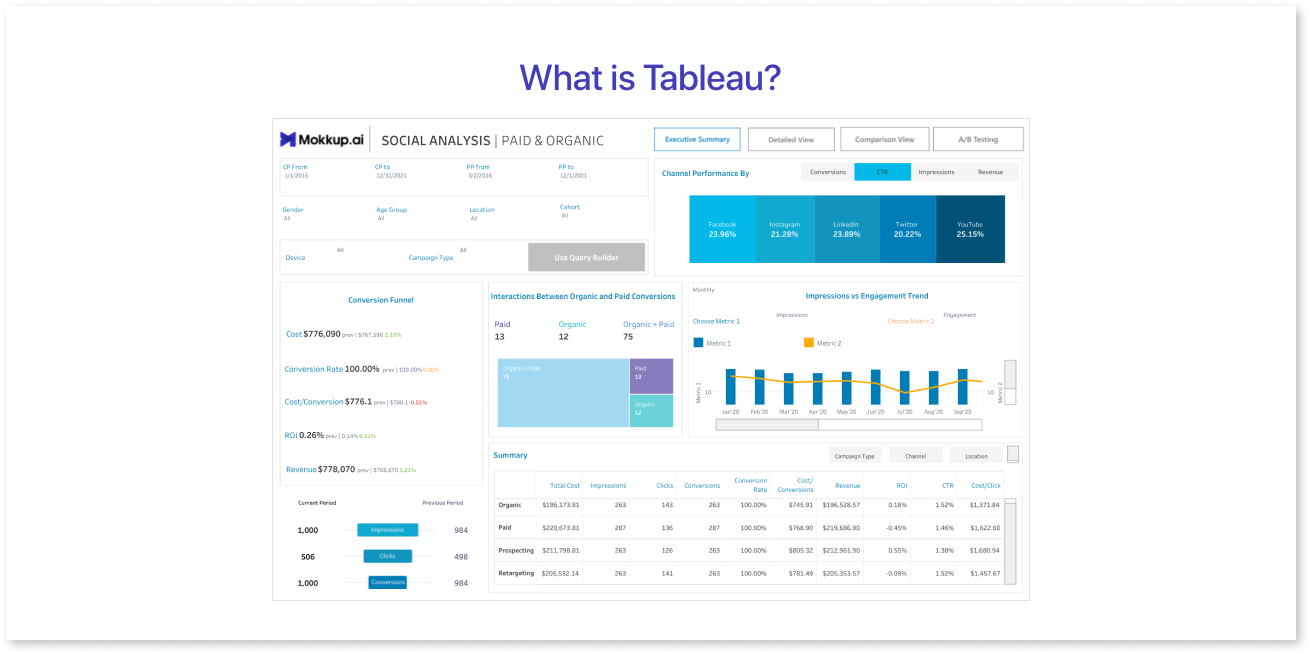
Tableau is basically special software that takes boring numbers and turns them into exciting pictures. Imagine you're a detective trying to solve a mystery. Many clues are scattered around, including footprints, fingerprints, and witness statements.
Tableau helps you gather and arrange all these clues in a way that makes sense. It's like putting together a puzzle using data instead of puzzle pieces.
Stanford University academics launched Tableau in 2003. Leader in business analytics, it was purchased by Salesforce in 2019 for $15.7 billion. Tableau was founded by database analysis and visualization experts who sought a business outlet for their research.
Tableau, headquartered in Seattle, Washington, offers simple-to-use tools for analyzing and examining data. A major turning point for the industry was reached when Salesforce acquired Tableau, which improved its capabilities and set it up for future innovation.
Today, Tableau continues to empower users worldwide to derive insights and make informed decisions from their data.
Key Features and Benefits
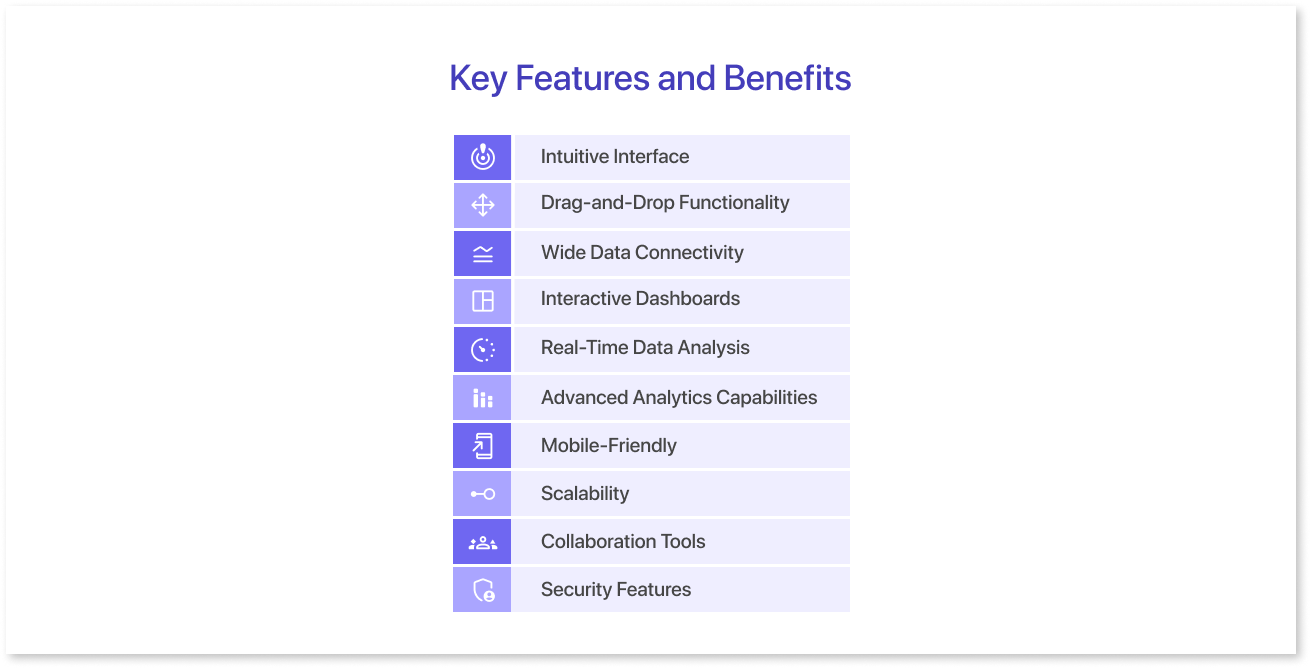
| Key Features | Benefits |
| Intuitive Interface | Easy to learn and use for beginners. |
| Drag-and-Drop Functionality | Simplifies data analysis and visualization creation. |
| Wide Data Connectivity | Connects to various data sources for comprehensive analysis. |
| Interactive Dashboards | Allows for dynamic exploration and storytelling with data. |
| Real-Time Data Analysis | Provides up-to-date insights for timely decision-making. |
| Advanced Analytics Capabilities | Supports complex statistical analysis and forecasting. |
| Mobile-Friendly | Access and interact with visualizations on the go. |
| Scalability | Scales to accommodate large datasets and enterprise needs. |
| Collaboration Tools | Facilitates teamwork among users. |
| Security Features | Ensures data privacy and compliance with industry regulations. |
What is a Tableau Developer?
A Tableau Developer is skilled at taking all sorts of jumbled-up data (just like making yourself skilled in business intelligence), like numbers and information, and turning them into neat, easy-to-understand pictures and graphs. These pictures help people see patterns and trends in the data, like how a map helps you find your way around a city.
Their job is to use a special computer program called Tableau. They use Tableau to organize the data, create cool visuals, and even make interactive displays that let people explore the data themselves. It's like they're the artists of data, using Tableau as their paintbrush to create masterpieces that tell stories and help businesses make smart decisions.
Importance in Data Visualization
Data visualization is like turning a jumble of numbers into a clear picture story. Tableau Developers are like the artists who make these pictures using special computer tools. These pictures aren't just for show – they're super helpful.
Imagine you have a huge stack of receipts from your favorite store. Instead of flipping through them all, a Tableau Developer can turn them into a colorful graph or chart. This makes it easier to see which items you buy most often or when you spend the most money.
Here are some facts:
- Easy Understanding: People understand pictures better than spreadsheets. With Tableau, developers can make data easy to understand at a glance.
- Spotting Trends: Tableau visuals help spot trends or patterns in data that might be hard to see otherwise. It's like finding a hidden treasure in a messy room!
- Better Decisions: Businesses use Tableau to make smart choices. Visualized data helps them see what's going well and what needs fixing.
Data visualization tools isn't just about pretty pictures – it's about making sense of information and using it to make life easier and businesses smarter. And Tableau Developers are the peers who make it all happen.
Roles and Responsibilities of Tableau Developer
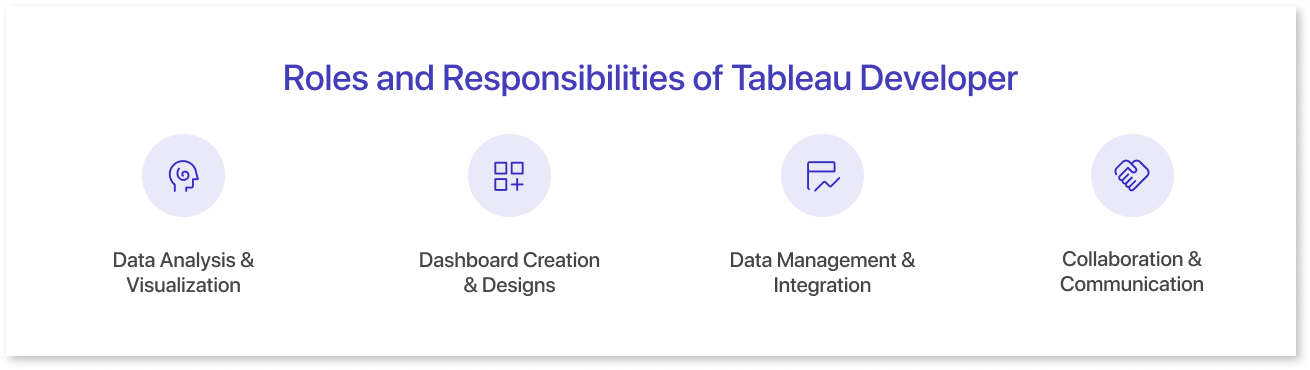
Tableau Developers undertake pivotal responsibilities to ensure data clarity and utility across various organizational functions. Here's an overview of their key roles:
| Key Roles | Responsibilities |
| Data Analysis & Visualization | Tableau Developers serve as data interpreters, transforming raw data into visually intuitive representations. Through meticulous analysis and adept visualization techniques, they present complex datasets in accessible formats, enabling stakeholders to discern trends and patterns effectively. |
| Dashboard Creation & Designs | Tableau Developers craft dynamic dashboards akin to control panels, aggregating critical data metrics into cohesive displays. Their expertise lies in designing user-friendly interfaces that streamline end-users data interpretation and decision-making processes. |
| Data Management & Integration | Acting as custodians of data integrity, Tableau Developers meticulously organize and integrate disparate datasets. Implementing robust data management practices ensures data consistency and compatibility, facilitating seamless integration across diverse data sources. |
| Collaboration & Communication | They engage with stakeholders across departments, soliciting feedback and requirements to tailor data solutions to organizational needs. Through clear and concise communication, they facilitate understanding and alignment among team members, fostering a collaborative environment conducive to data-driven decision-making. |
How to Become a Tableau Developer?
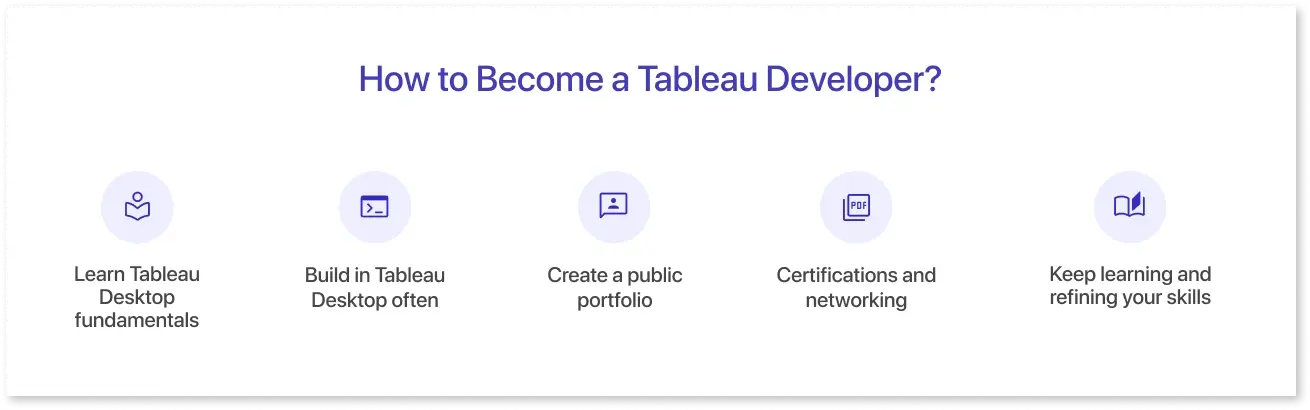
Becoming a Tableau Developer involves skills that help you work with data and make cool visuals. Here are some important ones:
1. Learn Tableau Desktop fundamentals
A strong foundation in Tableau Desktop is essential for any aspiring Tableau developer. Start with comprehensive courses like Tableau Desktop for Beginners, Advanced Tableau Desktop, and Tableau Prep for Beginners. These courses teach you the key features, data preparation, and visualization techniques you’ll need to build your skillset.
2. Build in Tableau Desktop often
Practice is the fastest way to grow. Work on personal or volunteer projects to gain real-life experience. Committing to projects gives you motivation and urgency to finish them. Try the “Tableau Every Day (TED)” approach to keep your skills fresh. Many impressive dashboards come from public projects- like one I contributed to for the National Registry of Exonerations, which can also serve as portfolio material.
3. Create a public portfolio
Showcase your work on Tableau Public, a free platform to share dashboards and view others’ projects. A public profile demonstrates your skills to potential employers and keeps you motivated. You can even host your Tableau Resume Example here. If you’re looking for datasets or ideas for public dashboards, participate in community initiatives like Makeover Monday, Workout Wednesday, Iron Viz, Iron Quest, Viz for a Cause, or the Sustainable Development Goals (SDG) Viz Project.
4. Certifications and networking
Consider Tableau certification to validate skills and increase competitiveness in the job market. Also, being part of the Tableau community helps you learn faster and get noticed by employers. Join Tableau User Groups (TUGs), attend webinars, and participate in competitions like Iron Viz or Iron Quest. Attending Tableau Conferences, including Tableau Conference Europe, can connect you with peers, mentors, and hiring managers.
5. Keep learning and refining your skills
Tableau evolves constantly, so it’s important to stay updated with new features, tips, and best practices. Building dashboards regularly, experimenting with complex visualizations, and applying your skills to real-world projects will strengthen your portfolio and increase your chances of landing a Tableau developer role.
Career Growth and Opportunities for Tableau Professionals
| Level | Designation | Responsibilities | Qualifications |
| Entry Level | Tableau Analyst |
Assist in data visualization and report creation. Basic understanding of data analysis concepts |
Bachelor's degree in a related field. Familiarity with Tableau software. |
| Junior Level | Tableau Developer |
Develop interactive dashboards and data visualizations. Collaborate with stakeholders to gather requirements. |
1-3 years of experience in Tableau development. Strong understanding of data structures. |
| Mid Level | Tableau Consultant |
Provide Tableau expertise for clients’ data needs. Lead Tableau implementation projects. |
3-5 years of Tableau development experience. Experience in client-facing roles |
| Senior Level | Tableau Architect |
Design Tableau solutions for enterprise-level applications. Mentor junior Tableau developers. |
5+ years of experience in Tableau development. Expertise in database management. |
| Management Level | Tableau Manager/Director |
Oversee Tableau team and projects. Develop a Tableau strategy for the organization. |
Previous leadership experience. Strong communication and analytical skills. |
Why are Companies Hiring More Tableau Professionals?
Growing Importance of Data Analytics
- Companies rely on data to make important decisions.
- Analyzing data helps them understand trends and customer behavior.
- Tableau professionals help companies make sense of large amounts of data quickly and accurately.
Need for Effective Data Visualization
- Data can be complex and hard to understand.
- Tableau professionals use Tableau software to create visual data representations, like charts and graphs.
- These visuals make it easier for people to grasp information and make decisions.
Tableau's Market Dominance and Versatility
- Tableau is a popular tool for data visualization and analysis.
- Many companies already use Tableau or are switching to it because of its reputation and features.
- Tableau can handle various data types from different sources, making it versatile for different business needs.
Final Thoughts
As the world becomes increasingly data-centric, the role of Tableau Developers has become indispensable for businesses aiming to thrive in this landscape. With Tableau's intuitive interface, powerful features, and ability to transform complex data into actionable insights, companies recognize the need to invest in Tableau professionals.
Embracing a career as a Tableau Developer opens doors to a dynamic field where creativity meets data-driven decision-making, promising a rewarding journey ahead in data visualization with Mokkup.ai and analytics.
Frequently Asked Questions
A Tableau developer needs skills in data visualization, SQL, Tableau Desktop, and data analysis, as well as an understanding of business processes.
Yes, Tableau will continue to be a strong career choice in 2025 due to the growing demand for data-driven decision-making across industries.
You can learn Tableau basics in 3–5 weeks, while advanced dashboards, calculations, and analytics may take 2–4 months of practice.
Yes, you can work in Tableau without deep programming knowledge, though SQL or basic scripting skills improve your job prospects.
Start by learning Tableau Desktop, SQL, and data visualization techniques, then build real-world dashboards and work on projects to gain experience.
Prompt it. Wireframe it with Mokkup.ai.